Americana
1862 Brooklyn Daily Eagle — Post-Fort Henry Dispatches, 'Love For Sale,' Feb. 10
$44.44
-
Details📜 ABOUT THIS PIECE OF HISTORY 📜
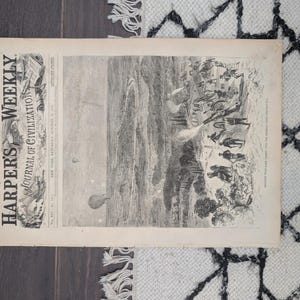
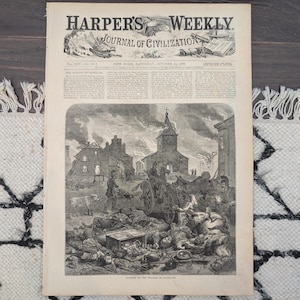
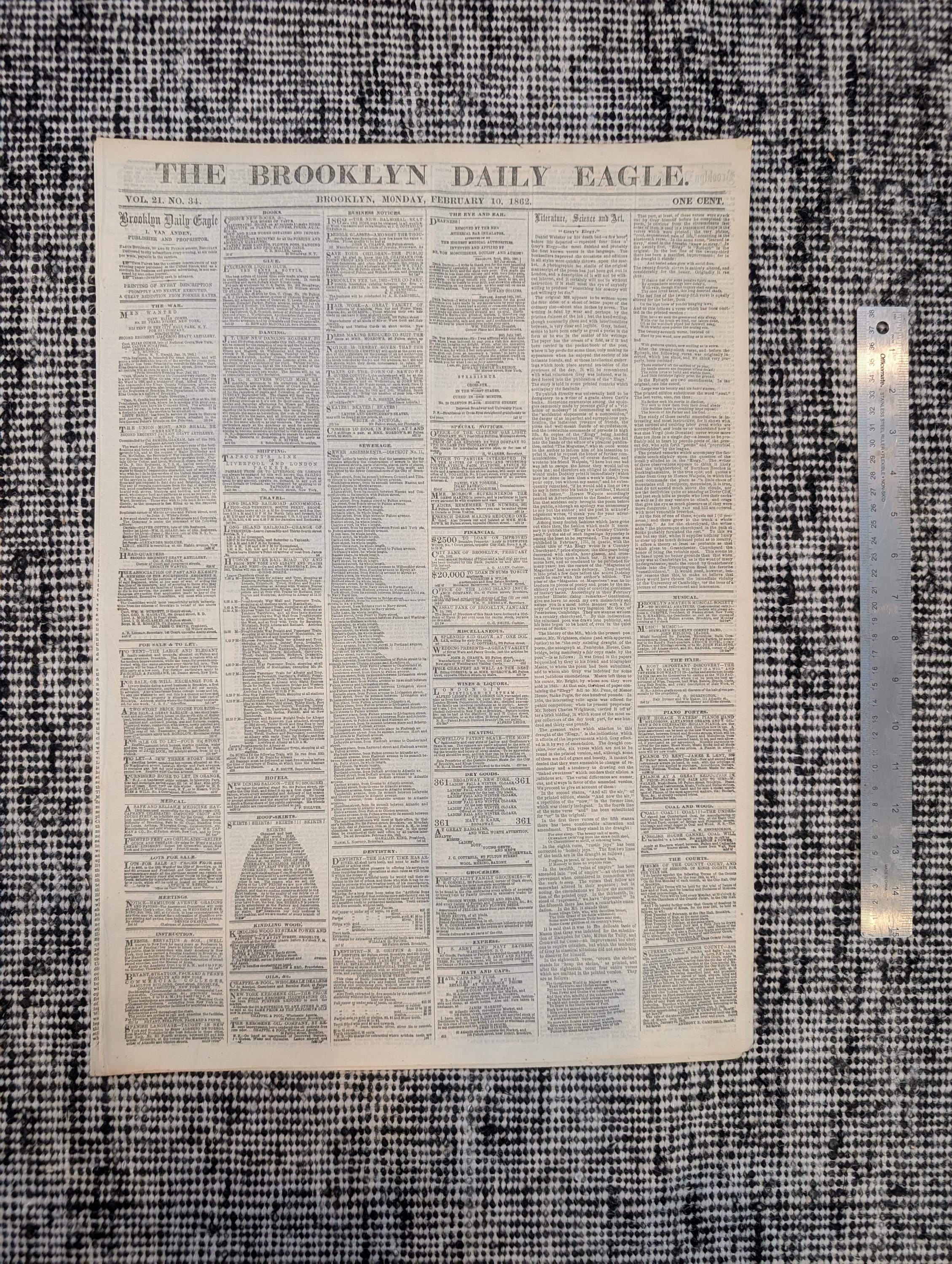
This February 10, 1862 issue of *The Brooklyn Daily Eagle* — Vol. 21, No. 34 — arrives in a peculiar suspended moment of the Civil War. Four days earlier, on February 6th, Grant's forces had taken Fort Henry on the Tennessee River — the Union's first meaningful offensive victory. The country was cautiously elated. But the next act was not yet written: Grant would not begin marching toward Fort Donelson until the following day. February 10th is the pause between two storms — a Monday morning in wartime Brooklyn when the news from the front was recent enough to still feel miraculous, and the next crisis hadn't arrived yet.
The Brooklyn Daily Eagle — once edited by Walt Whitman, now under publisher L. Van Ander — captures that pause in full, from war dispatches to wedding present advertisements, literary criticism to a classified ad that stops you cold mid-column.
---
## ⚔️ FIRST EDITION — FORT HENRY DISPATCHES ⚔️
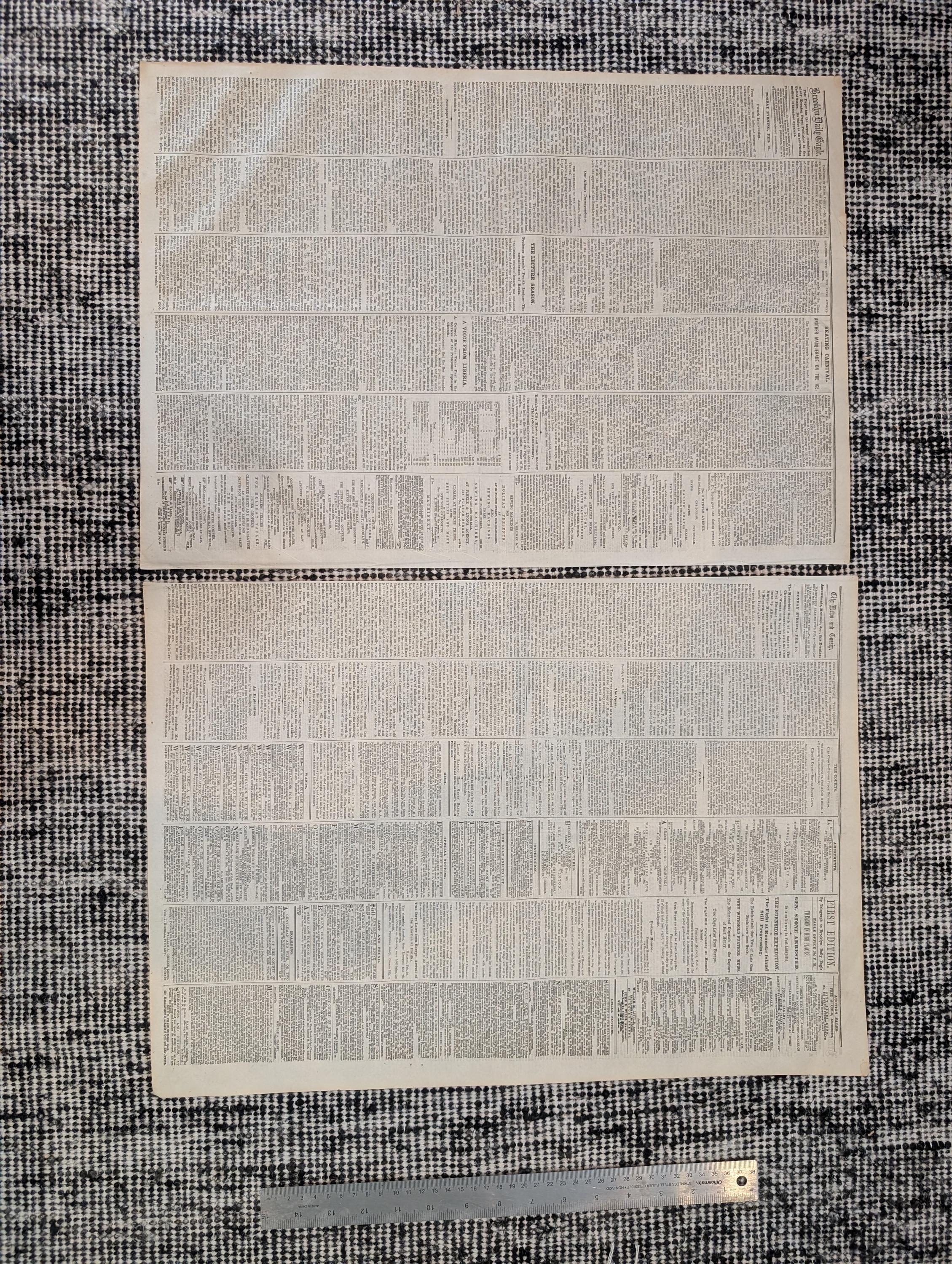
The inner pages carry a **First Edition** breaking news insert — the Eagle's method of rushing the latest telegraph dispatches into print mid-day. The content covers the immediate aftermath of the Fort Henry victory: the movements of Union forces, the state of Confederate defenses, and the anxious calculations of what comes next. For readers on February 10th, Fort Henry was still fresh news — the battle had ended just 96 hours earlier — and every dispatch from the Western Theater carried enormous weight.
---
## 💌 "LOVE FOR SALE" 💌
Tucked into the front page's classified columns is a notice headlined simply: **"LOVE FOR SALE."** In a newspaper otherwise full of military recruitment notices, war dispatches, and civic urgency, these three words stop the eye cold. Victorian classified advertising had its own poetry — compressed, elliptical, charged with what it couldn't say directly — and "Love For Sale" is as arresting a headline as this era of journalism produced. What exactly is being sold? That's for the reader to discover. The notice stands as a small, strange monument to the persistence of ordinary human longing in the middle of catastrophe.
---
## 📚 "LUCILE" — THE LITERATURE COLUMN 📚
The **Literature, Science and Art** column opens with a review anchored by the title **"'Lucile'"** — almost certainly a piece engaging with Owen Meredith's enormously popular narrative poem of the same name, published in 1860 and a sensation on both sides of the Atlantic. *Lucile* was one of the bestselling poems of the Victorian era, a romantic verse novel that Brooklyn's educated readers would have known well. A substantive literary review of it appearing in a wartime daily in February 1862 is a reminder that even as Grant's armies moved through Tennessee, Brooklyn's cultural conversation continued without apology.
---
## 🗣️ "CITY ITEM AND GOSSIP" 🗣️
The inner pages carry a **"City Item and Gossip"** column — the Eagle's ear-to-the-ground roundup of Brooklyn street-level news, neighborhood chatter, and municipal observation. This kind of column is the ancestor of the modern gossip column and the urban blog: informal, anecdotal, opinionated, and irreplaceable as a document of how a city actually talked about itself. What Brooklyn was gossiping about on February 10, 1862 — four days after Fort Henry and one day before Grant marched again — is exactly the kind of human texture that formal histories never capture.
---
## 💍 "WEDDING PRESENTS — GREAT VARIETY" 💍
The miscellaneous columns carry a notice for **"Wedding Presents — Great Variety"** — a commercial advertisement that lands with unexpected emotional weight in a paper full of men-wanted recruitment notices. Life was continuing. Couples were still marrying. Gifts were still being purchased and wrapped. The coexistence of bridal commerce and war recruitment in the same column, on the same page, is one of the defining textures of the Civil War home front.
---
## ✈️ TRAVEL 📰
A **"Travel"** section appears in the second column — an unusual feature that speaks to the continued movement of people and commerce in wartime. Whether covering passenger steamship schedules, railway connections, or the logistics of wartime travel, this section reflects a civilian world still very much in motion despite the conflict reshaping everything around it.
---
## 🎭 "A MELODRAMA IN A FIRST CLASS CARRIAGE" — SERIALIZED ON THE BACK PAGE 🎭
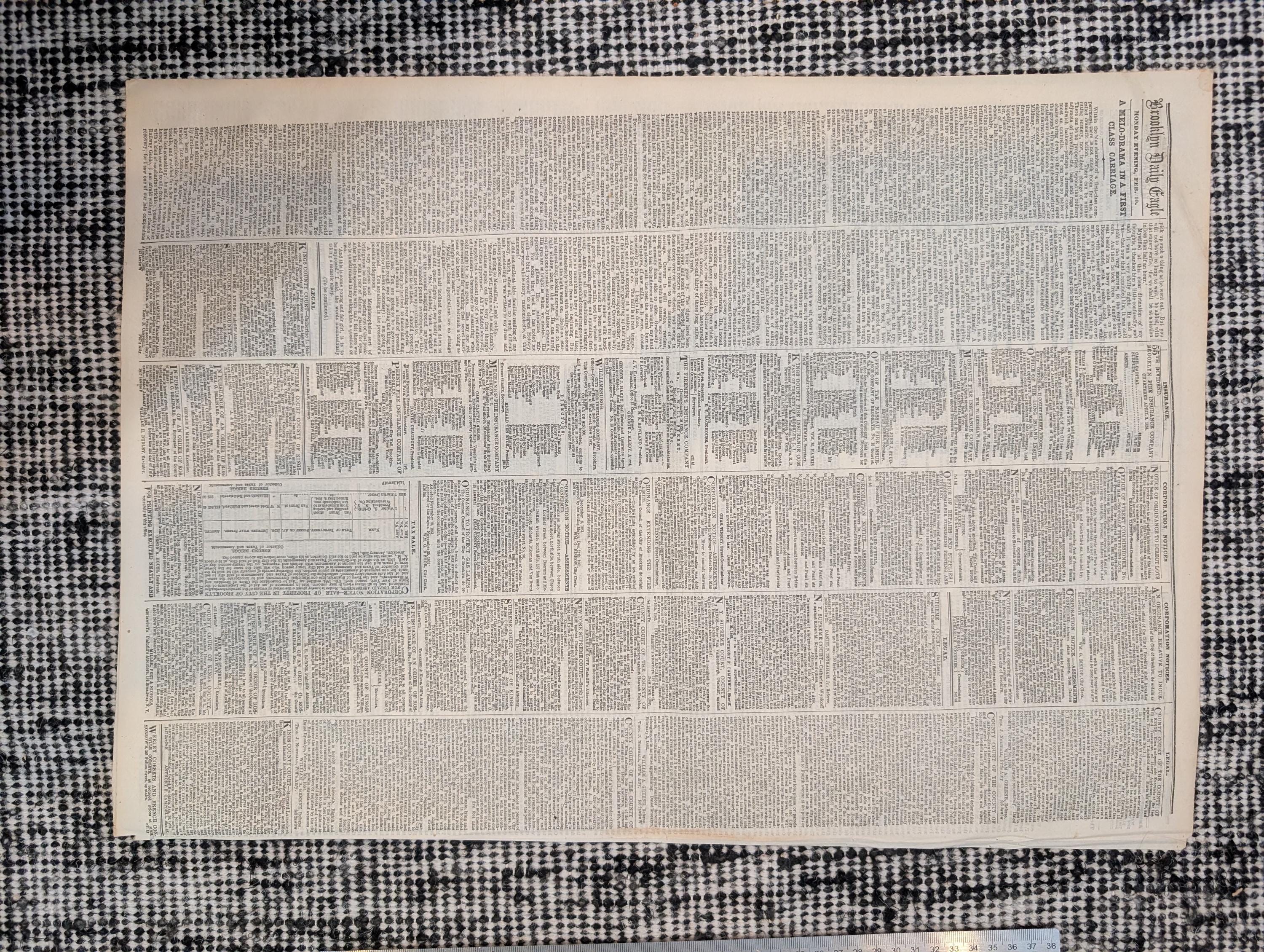
The back page — dateline **"Monday Evening, Feb. 10"** — continues the serialized story **"A Melodrama in a First Class Carriage,"** a multi-installment Victorian fiction piece running across consecutive issues of the Eagle. The serial format was the era's dominant popular entertainment, and this railway melodrama — with all its implied drama of class, danger, and social collision — gave Brooklyn readers a nightly installment of narrative escape. The back page dateline is itself a nice detail: this paper had an evening print run, and the back page was updated with the day's final content.
---
## 🗞️ THE FULL FRONT PAGE 🗞️
Beyond the major features, the front page covers the full texture of wartime Brooklyn:
- **The War** — front-page dispatches from the Union campaigns
- **"The Great Hub and Shall It Be..."** — editorial opinion on the war and the Union cause
- **Men Wanted** — military recruitment alongside civilian employment
- **Tapscott's Line — Liverpool and London** — transatlantic shipping
- **Brooklyn Medical Association** — professional medical notices
- **The Eye and Ear** — ophthalmology and audiology column
- **Spelling** — a section on language and education
- **City Library Society of Brooklyn** — cultural institution notices
- **Special Notices** — civic and commercial announcements
- **$2,500 and $20,000 loan notices** — wartime finance
- **Skating** — winter leisure advertisements
- **Dry Goods — 361 Broadway** — prominent display advertisement
- **Dancing** — "A Large Best Dancing Academy"
- **Sewerage** — Brooklyn municipal works
- **Hoop-Skirts — Perfect!** — Victorian fashion
- **Dentistry — "The Giant Cure"** — period dental advertisement
- **Kindling Wood** — winter fuel
- **Wines & Liquors** — Brooklyn merchants
- **Groceries** — wartime provisions
- **Express** — delivery services
- **Hats and Caps** — Brooklyn retail
- **Musical** — Brooklyn musical society notices
- **The Hair** — Victorian grooming column
- **Piano Forte** — instrument dealers
- **Coal and Wood** — winter fuel market
- **The Courts** — Brooklyn legal proceedings
- **Corporation Notices / Sale of Property** — city government records
- **For Sale & To Let** — Brooklyn real estate
---
## 🔍 CONDITION & TRANSPARENCY 🔍
**Authenticity:** Guaranteed original letterpress printing from February 10, 1862 — not a reproduction.
**Condition Report:** Consistent with its 163-year age. Natural toning to newsprint throughout. Some handling wear visible. Text remains legible across all columns. Civil War-era daily papers were printed on perishable newsprint and almost never deliberately preserved — intact examples are genuinely scarce survivors.
Please review all photographs carefully. I'm happy to photograph any specific column or section in greater detail before you purchase.
---
## 📦 SHIPPING & PRESERVATION 📦
- Housed in an acid-free archival folder
- Flat-shipped with heavy-duty reinforcement
- Fully tracked
---
Fort Henry had fallen four days ago. Fort Donelson hadn't started yet. On February 10, 1862, Brooklyn exhaled briefly — and someone placed an ad headlined "Love For Sale."
---
## 🏷️ TAGS
1862 Brooklyn Daily Eagle, Fort Henry Civil War 1862, Civil War Newspaper February 1862, Walt Whitman Brooklyn Eagle, Victorian Classified Advertising, Lucile Owen Meredith 1862, Civil War Home Front Brooklyn, Antique Newspaper 1862, Brooklyn History Civil War, Victorian Literary Review, City Gossip Column 1862, Civil War Primary Source, Victorian Serialized Fiction, Brooklyn Daily Eagle Civil War, Wartime Brooklyn Newspaper -
Shipping & Policies