Americana
1880 Christmas Morning Old New York, Nast Silver Standard — Harper's Weekly — Dec 25
$45.45
-
Details📜 ABOUT THIS PIECE OF HISTORY 📜
The Christmas Day 1880 issue of Harper's Weekly closes out one of the most extraordinary years in the paper's history with a double-page centerfold of Christmas Morning in Old New York that is among the most beautiful and historically resonant holiday illustrations in the entire run, a front page of wreath-making that captures the domestic warmth of the season at its most genuine, the excavations beneath Hell Gate in one of the great engineering spectacles of the age, three large illustrations of the Nile bringing the ancient world to the Christmas reader, and two Thomas Nast political cartoons including one of his earliest and most pointed statements on the silver standard question that would dominate American politics for the next two decades. This is the Christmas issue for the year of Garfield's election — a document of the republic pausing to celebrate before the extraordinary events of 1881 began.
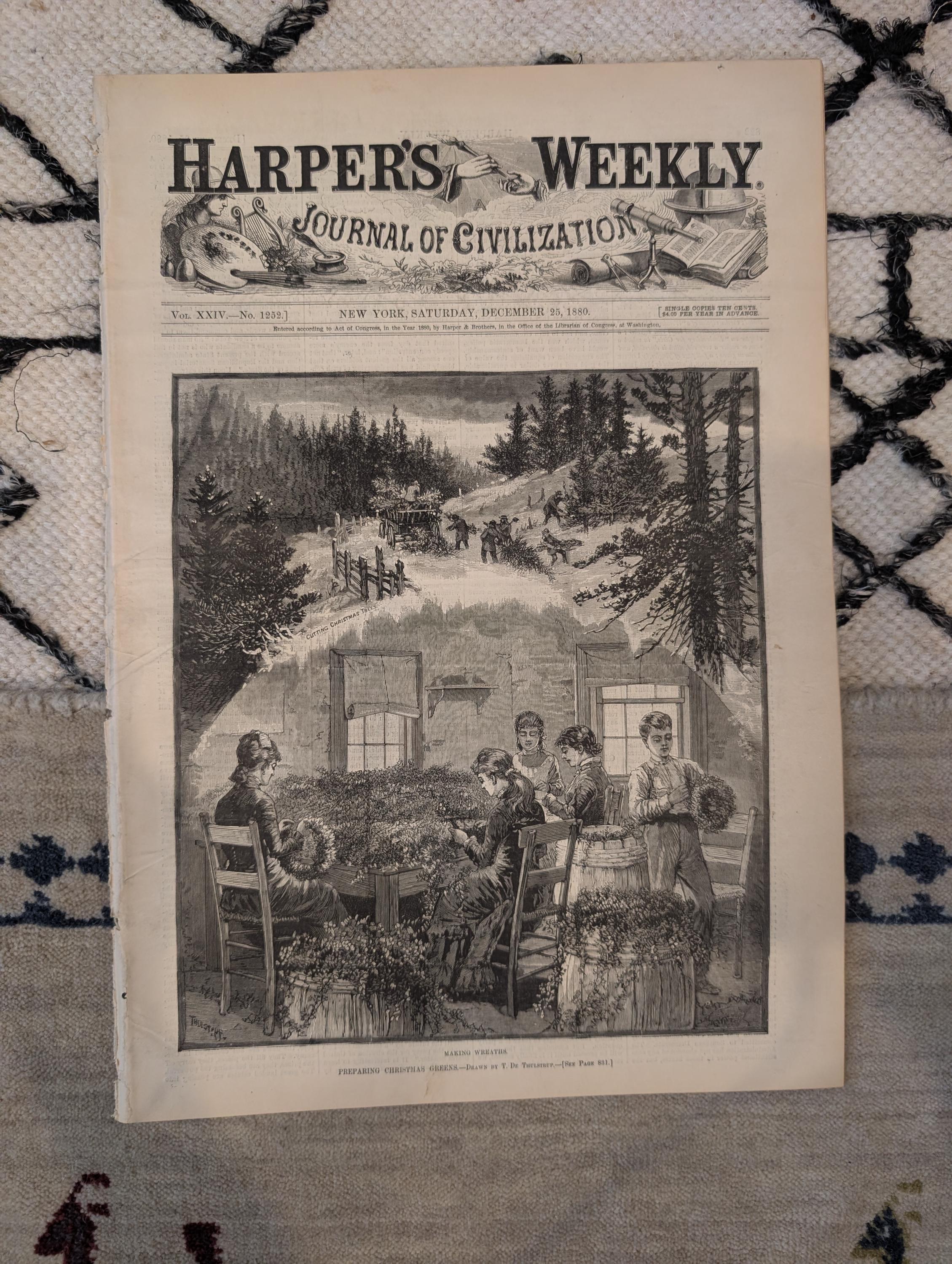
🎄 FULL FRONT PAGE — "MAKING WREATHS"
The full front page opens the Christmas issue with one of the most warmly domestic and seasonally perfect images in the entire 1880 run — "Making Wreaths" capturing the pre-Christmas ritual of wreath-making with the human warmth, domestic detail, and pictorial skill that Harper's Weekly brought to its finest holiday genre illustration. The hands at work, the greenery and berries, the preparations for the holiday that was just hours away — all rendered with the intimacy and authenticity of an artist who understood that the great holidays are made in the small domestic acts that precede them. A fully displayable and deeply seasonally resonant front page for collectors of Victorian Christmas illustration and 19th-century American holiday history.
🎄 DOUBLE-PAGE CENTERFOLD — "CHRISTMAS MORNING IN OLD NEW YORK"
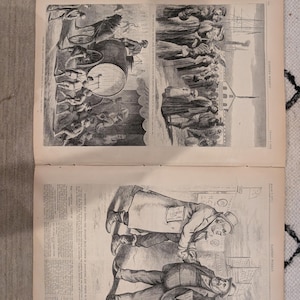
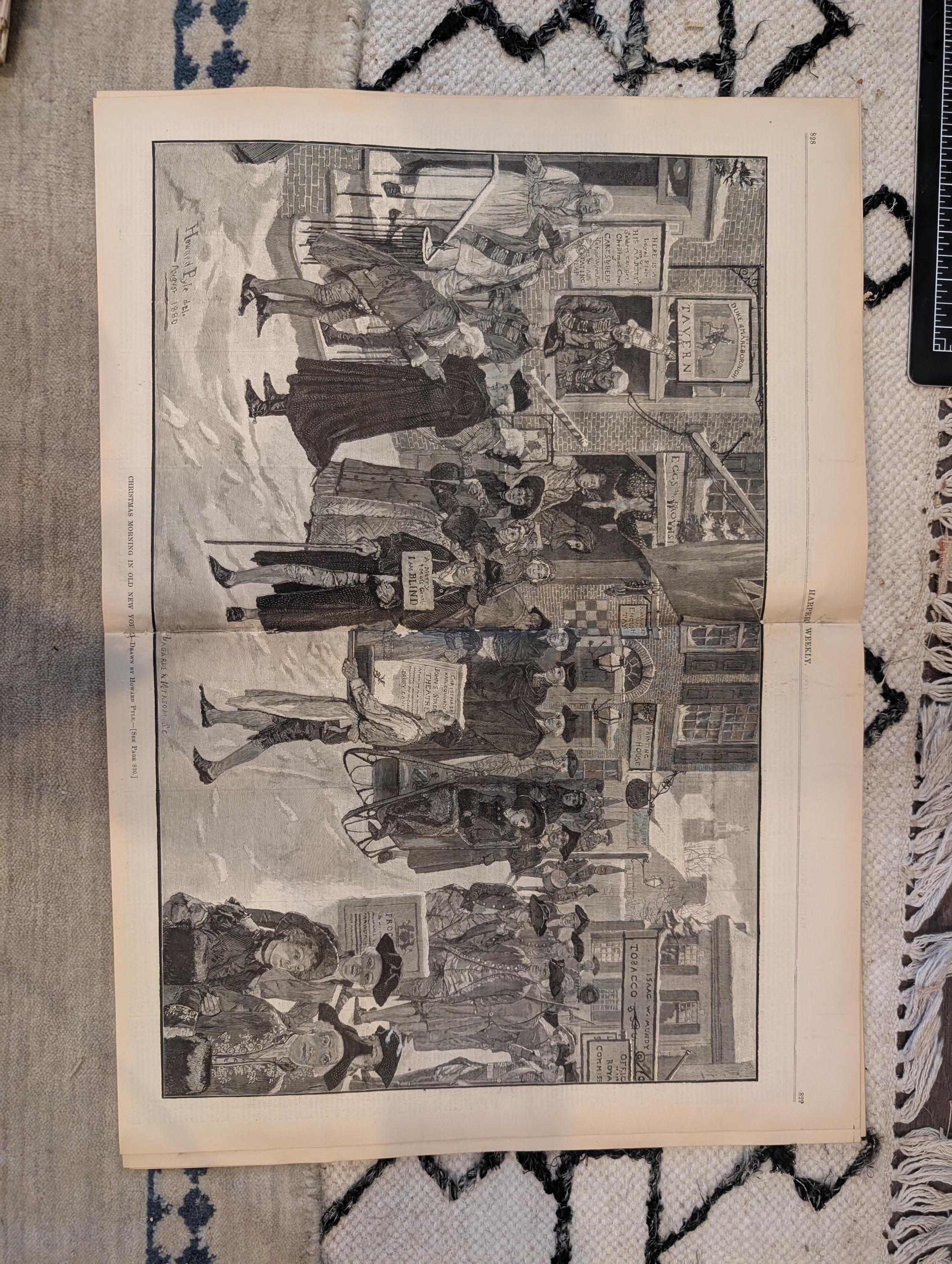
The visual and emotional crown jewel of this issue — and one of the most beautiful and historically resonant Christmas centerfolds in the entire Harper's Weekly archive. "Christmas Morning in Old New York" transports the Gilded Age reader back to the Dutch and early English colonial city of the 17th and 18th centuries — the New Amsterdam and early New York that had given so many of the Christmas traditions that Americans cherished their distinctive American character. The snowy streets, the church bells, the figures in period dress moving through a city that had been transformed beyond recognition in the intervening centuries — all captured across the full double-page spread with the historical imagination and pictorial grandeur that only the centerfold format could achieve.
The choice of "Old New York" for the Christmas centerfold is deeply meaningful — connecting the Gilded Age present to the Dutch colonial past that had given America Sinterklaas, the figure that Thomas Nast had transformed into the modern Santa Claus, and the Christmas traditions that had traveled from the Netherlands to the Hudson Valley and from there to the world. For collectors of New York City history, Christmas history, Dutch colonial American history, and Victorian Christmas illustration, this double-page centerfold is an irreplaceable primary source document of extraordinary beauty and lasting historical importance.
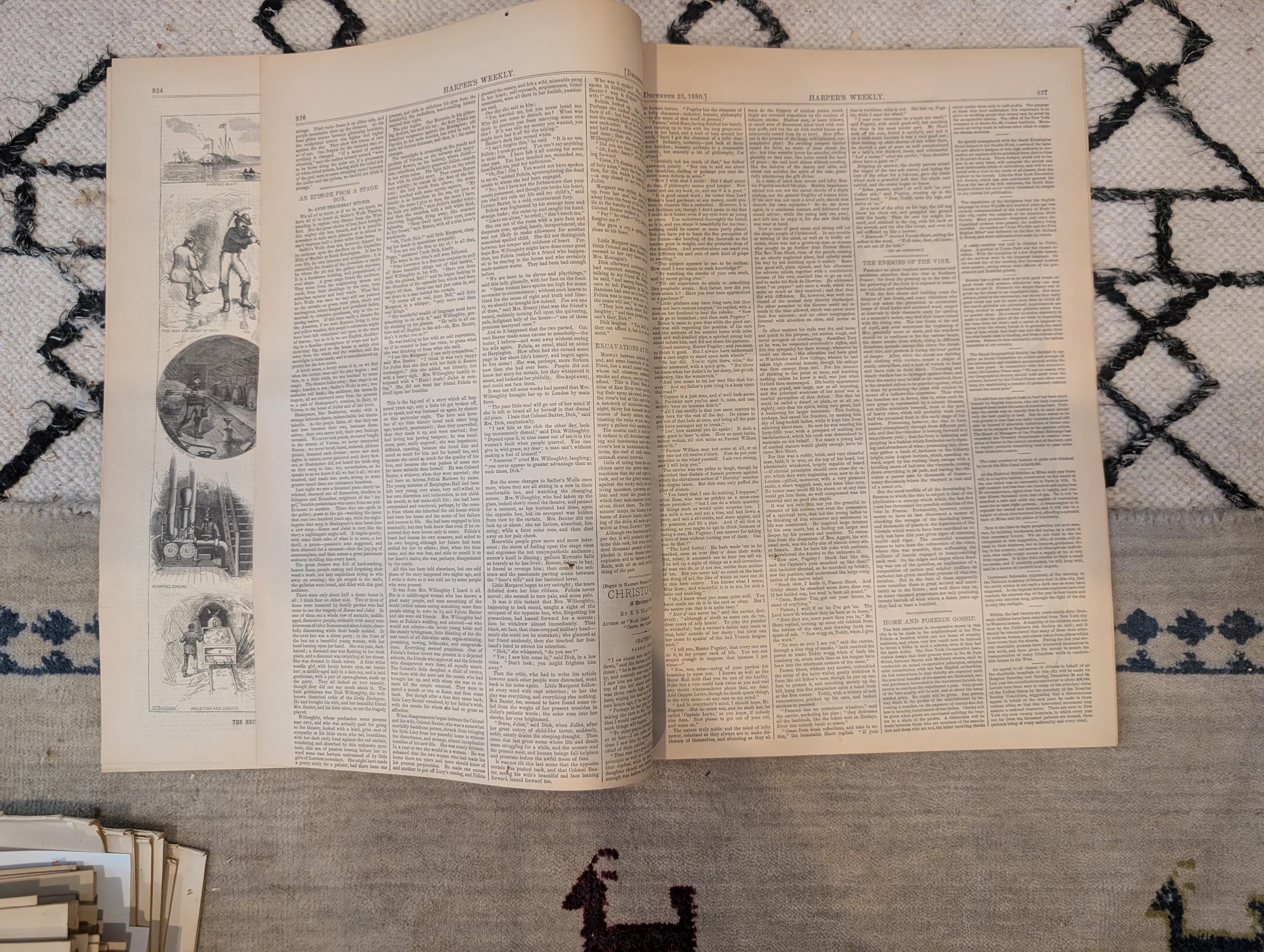
🔩 FULL PAGE — "THE EXCAVATIONS UNDER FLOOD ROCK, HELL GATE"
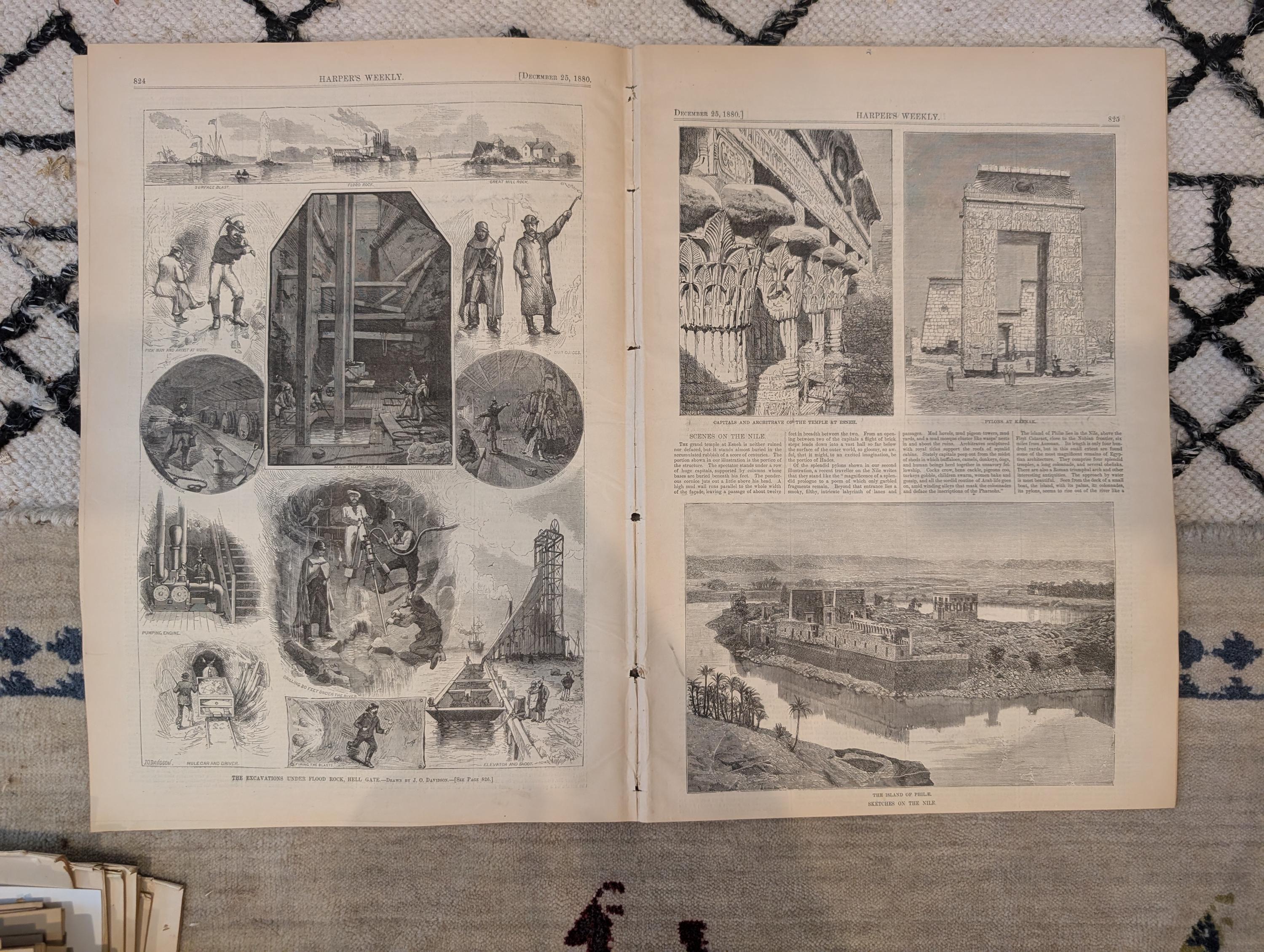
A magnificent and historically significant full-page documentary of the excavations beneath Flood Rock at Hell Gate — one of the great engineering spectacles of Gilded Age New York and a project of genuine public importance. Hell Gate — the narrow tidal strait in the East River between Queens and Randall's Island — had been one of the most dangerous passages in American coastal navigation since the Dutch colonial era, its rocky underwater obstructions having wrecked hundreds of ships and killed thousands of sailors over two centuries. The Army Corps of Engineers had been tunneling beneath the rocks of Hell Gate since 1876, drilling an extraordinary network of shafts and chambers into the bedrock with the intention of placing a massive explosive charge beneath Flood Rock — the largest of the obstructions — and blowing it to pieces. The excavations depicted here were the preparatory work for what would become, on October 10, 1885, the largest planned explosion in history to that date — 300,000 pounds of explosive detonated simultaneously, obliterating Flood Rock and opening Hell Gate to safe navigation. This full-page illustration documents that extraordinary project five years before its completion — a primary source document of American engineering history, New York harbor history, and the Army Corps of Engineers at its most ambitious.
🌊 THREE LARGE ILLUSTRATIONS — "SKETCHES ON THE NILE"
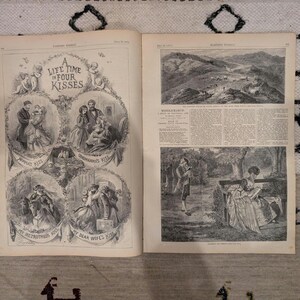
Three large illustrations bringing the ancient world to the Christmas reader — scenes along the Nile River that transported Harper's Weekly's American audience to the most historically resonant waterway on earth. The Nile in 1880 was at the center of the great Victorian romance with Egypt — intensified by the arrival of Cleopatra's Needle in Central Park just months before, by the archaeological discoveries that were rewriting human history, and by the political drama of the Egyptian crisis that would erupt into British military intervention in 1882. These Nile sketches — the river, the monuments, the feluccas and the desert light — are vivid and atmospheric documents of the Victorian Egyptian imagination at its most engaged. A wonderful piece for collectors of Egyptian history, Nile River history, and Victorian travel illustration.
🎨 THOMAS NAST CARTOON — "DOCTORS DIFFER" — THE SILVER STANDARD
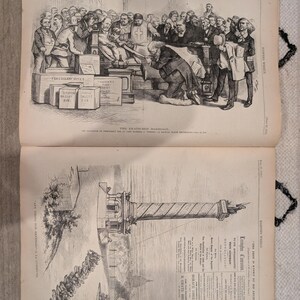
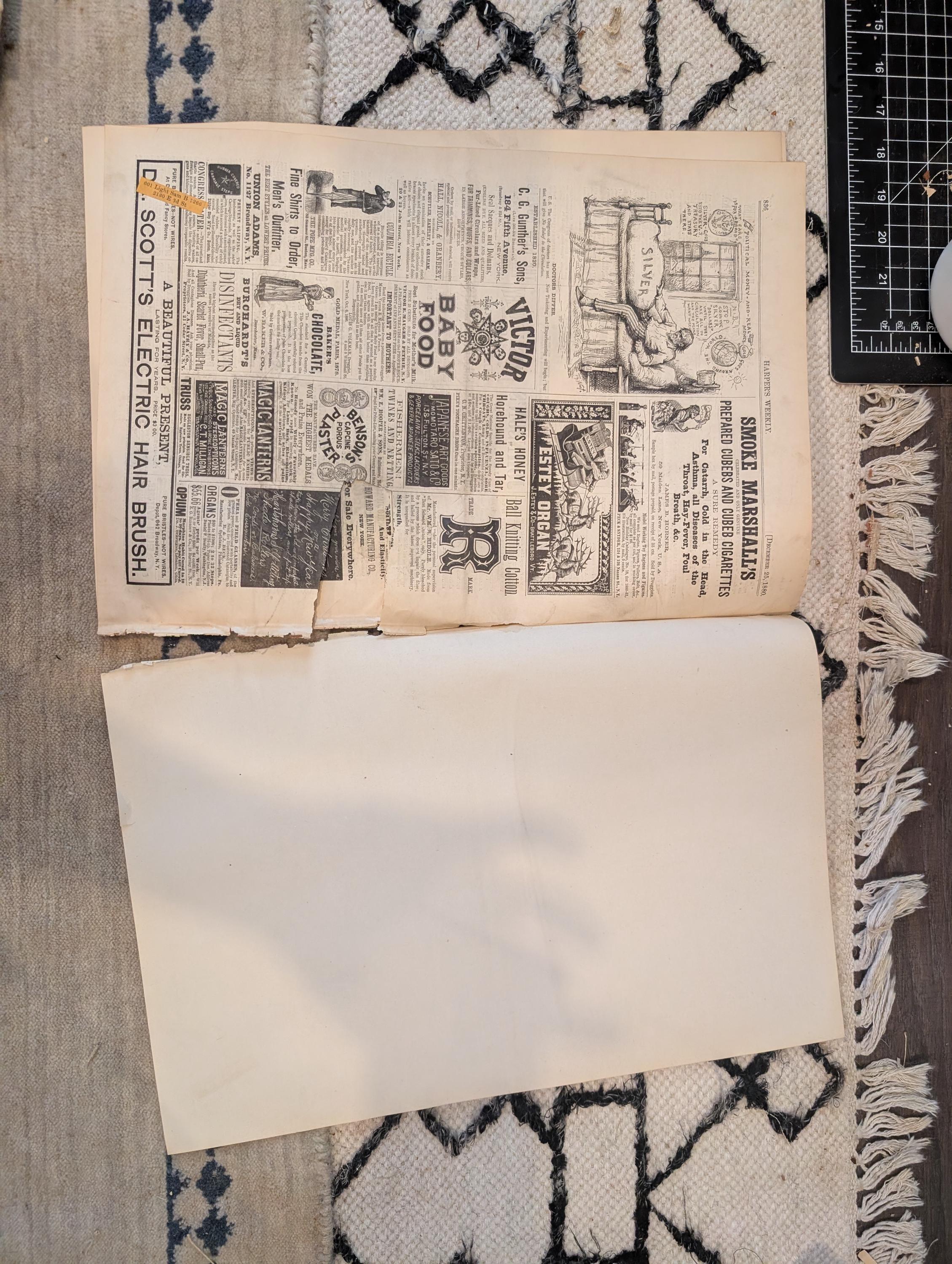
One of the most historically significant Thomas Nast cartoons in this entire run of issues — "Doctors Differ" engaging with Congress's consideration of adopting a silver standard in one of Nast's earliest and most pointed statements on the great monetary debate that would dominate American politics through the election of 1896. The silver question — whether the United States should supplement or replace its gold-backed currency with silver coinage, inflating the money supply to benefit debtors and farmers at the expense of creditors and bondholders — was the most consequential economic policy debate of the last quarter of the 19th century, and Nast's "Doctors Differ" captures its essential character with characteristic precision: the monetary doctors of Congress disagreeing fundamentally about the diagnosis and the cure, their patient — the American economy — at risk from the disagreement itself. For collectors of Nast's work, Gilded Age monetary history, and the history of the silver question that would eventually produce William Jennings Bryan's Cross of Gold speech, this cartoon is a primary source document of exceptional historical importance.
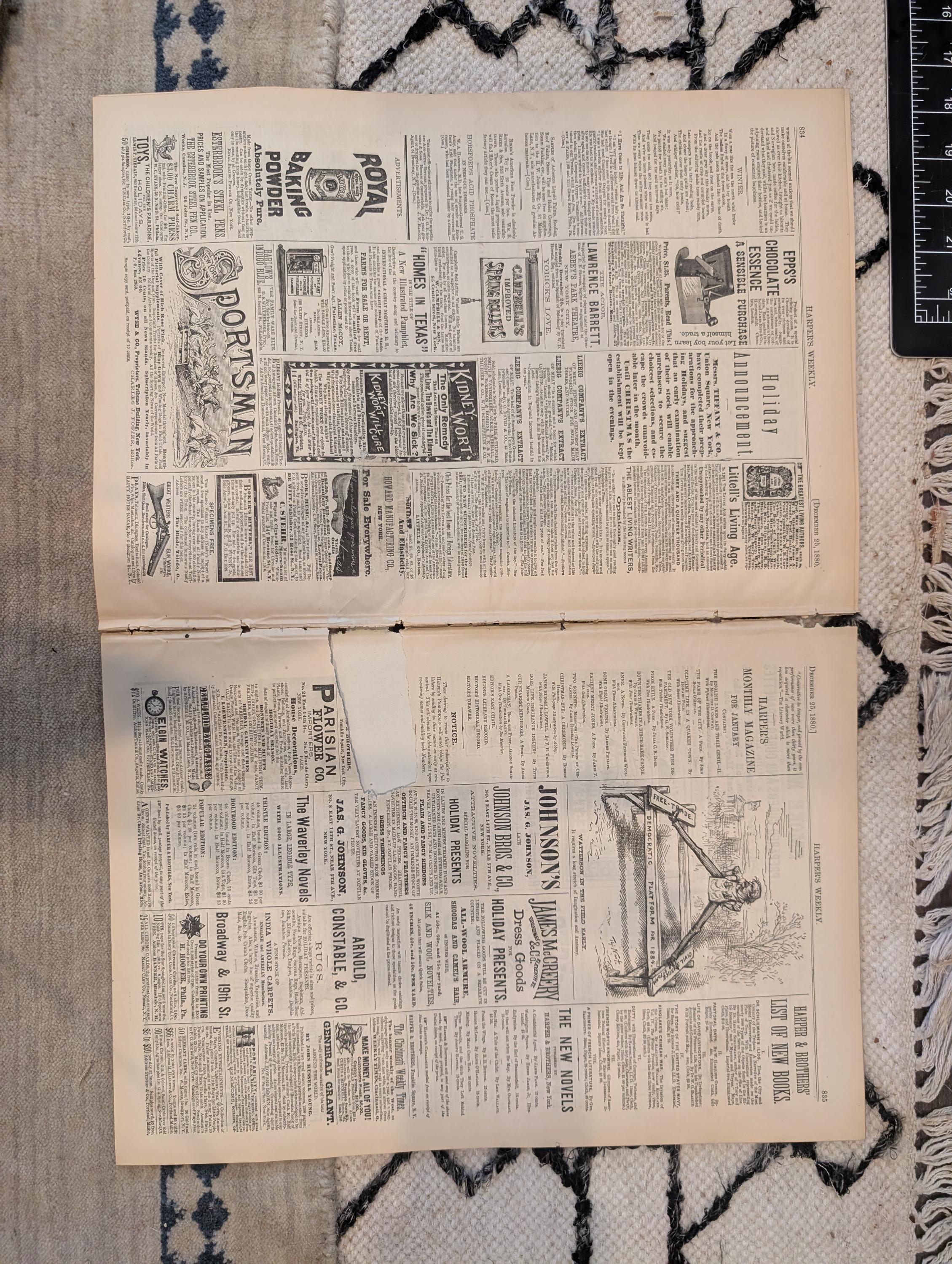
🎨 THOMAS NAST CARTOON — "WATTERSON IN THE FIELD EARLY"
The second Thomas Nast cartoon of the issue targets Henry Watterson — the celebrated editor of the Louisville Courier-Journal and one of the most influential voices in the Democratic Party — who was apparently positioning himself for the next electoral cycle with characteristic journalistic ambition. Watterson was one of the great political editors of the Gilded Age, his editorials combining Southern Democratic politics with a genuine literary flair that made him one of the most read and most quoted newspaper voices in America. Nast's "Watterson In The Field Early" catches him at the beginning of what would be a long and consequential political journalism career, already preparing the ground for the next campaign. A significant piece for collectors of Nast's work, Democratic Party history, and the history of American political journalism.
🚢 QUARTER PAGE — "THE GUN OF ERICSSON'S TORPEDO BOAT THE DESTROYER"
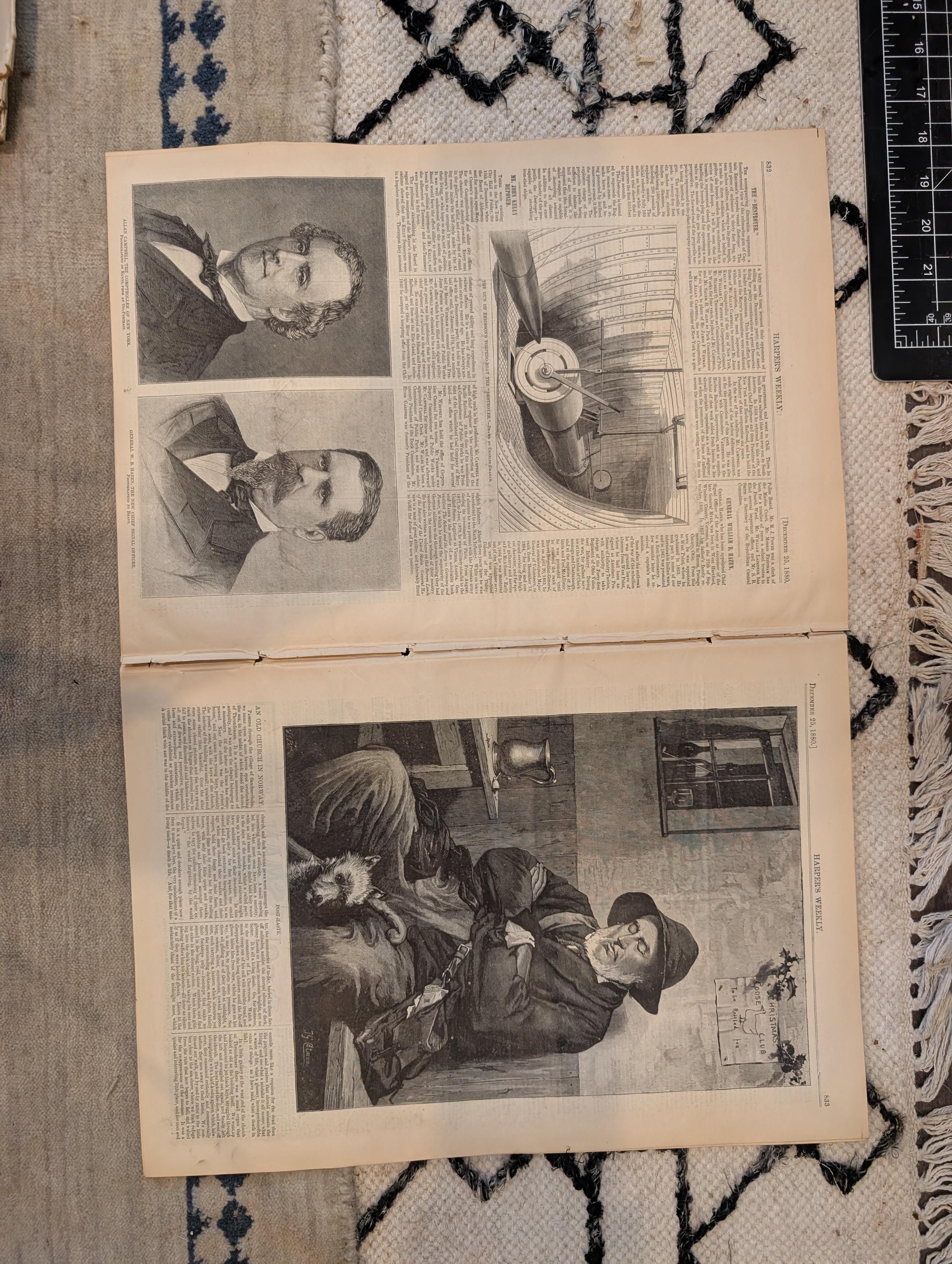
A historically fascinating quarter-page illustration of the armament of John Ericsson's experimental torpedo boat Destroyer — the Swedish-American inventor who had designed the Monitor continuing his revolutionary work in naval warfare with a vessel designed to deliver explosive torpedoes against enemy ships at close range. Ericsson was one of the great engineering minds of the 19th century, and the Destroyer represented his vision of how naval combat would be transformed by the torpedo — a vision that proved entirely correct over the following decades. A fine piece for collectors of naval history, torpedo history, and the history of John Ericsson's remarkable engineering career.
🏛️ TWO QUARTER-PAGE PORTRAITS — ALLAN CAMPBELL & GENERAL W.B. HAZEN
Two quarter-page portraits document significant figures of the moment. Allan Campbell — the Comptroller of New York City, one of the most powerful financial officers in American municipal government, responsible for the fiscal management of the nation's largest and most financially complex city. And General William Babcock Hazen — the new Chief Signal Officer of the United States Army, taking over from the late General Albert Myer to lead the Signal Corps and its weather bureau operations. Hazen would go on to lead one of the most consequential and controversial chapters in Signal Corps history, sending the doomed Lady Franklin Bay Expedition to the Arctic in 1881 — an expedition that would end in one of the greatest tragedies of American polar exploration. A significant portrait for collectors of Signal Corps history and Arctic exploration history.
🐎 TWO-THIRDS PAGE — "POST HASTE"
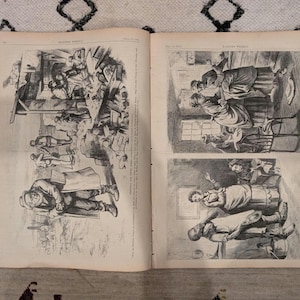
A vivid and action-filled two-thirds page illustration of the mail coach at full gallop — "Post Haste" capturing the speed and urgency of the mail delivery system in the days before the railroad and the telegraph had fully supplanted the horse-drawn post as the primary means of rapid communication across the American landscape. The image of the post coach flying down a winter road at full gallop — the horses stretched out, the wheels barely touching the ground, the whole vehicle expressing the maximum urgency of the postal mission — is one of the most kinetically exciting illustrations in the December run. A wonderful piece for collectors of postal history, transportation history, and Victorian American genre illustration.
🔍 CONDITION & TRANSPARENCY 🔍
Completeness: Complete 16-page issue.
Authenticity: Guaranteed original printing from December 25, 1880 — not a reproduction.
Condition Report: Presents well for its 145-year age with natural toning to the newsprint consistent with paper of this era. The wreath-making front page, the Christmas Morning in Old New York double-page centerfold, the Hell Gate excavations full page, the three Nile illustrations, both Thomas Nast cartoons, and all portrait pages are clear and displayable. I have photographed every page — please review all images carefully and don't hesitate to ask for additional close-ups of any area before purchasing.
📦 SHIPPING & PRESERVATION 📦
Housed in an acid-free archival folder with Mylar overlay to protect the 145-year-old newsprint
Flat-shipped with heavy-duty reinforcement to ensure safe arrival of the centerfold
Fully tracked for your peace of mind
On Christmas Day 1880 Old New York filled the centerfold with snow and church bells and colonial memory, the engineers were tunneling beneath Hell Gate with 300,000 pounds of explosive waiting, the Nile was flowing through the holiday pages, and Thomas Nast was already watching the silver question with one skeptical eye. What a paper. What a year.
🏷️ TAGS
1880 Christmas Morning Old New York, Christmas Centerfold Old New York, Making Wreaths Christmas Front Page, Hell Gate Excavations Flood Rock, Sketches on the Nile Victorian, Thomas Nast Silver Standard, Nast Doctors Differ Silver, Nast Watterson Field Early, Ericsson Torpedo Boat Destroyer, General Hazen Signal Corps, Allan Campbell Comptroller New York, Victorian Christmas Illustration, Dutch Colonial New York Christmas, Antique Newspaper 1880, Harper's Weekly 1880, Gilded Age Christmas History -
Shipping & Policies
Related Products