Americana
1880 Quail Hunting, Rugby Colony Tennessee, Nast — Harper's Weekly — Oct 16
$45.45
-
Details📜 ABOUT THIS PIECE OF HISTORY 📜
The October 16, 1880 issue of Harper's Weekly is one of the most varied and historically surprising issues of the entire fall run — Thomas Nast delivers a front-page cartoon on women and politics that is one of his most provocative of the entire year, a full page documents the extraordinary English utopian colony of Rugby in the Tennessee mountains, the St. Louis Fair fills a full page with one of the great annual agricultural spectacles of the American heartland, a magnificent quail hunting full page captures the most beloved bird shooting of the Gilded Age, and W.A. Rogers delivers a full-page campaign illustration of maximum urgency in the final three weeks before the election. This is an issue of exceptional range and lasting historical importance.
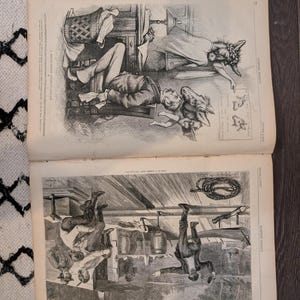
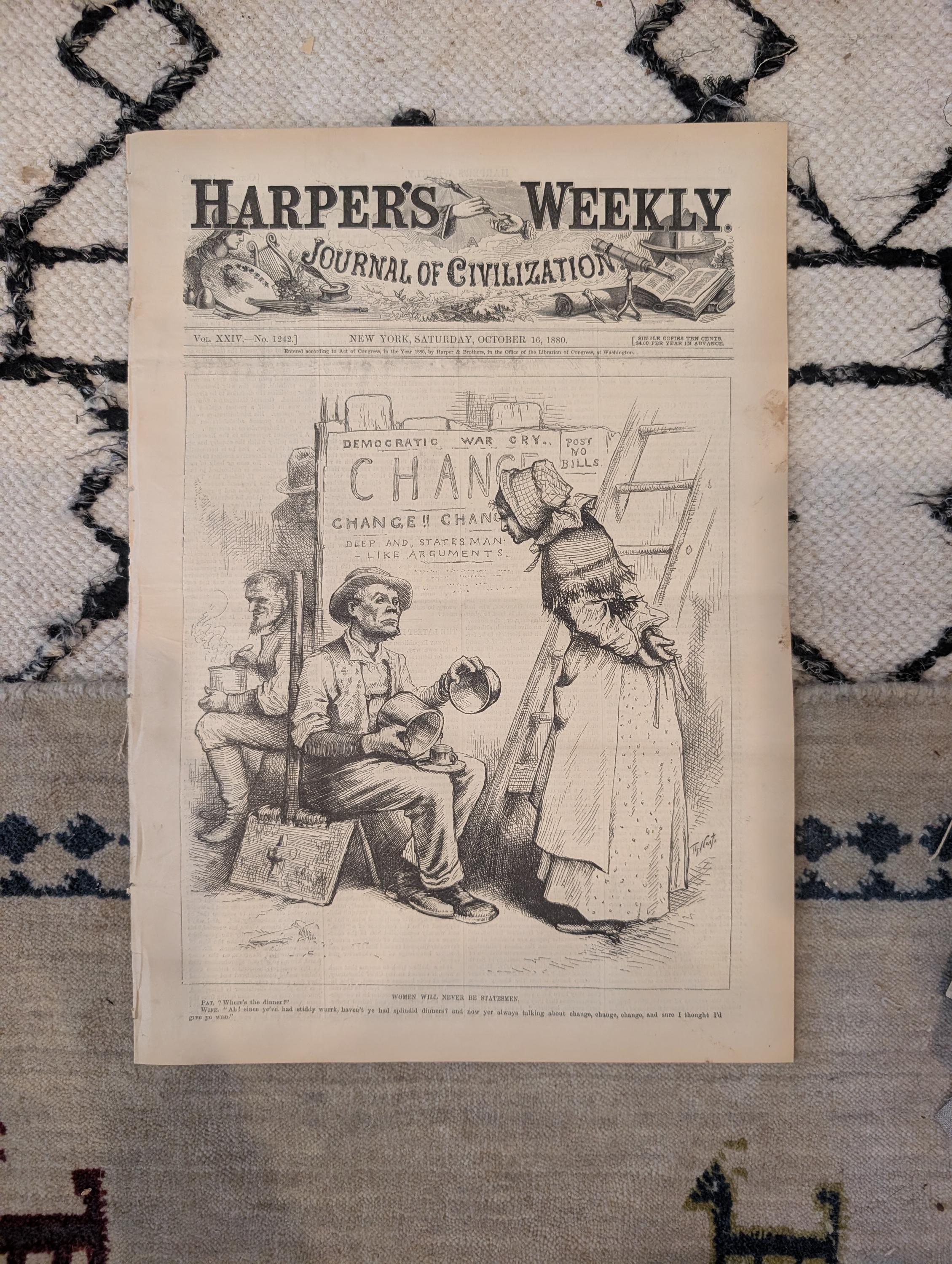
🎨 FULL FRONT PAGE — THOMAS NAST: "WOMEN WILL NEVER BE STATESMEN"
Thomas Nast opens the issue with one of his most provocative and historically complex front pages of the entire 1880 run — "Women Will Never Be Statesmen" arriving at a moment when the women's suffrage movement was between its early post-Civil War peak and the final push that would produce the 19th Amendment forty years later. The title is a statement, but Nast's treatment of it — whether ironic, sincere, or deliberately ambiguous — reflects the complicated and often contradictory positions that American illustrated journalism took on the question of women's political participation in the Gilded Age. Victoria Woodhull had run for President eight years before this front page appeared. Susan B. Anthony had been arrested for voting in 1872. The National Woman Suffrage Association was actively organizing. And Nast — who had championed Black rights and immigrant rights and labor rights — put "Women Will Never Be Statesmen" on the front page of the most widely read illustrated newspaper in America three weeks before a presidential election. A front page of maximum historical complexity and enduring relevance for collectors of women's suffrage history, Thomas Nast's work, and Gilded Age political culture.
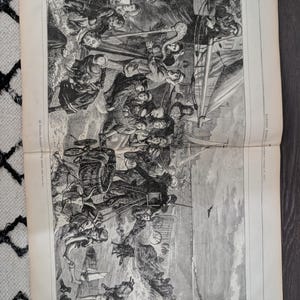
🌾 FULL PAGE — "THE ST. LOUIS FAIR"
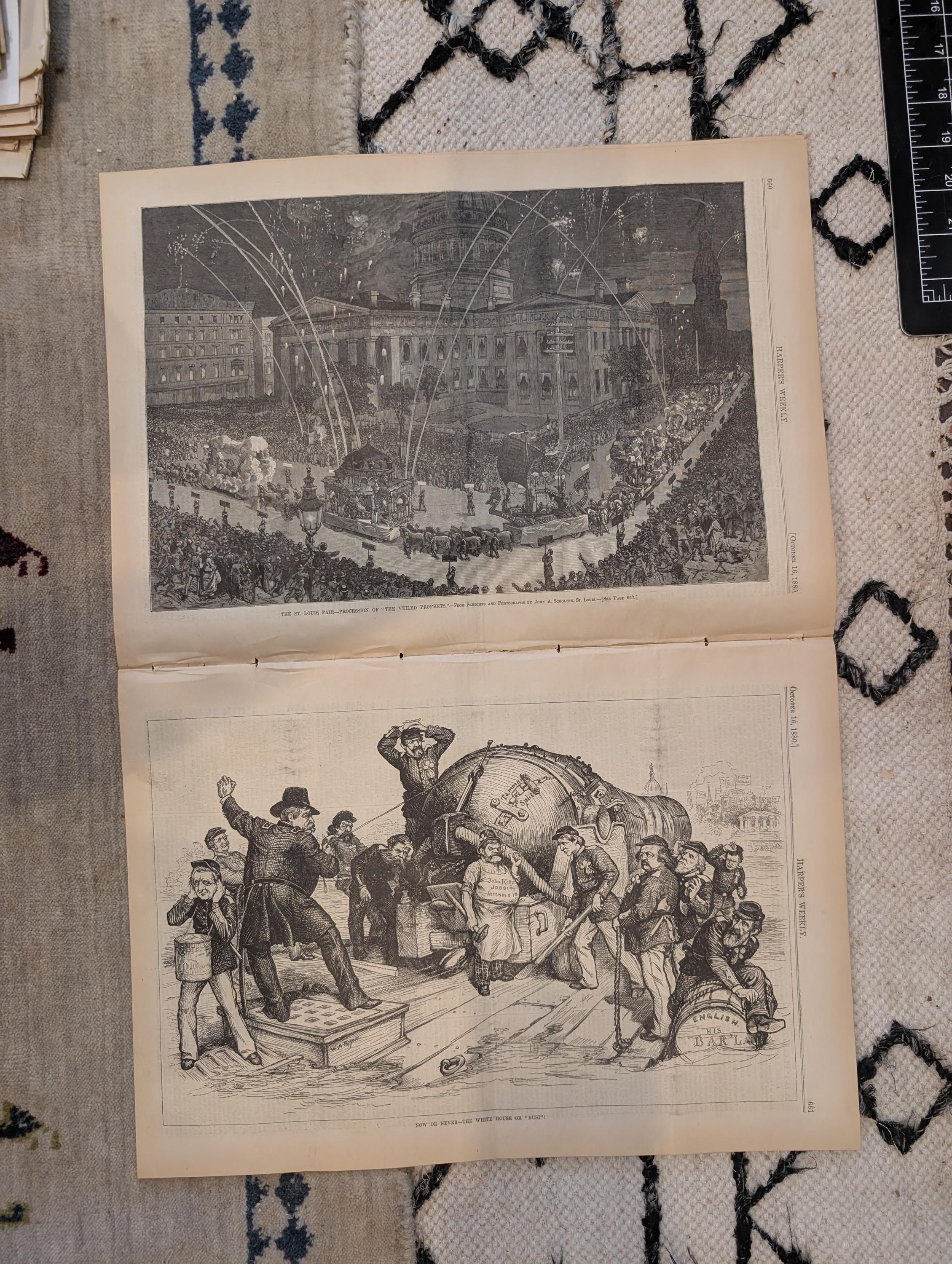
A magnificent and warmly observed full-page documentary of the St. Louis Fair — the great annual agricultural and industrial exposition that was one of the most important civic events in the life of the American heartland, drawing farmers, merchants, exhibitors, and visitors from across the Mississippi Valley to celebrate the productivity and ingenuity of the region that fed the nation. The St. Louis Fair in 1880 was at the height of its Gilded Age prestige — the livestock competitions, the machinery exhibitions, the horticultural displays, and the social gatherings that surrounded them all combining to make it one of the great popular festivals of the American interior. A wonderful and fully displayable full page for collectors of St. Louis history, Missouri history, American agricultural history, and the history of the great regional fairs that were among the defining civic institutions of the 19th century.
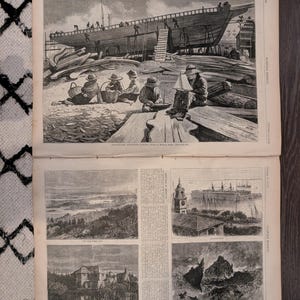
🎨 FULL PAGE — W.A. ROGERS: "NOW OR NEVER — THE WHITE HOUSE OR BUST"
W.A. Rogers delivers one of the most urgently titled campaign illustrations of the entire 1880 run — "Now or Never — The White House or Bust" capturing the do-or-die energy of the final three weeks of the Garfield-Hancock contest with maximum dramatic force. Rogers — whose political illustration work throughout the campaign had complemented and occasionally rivaled Nast's — brings his full visual energy to this full-page declaration of Republican determination, the white-knuckle sprint to November rendered in terms that every American voter could understand. In the most closely contested presidential race since before the Civil War, "Now or Never" was not hyperbole — it was an accurate description of what both campaigns were feeling as October wound toward its close. A significant piece for collectors of W.A. Rogers illustration and the 1880 presidential election.
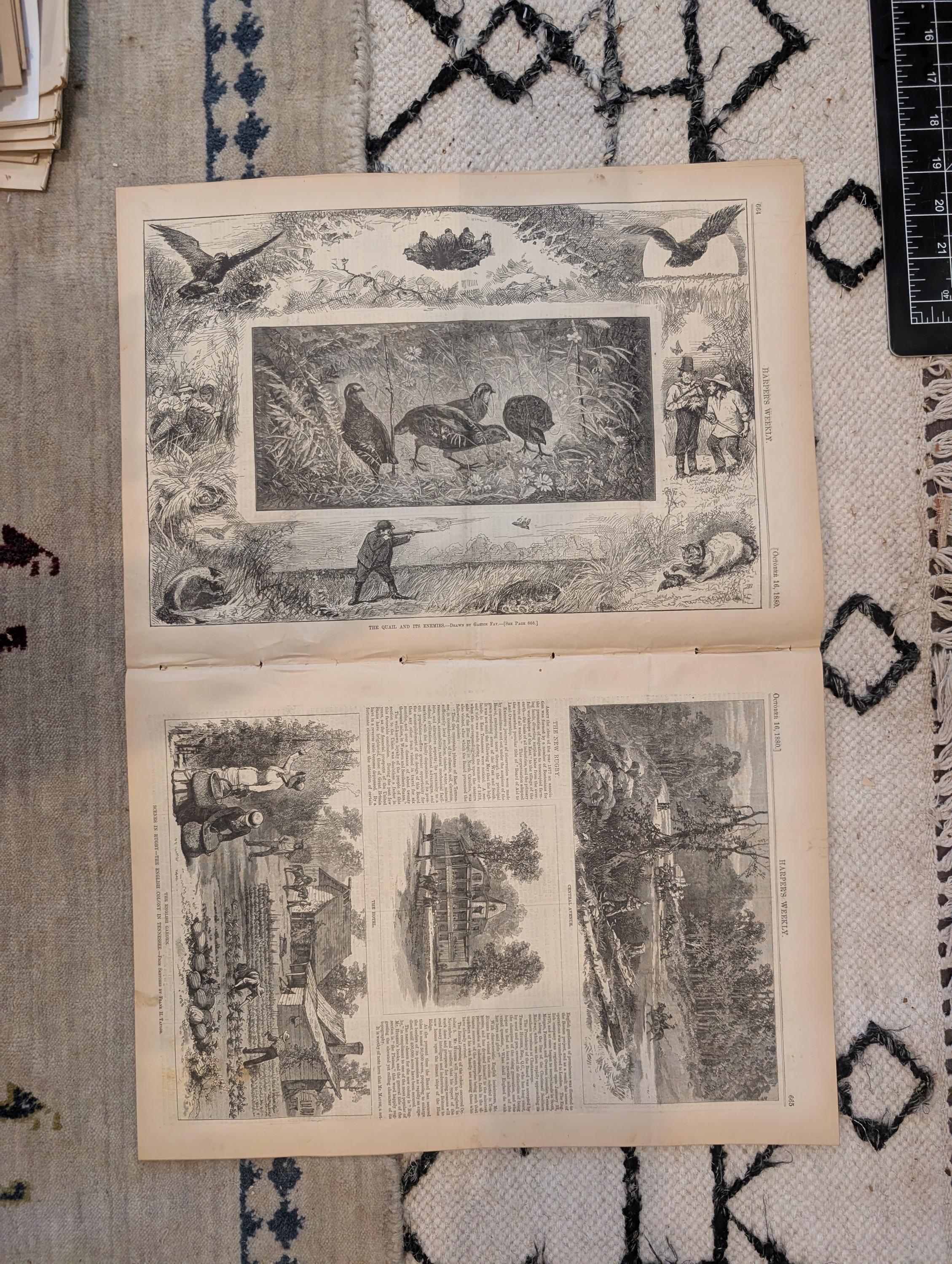
🐦 FULL PAGE — "THE QUAIL AND ITS ENEMIES"
The sporting crown jewel of this issue — a magnificent full-page illustration of quail hunting that is one of the finest bird shooting documentaries in the entire Harper's Weekly run for 1880. The bobwhite quail was the most beloved game bird in America — its explosive flush from the covey, its challenge to the wingshooter, its association with the golden autumn days of the Southern upland hunt making it the object of a sporting passion that transcended class and region. "The Quail and Its Enemies" takes a broader view than a simple hunting scene — documenting not only the hunter and his dog pursuing the bird but the full ecological context of the quail's existence, including the predators and pressures that threatened its survival beyond the gunner's shot. This broader framing makes the illustration an early conservation document as well as a sporting one — Harper's Weekly increasingly aware in 1880 that the great American game bird populations were under pressure from all directions. A wonderful and fully displayable full page for collectors of quail hunting history, sporting illustration, conservation history, and Victorian American outdoor culture.
🏡 FULL PAGE — "SCENES IN RUGBY — THE ENGLISH COLONY IN TENNESSEE"
One of the most historically extraordinary and rarely encountered illustration subjects in the entire 1880 run — a full-page documentary of Rugby, Tennessee, the utopian English colony that Thomas Hughes — author of Tom Brown's School Days — had founded in the Cumberland Plateau just the previous year, 1879. Rugby was one of the most ambitious and most poignant social experiments of the Gilded Age: Hughes's vision of a community where younger sons of the English gentry — shut out of inheritance by primogeniture and unable to enter the learned professions without capital — could build a new life on the American frontier while maintaining the cultural standards and social institutions of English civilization. The colony had its own library, its own church, its own cricket pitch, its own literary society — English institutions transplanted to the Tennessee mountains with the earnest optimism that characterized all of Thomas Hughes's enterprises.
In 1880 Rugby was just one year old and still full of hope — the settlers had not yet encountered the full reality of Tennessee mountain farming, the typhoid outbreaks that would devastate the colony, or the financial difficulties that would eventually doom the experiment. This full-page documentary captures it at its most idealistic moment — the English settlers in their Tennessee clearing, building their Muscular Christian utopia in the American wilderness with the confidence of people who believed that good intentions and good character were sufficient for any enterprise. For collectors of Tennessee history, utopian community history, Thomas Hughes history, and the extraordinary story of Rugby's brief and beautiful existence, this full page is a primary source document of exceptional rarity and historical interest.
🎨 FULL PAGE — THOMAS NAST: FOUR PRINTS
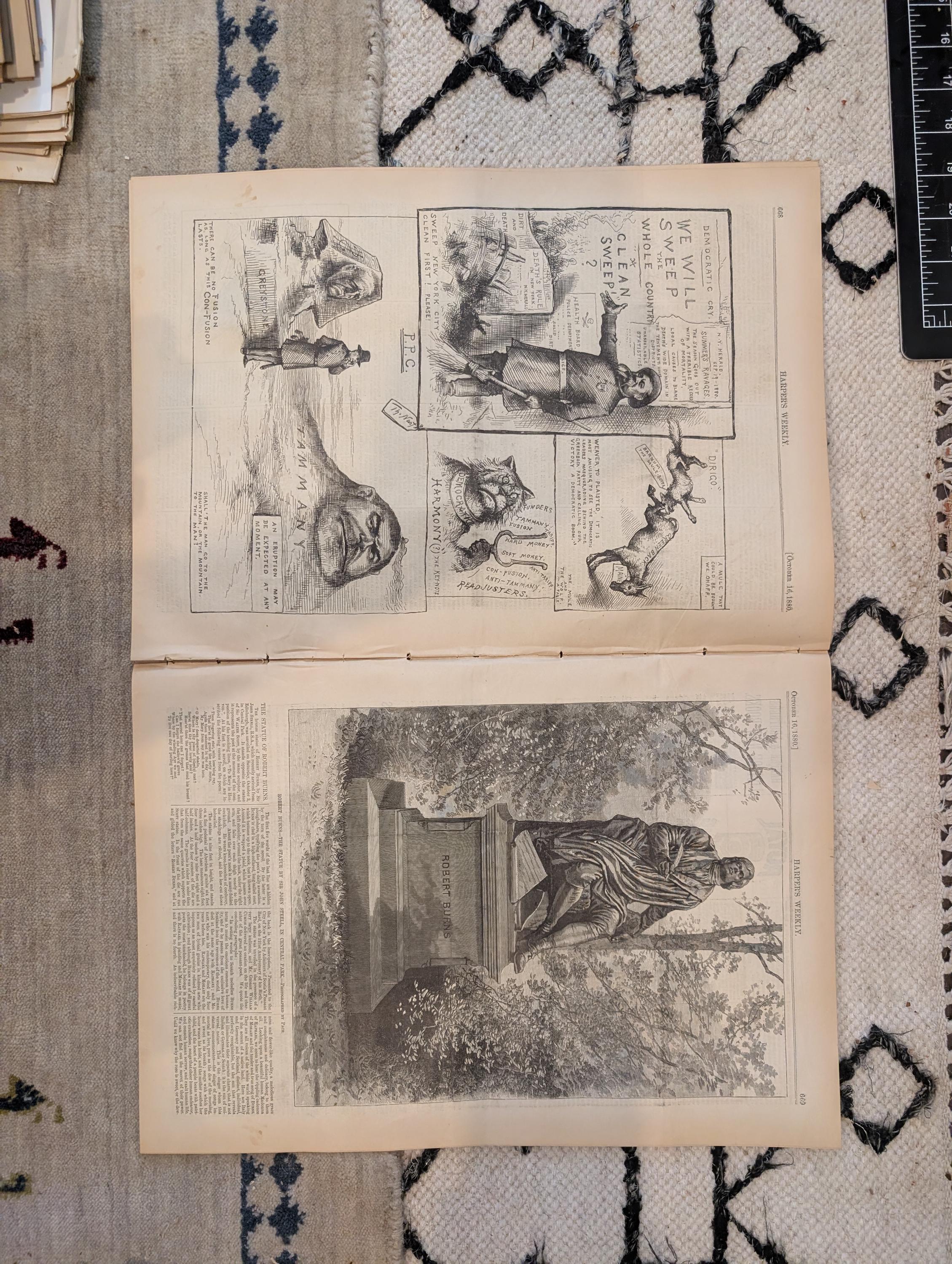
Thomas Nast contributes a second full-page illustration to the issue — a pictorial with four prints that extends his campaign coverage across multiple arguments simultaneously. The four-print format was one of Nast's most versatile tools — allowing him to make several related points in a single page, surrounding the central argument with supporting evidence, parallel cases, and satirical commentary that together built a case more comprehensive than any single image could construct. In the final three weeks of the 1880 campaign this multi-panel approach reflects the urgency of the moment — too much to say, too little space to say it, four images doing the work that time would not allow a single elaborate cartoon to accomplish. A significant Nast full page for collectors of his work and the 1880 presidential election.
🔍 CONDITION & TRANSPARENCY 🔍
Completeness: Complete 16-page issue.
Authenticity: Guaranteed original printing from October 16, 1880 — not a reproduction.
Condition Report: Presents well for its 145-year age with natural toning to the newsprint consistent with paper of this era. The Thomas Nast front page, the St. Louis Fair full page, the W.A. Rogers campaign full page, the quail hunting full page, the Rugby Tennessee full page, and the second Nast four-print full page are all clear and displayable. I have photographed every page — please review all images carefully and don't hesitate to ask for additional close-ups of any area before purchasing.
📦 SHIPPING & PRESERVATION 📦
Housed in an acid-free archival folder with Mylar overlay to protect the 145-year-old newsprint
Flat-shipped with heavy-duty reinforcement to ensure safe arrival
Fully tracked for your peace of mind
In October 1880 English settlers were playing cricket in the Tennessee mountains and dreaming of Tom Brown's School Days, the quail were running in the autumn fields, and Thomas Nast was telling American women they would never be statesmen while W.A. Rogers was shouting Now or Never at the electorate. What a paper. What a week.
🏷️ TAGS
1880 Quail Hunting Victorian America, Rugby Tennessee English Colony, Thomas Hughes Rugby Tennessee, English Utopian Colony America, Thomas Nast Women Statesmen, WA Rogers Now or Never Election, St Louis Fair Missouri 1880, Quail Hunting Primary Source, Thomas Nast Campaign Cartoon, Women Suffrage History Nast, Rugby Colony Cumberland Plateau, Gilded Age Utopian Community, Agricultural Fair History 1880, Antique Newspaper 1880, Harper's Weekly 1880, Victorian Sporting Illustration -
Shipping & Policies
Related Products