Americana
1880 Indian Reservation, W.A. Rogers High Bridge, Passion Play — Harper's Weekly — July 24
$38.88
-
Details📜 ABOUT THIS PIECE OF HISTORY 📜
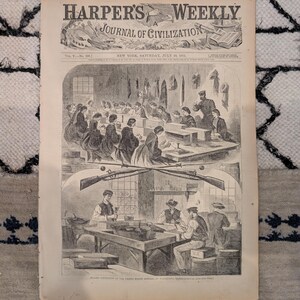
The July 24, 1880 issue of Harper's Weekly is a richly varied summer issue — a political front page that reduces the presidential contest to its essential drama, W.A. Rogers delivering a magnificent full-page scene of summer life at the High Bridge over the Harlem River, a rare and historically significant half-page documentary of muster day on an Indian reservation, two large illustrations of the celebrated Passion Play, Thomas Nast with two cartoons, and a pair of atmospheric summer night illustrations that capture the dreamy beauty of water and moonlight in the high Gilded Age. This is an issue of genuine range and lasting historical interest.
🎨 FULL FRONT PAGE — MISS COLUMBIA AND THE ELECTION
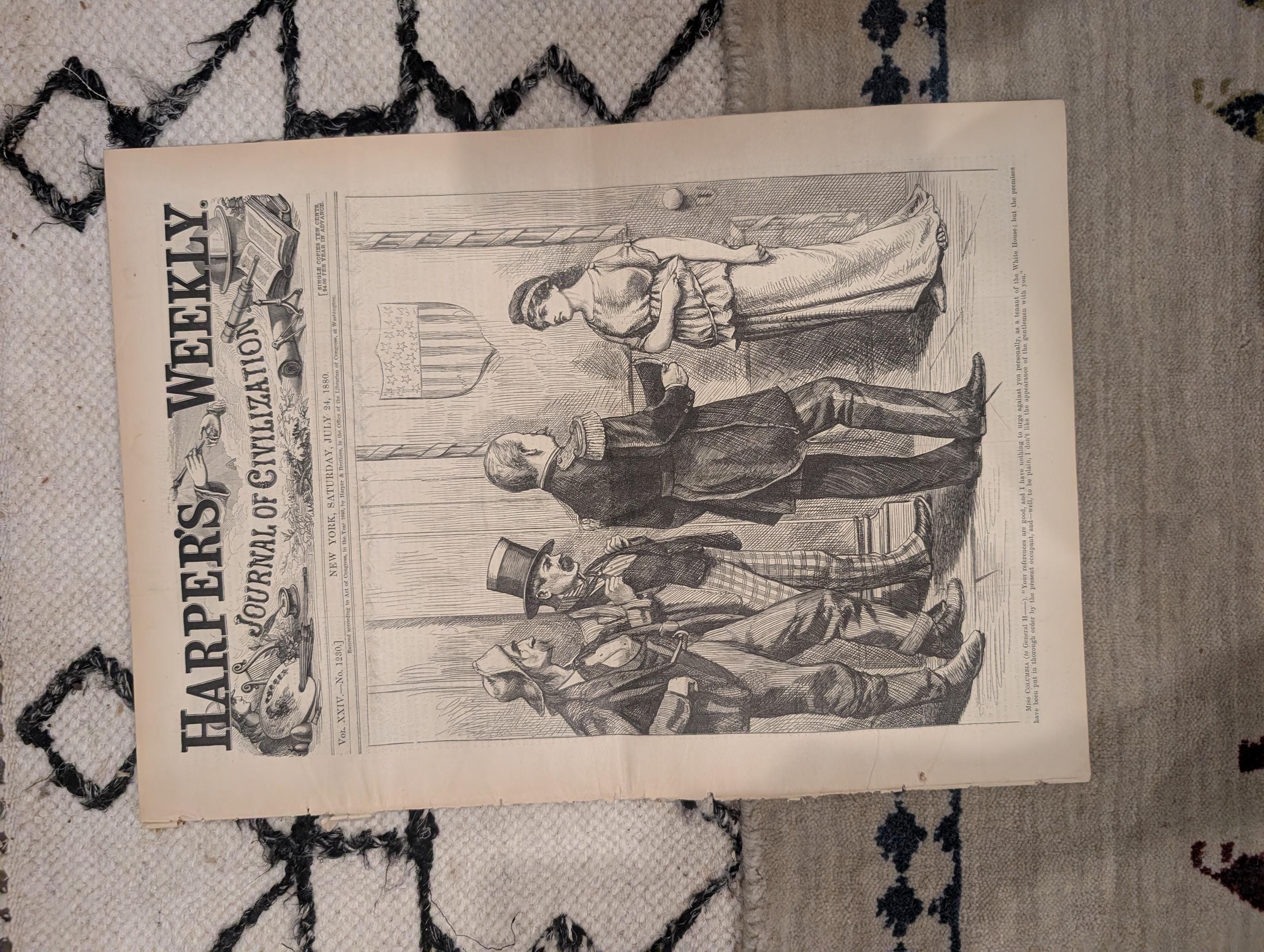
The full front page delivers a political statement framed as an encounter between Miss Columbia — the female personification of the American republic — and the Democratic presidential candidate General Hancock, whose name is rendered with deliberate coyness as "General H___." The use of Miss Columbia as a political interlocutor was a device both Thomas Nast and his Harper's Weekly colleagues deployed with great effect — the republic herself, asking the hard questions that the candidates preferred to avoid. In the summer of 1880 with the Garfield-Hancock contest fully underway, the question of what each candidate would actually do for the republic was the central and most contested issue of the campaign, and this front page engages it with the visual wit and political directness that made Harper's Weekly the essential illustrated newspaper of the election year.
✝️ TWO LARGE ILLUSTRATIONS — "THE PASSION PLAY"
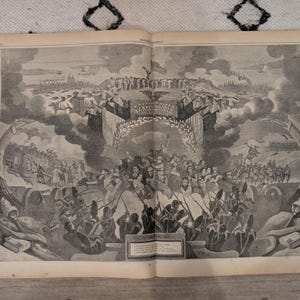
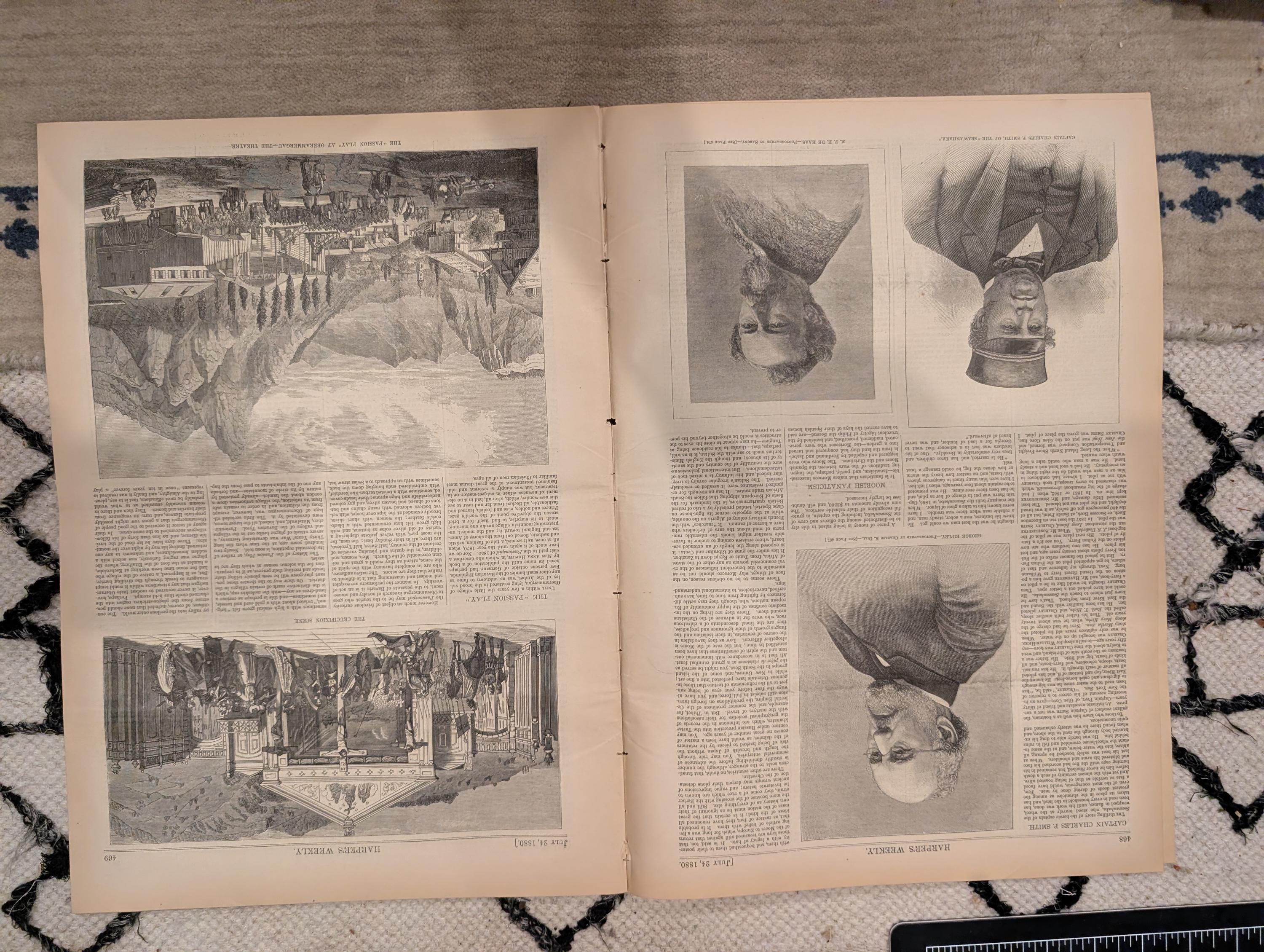
Two large illustrations accompany a feature article on the Passion Play — the celebrated dramatic reenactment of the final days of Christ that had been performed in the Bavarian village of Oberammergau since the 17th century and that was drawing American and British pilgrims in increasing numbers in the 1870s and 1880s. The Oberammergau Passion Play was one of the great cultural pilgrimages of the Victorian age — a ten-hour theatrical event performed by the villagers themselves in an open-air theater in the Alpine foothills, combining elaborate staging, traditional text, and the genuine devotional intensity of a community that had performed the play as a vow to God since surviving the plague of 1633. Harper's Weekly's illustrated feature — with two large illustrations and substantial text — is a primary source document of American engagement with one of the great religious theatrical traditions of European Christianity. A fine piece for collectors of religious history, theatrical history, and Victorian travel culture.
🌉 FULL PAGE — W.A. ROGERS: "AT HIGH BRIDGE, HARLEM RIVER — ALL ABOARD"
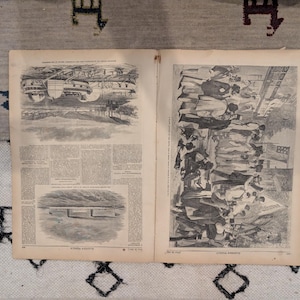
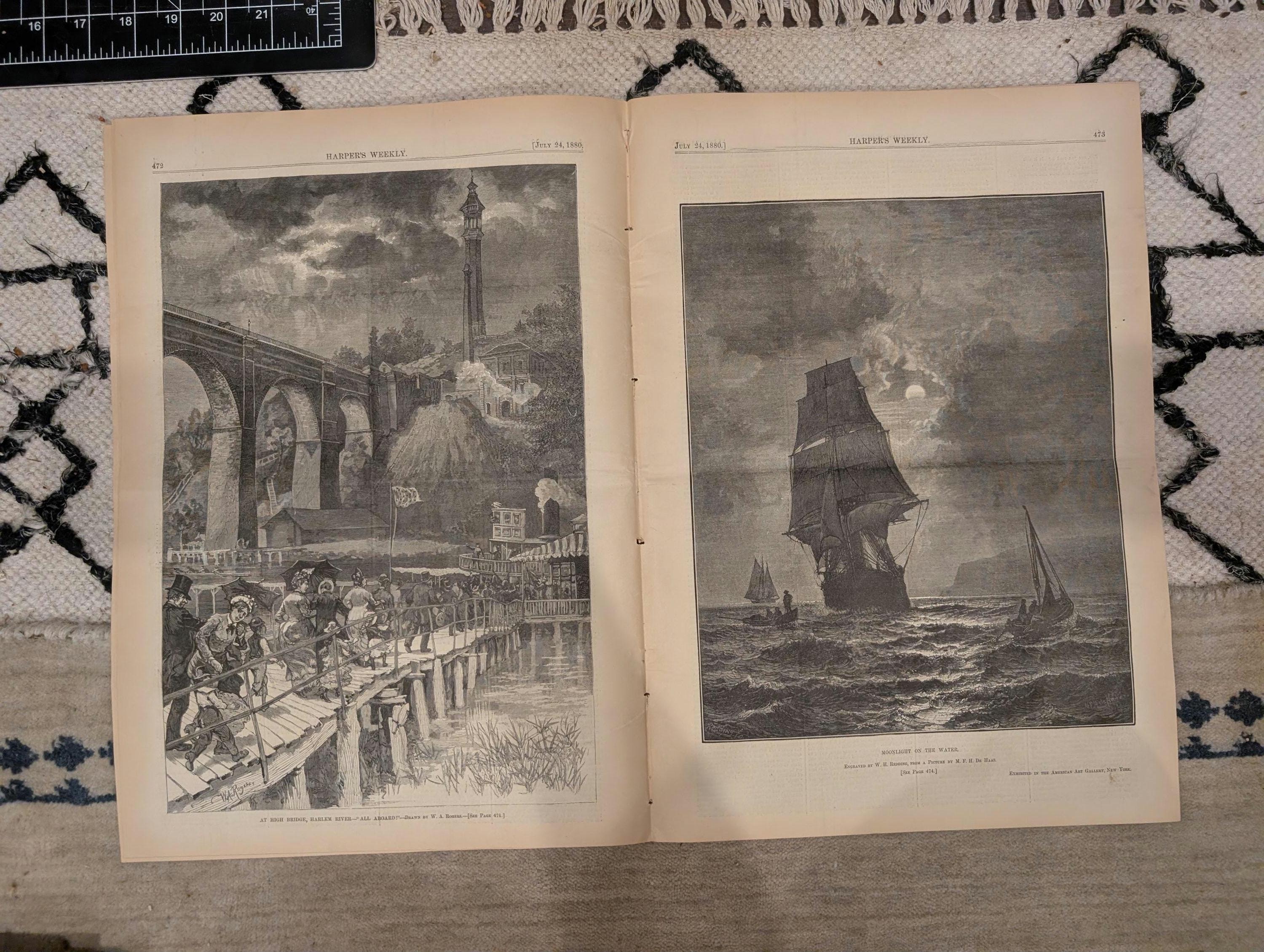
One of the most charming and historically vivid full-page illustrations in this entire run of issues — W.A. Rogers's magnificent scene of summer life at the High Bridge over the Harlem River, the ancient aqueduct bridge that was one of the great landmarks of upper Manhattan and one of the most popular summer excursion destinations for New Yorkers seeking relief from the heat of the crowded downtown streets. W.A. Rogers — William Allen Rogers, one of Harper's Weekly's most gifted and versatile staff artists — brings his characteristic warmth, humor, and keen social observation to this scene of New Yorkers piling onto excursion boats and omnibuses at the river's edge on a summer afternoon. "All Aboard" captures the cheerful chaos of Gilded Age popular leisure — the crowds, the excitement, the democratic mixing of classes that the great public spaces of New York produced — with the documentary immediacy and human affection that Rogers brought to his finest work. A wonderful and fully displayable full page for collectors of W.A. Rogers illustration, New York City history, High Bridge history, and Gilded Age leisure culture.
🌕 FULL PAGE — "MOONLIGHT ON THE WATER"
A full-page atmospheric illustration of water in moonlight — one of the most purely beautiful and contemplative images in the entire summer 1880 run. The moonlight-on-water subject was a staple of Victorian landscape art and illustration, combining the period's passion for atmospheric natural beauty with the technical challenge of rendering light and reflection in the black-and-white medium of woodblock engraving. This full page delivers that challenge with genuine skill — the shimmer of reflected moonlight on dark water, the stillness of a summer night on a river or bay, the world hushed and luminous. A lovely and fully displayable piece for collectors of Victorian landscape illustration and 19th-century American nature art.
🚢 HALF PAGE — "A NIGHT ON THE SOUND"
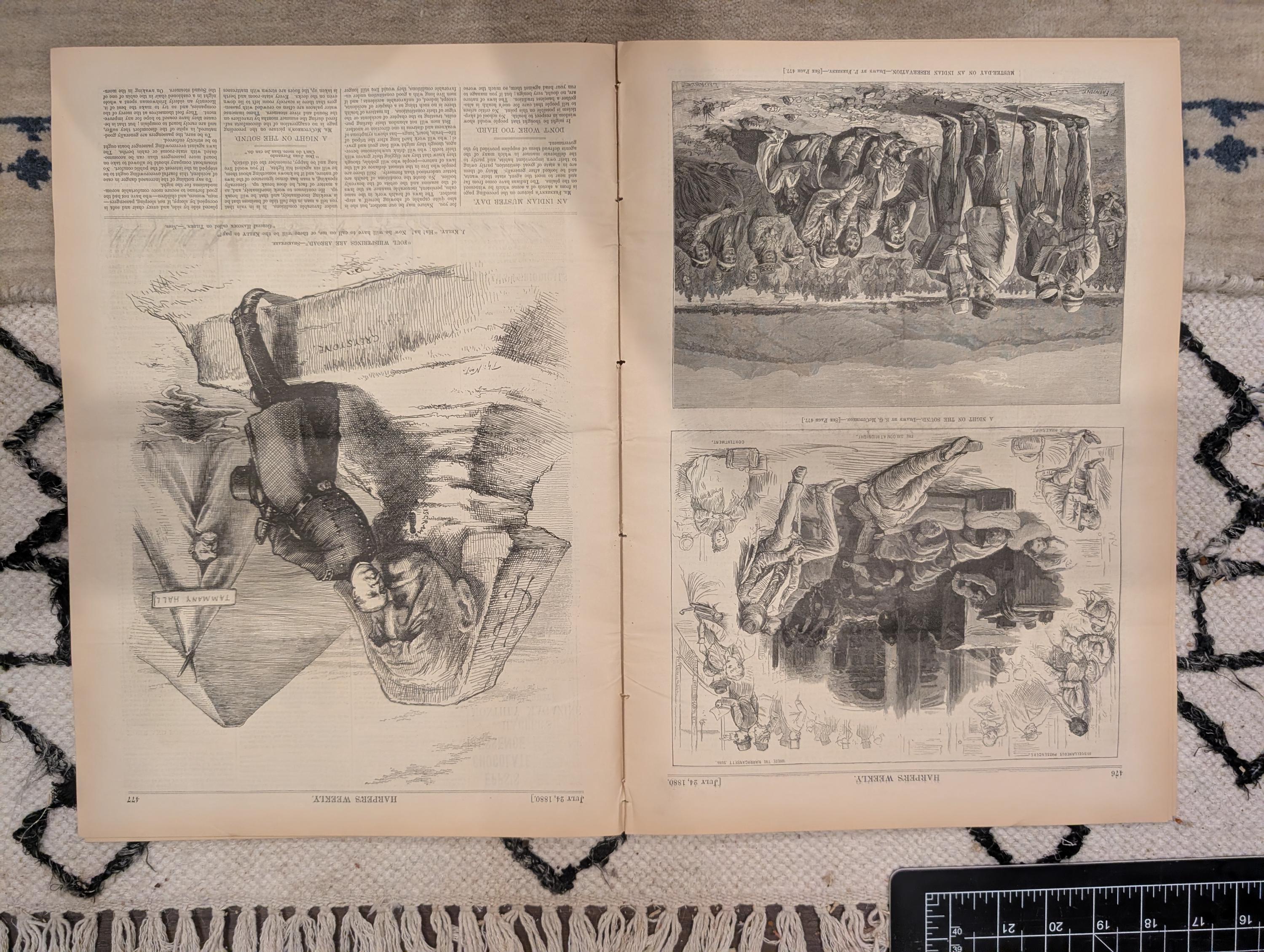
A companion atmospheric half-page of nighttime on Long Island Sound — the great inland sea between Connecticut and Long Island that was in summer the highway of New York's pleasure craft, ferry boats, and overnight steamers. Night on the Sound in 1880 was a particular experience — the lights of the steamers moving through the darkness, the sound of water and engines, the cooling air that made the overnight passage one of the great pleasures of the Gilded Age summer. Coming in an issue that had already documented the Narragansett and Seawanhaka disasters in recent weeks, this atmospheric night scene carries a subtle undercurrent of awareness that the beauty of the Sound at night contained its dangers. A fine piece for collectors of Long Island Sound history and Victorian maritime illustration.
🏹 HALF PAGE — "MUSTER DAY ON AN INDIAN RESERVATION"
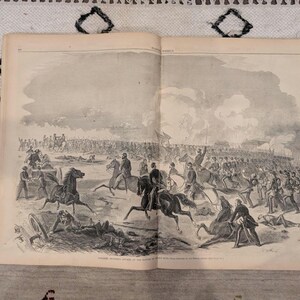
One of the most historically significant and rarely encountered illustration subjects in this entire run — a half-page documentary of muster day on an American Indian reservation, capturing one of the most consequential and contested aspects of federal Indian policy in 1880. Muster day — the periodic assembly and counting of reservation residents by federal Indian agents — was a fundamental instrument of the reservation system that had confined most of the surviving Native American nations of the West to bounded territories under federal supervision in the decades following the Civil War. The muster was both a census and a demonstration of federal control — the agent confirming who was present, who had left, who needed to be accounted for in the distribution of the annuities and rations that the reservation system provided in exchange for the lands that had been taken.
In 1880 the reservation system was at a critical moment — the great Indian wars of the Plains were largely concluded, the buffalo were nearly gone, and the question of what American policy toward Native peoples would look like in the coming generation was being actively debated. The Dawes Act, which would break up tribal land holdings into individual allotments in a devastating assault on Native communal culture, was just seven years away. This half-page illustration documents the reservation system at that pivotal moment — the muster, the assembly, the supervision — with a directness and specificity that makes it a primary source document of exceptional historical importance for collectors of Native American history, federal Indian policy history, and the history of the American West.
🎨 TWO-THIRDS PAGE & BACK PAGE — THOMAS NAST CARTOONS
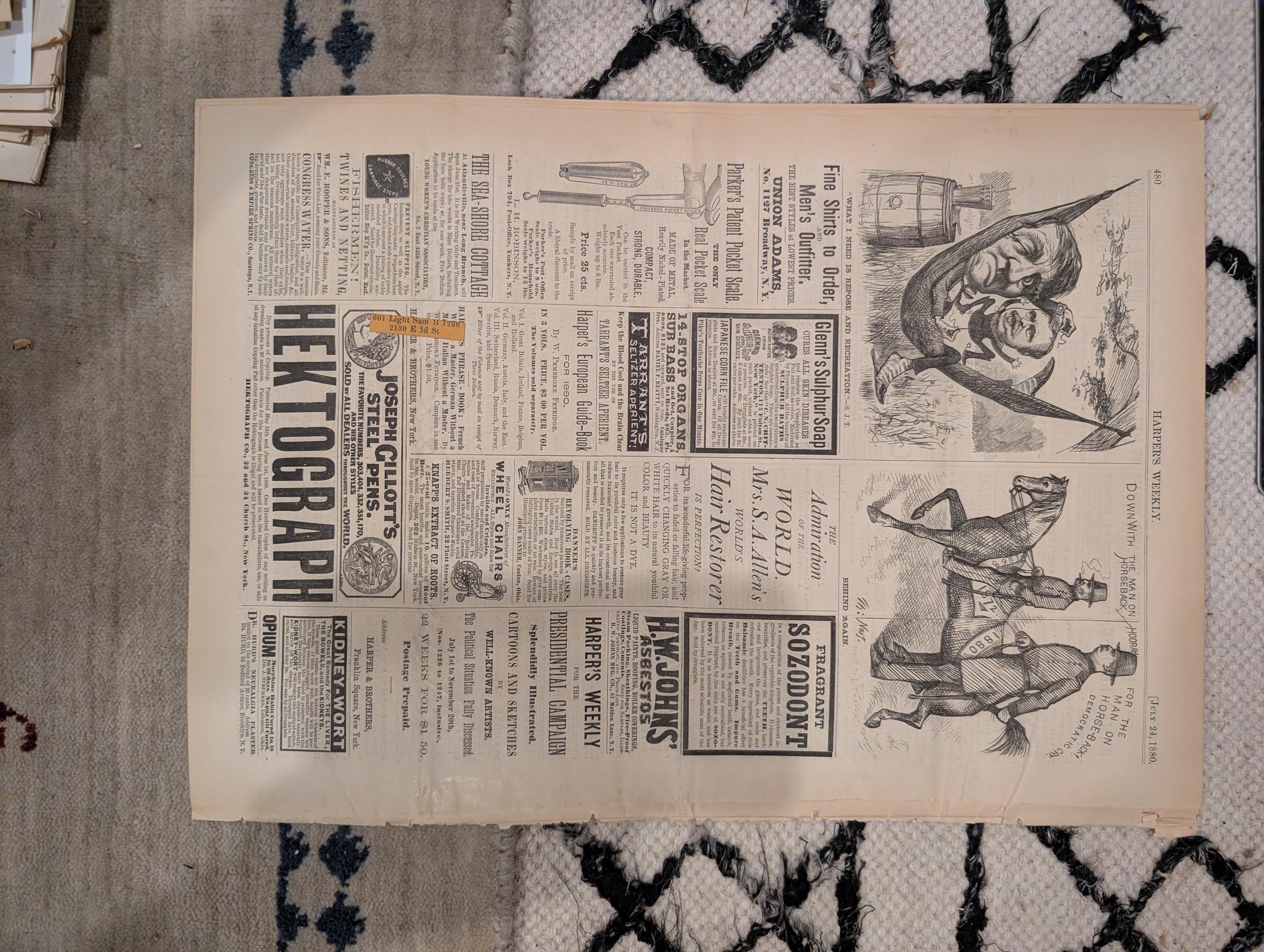
Thomas Nast contributes two cartoons to this issue — a two-thirds page illustration inside and a smaller cartoon on the back page — maintaining his relentless presidential election watch through the heart of the summer campaign. Nast in this period was engaged with the full complexity of the Garfield-Hancock contest, the third-party threats from the Greenback and other movements, and the broader questions of what the republic required of its citizens and its candidates in the fall of 1880. Two Nast cartoons in a single issue is always a significant collector's find, and this pairing represents his sustained engagement with the most consequential political moment of the year.
🔍 CONDITION & TRANSPARENCY 🔍
Completeness: Complete 16-page issue with additional prints and related text.
Authenticity: Guaranteed original printing from July 24, 1880 — not a reproduction.
Condition Report: Presents well for its 145-year age with natural toning to the newsprint consistent with paper of this era. The Miss Columbia front page, the W.A. Rogers High Bridge full page, the Indian reservation muster day half page, the Passion Play illustrations, the moonlight full page, the Sound night half page, and both Thomas Nast cartoons are all clear and displayable. I have photographed every page — please review all images carefully and don't hesitate to ask for additional close-ups of any area before purchasing.
📦 SHIPPING & PRESERVATION 📦
Housed in an acid-free archival folder with Mylar overlay to protect the 145-year-old newsprint
Flat-shipped with heavy-duty reinforcement to ensure safe arrival
Fully tracked for your peace of mind
In July 1880 W.A. Rogers was watching New Yorkers pile onto excursion boats at High Bridge, federal agents were counting Native Americans at reservation muster, the moonlight was on the water, and Thomas Nast was keeping watch over the election from two different angles in the same issue. Harper's Weekly held the whole American summer at once.
🏷️ TAGS
1880 Indian Reservation Muster Day, Native American Reservation History, WA Rogers High Bridge Harlem River, W.A. Rogers Harper's Weekly, Passion Play Oberammergau 1880, Thomas Nast Election Cartoon, Miss Columbia Election 1880, Moonlight on Water Victorian, Night on Long Island Sound, Gilded Age New York Leisure, High Bridge Manhattan History, Federal Indian Policy 1880, Native American Primary Source, Antique Newspaper 1880, Harper's Weekly 1880, Gilded Age Summer Life -
Shipping & Policies
Related Products