Americana
1880 Nast Plumed Knight, Shetland Islands, Milton PA Fire — Harper's Weekly — June 5
$38.88
-
Details📜 ABOUT THIS PIECE OF HISTORY 📜
The June 5, 1880 issue of Harper's Weekly arrives in the immediate aftermath of the Republican national convention — James Garfield has just emerged as the surprise presidential nominee, James Blaine has been defeated again, and Thomas Nast delivers two full-page illustrations that together process that dramatic political moment with his characteristic combination of wit and moral seriousness. Inside, the Shetland Islands open onto one of the most remote and atmospheric corners of the Victorian world, a Pennsylvania town lies in smoking ruins, prize dogs make their second appearance in as many issues, and a full page of undecorated soldiers' graves delivers one of the most quietly devastating Memorial Day meditations in the entire Harper's Weekly archive.
🎨 FULL FRONT PAGE — THOMAS NAST: "THE PLUMED KNIGHT"
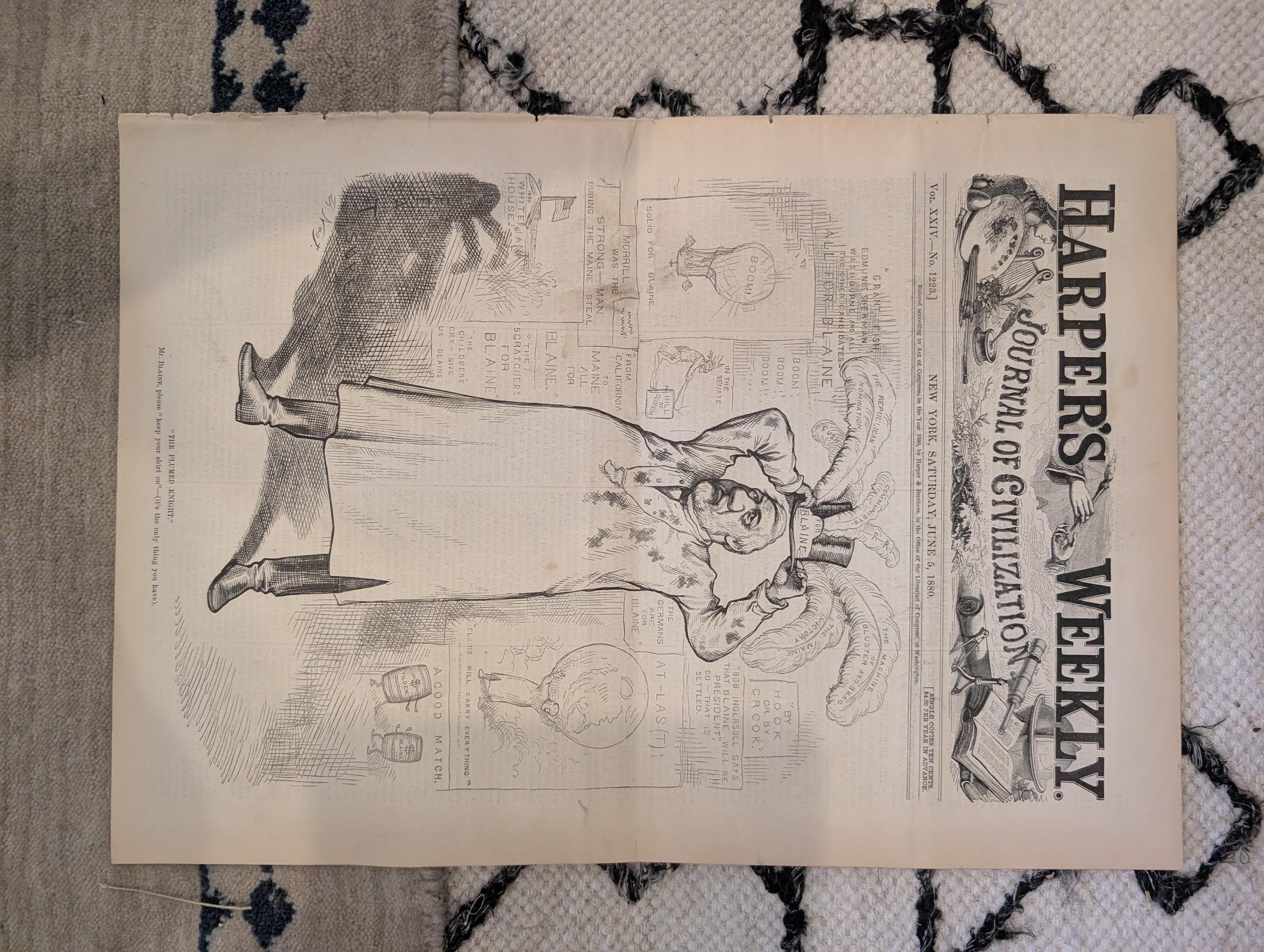
Thomas Nast opens the issue with one of the most historically charged front pages of the entire 1880 run — "The Plumed Knight," the famous sobriquet that had been bestowed on James G. Blaine by the orator Robert Ingersoll at the 1876 Republican convention and had followed him ever since. Blaine had just been defeated for the Republican presidential nomination for the third time — outmaneuvered at the Chicago convention by the dark horse candidacy of James Garfield — and Nast's "Plumed Knight" front page is his reckoning with that defeat and with the man himself. The title drips with irony: the Plumed Knight's plumes were the Mulligan Letters, the railroad corruption, the self-dealing that Nast had spent years documenting. The knight's defeat was, in Nast's view, not a tragedy but a deliverance. A fully displayable and historically essential front page for collectors of Nast's work, Blaine history, and the 1880 Republican convention.
🎨 FULL PAGE — THOMAS NAST: "NOT A BAD IDEA"
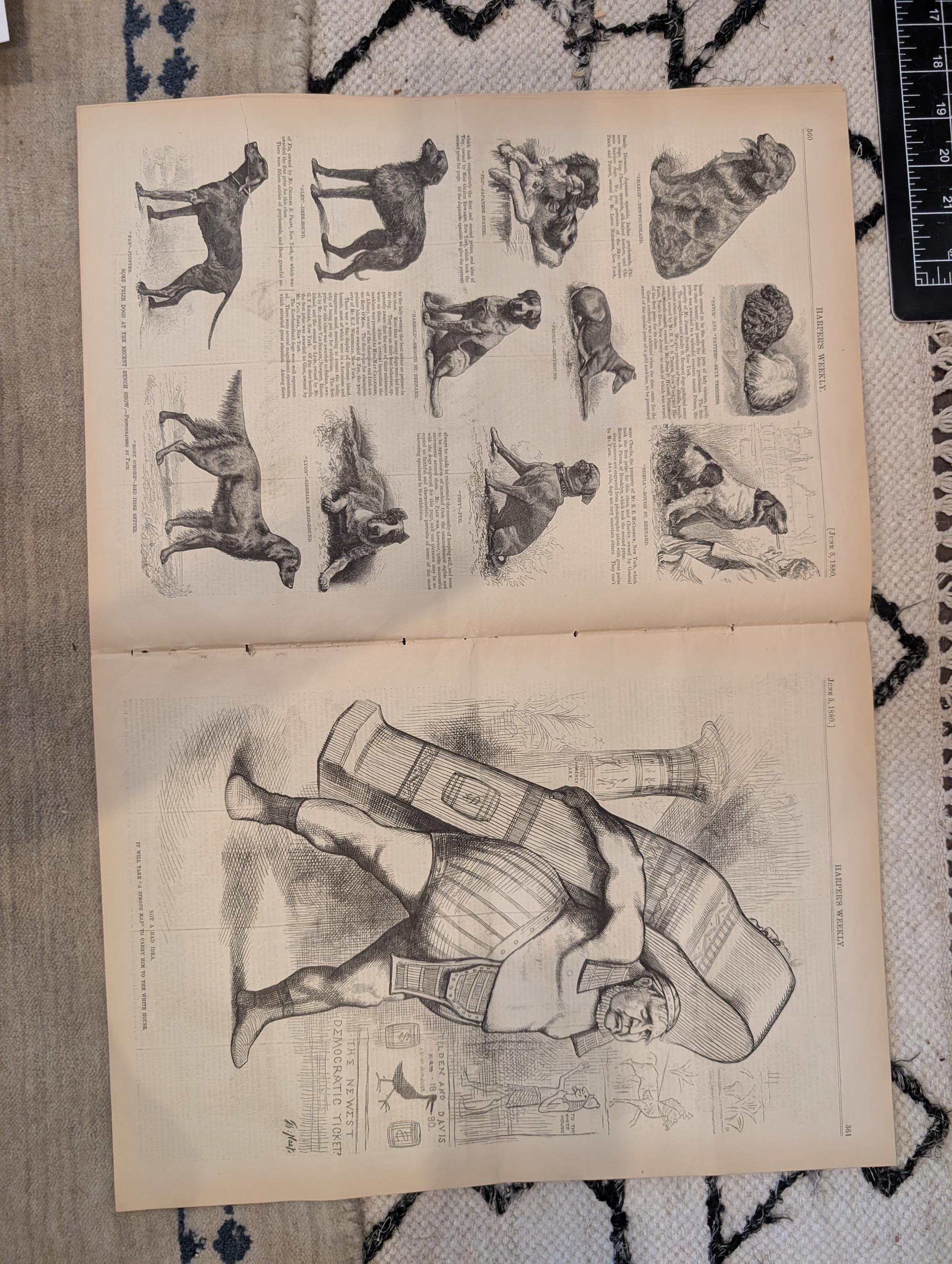
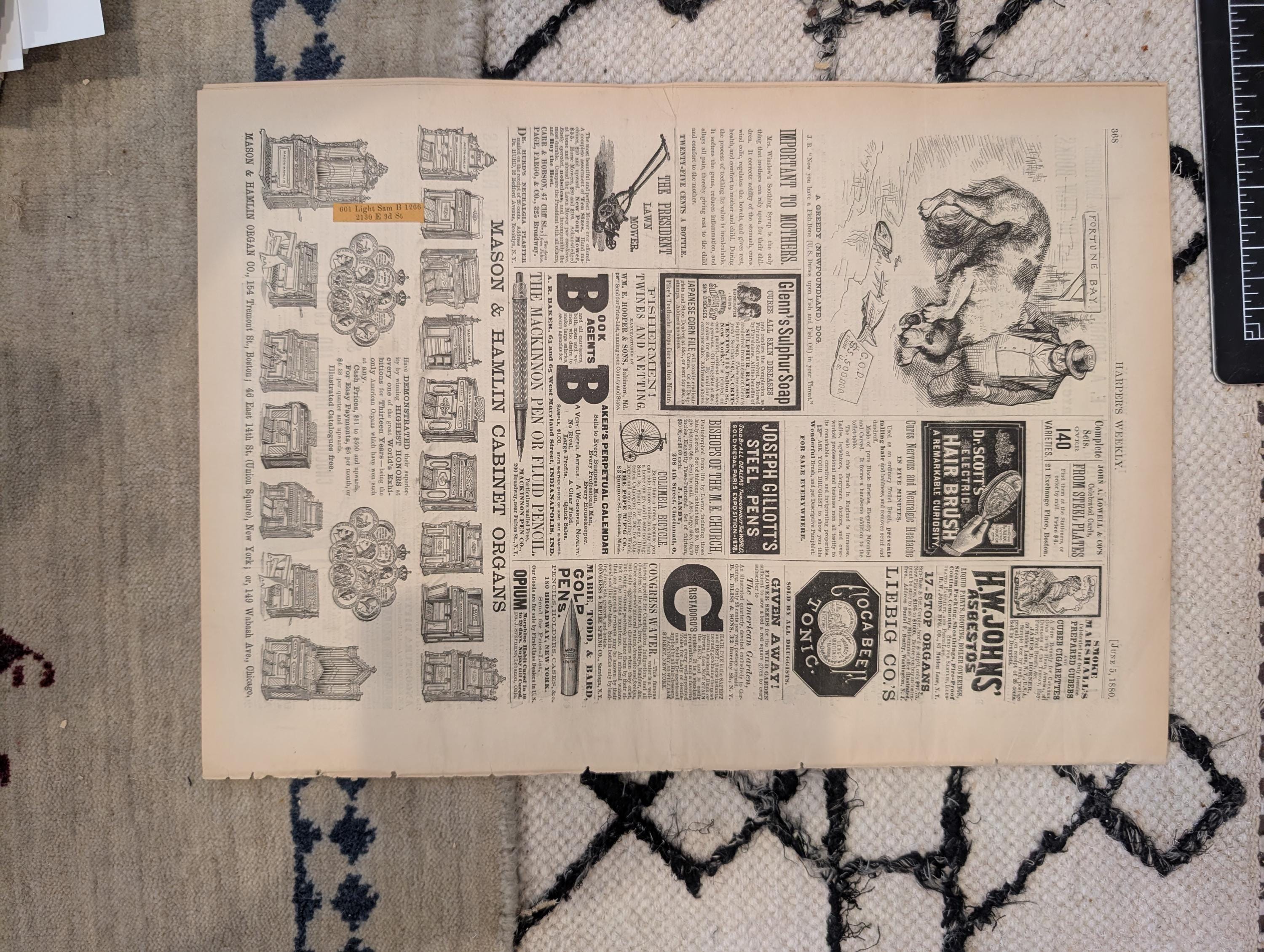
The second Thomas Nast full-page illustration of the issue turns from the defeated Blaine to the post-convention political landscape — "Not a Bad Idea" engaging with the Garfield nomination and the question of what the Republican Party should do next. Garfield was a genuine dark horse — an Ohio congressman and Civil War general who had entered the convention as a supporter of John Sherman and emerged as the nominee on the 36th ballot in one of the most dramatic convention moments of the 19th century. "Not a Bad Idea" is Nast's verdict on that outcome — measured, conditional, watchful, the response of a man who had seen too many political mornings to celebrate too early. Two Thomas Nast full-page illustrations in a single issue is always an exceptional find, and this post-convention pairing — the defeated Plumed Knight and the cautiously endorsed new nominee — makes this one of the most historically specific Nast issues of the entire election year.
⚓ TWO-THIRDS PAGE — "A CRUISE IN TEN TONNER"
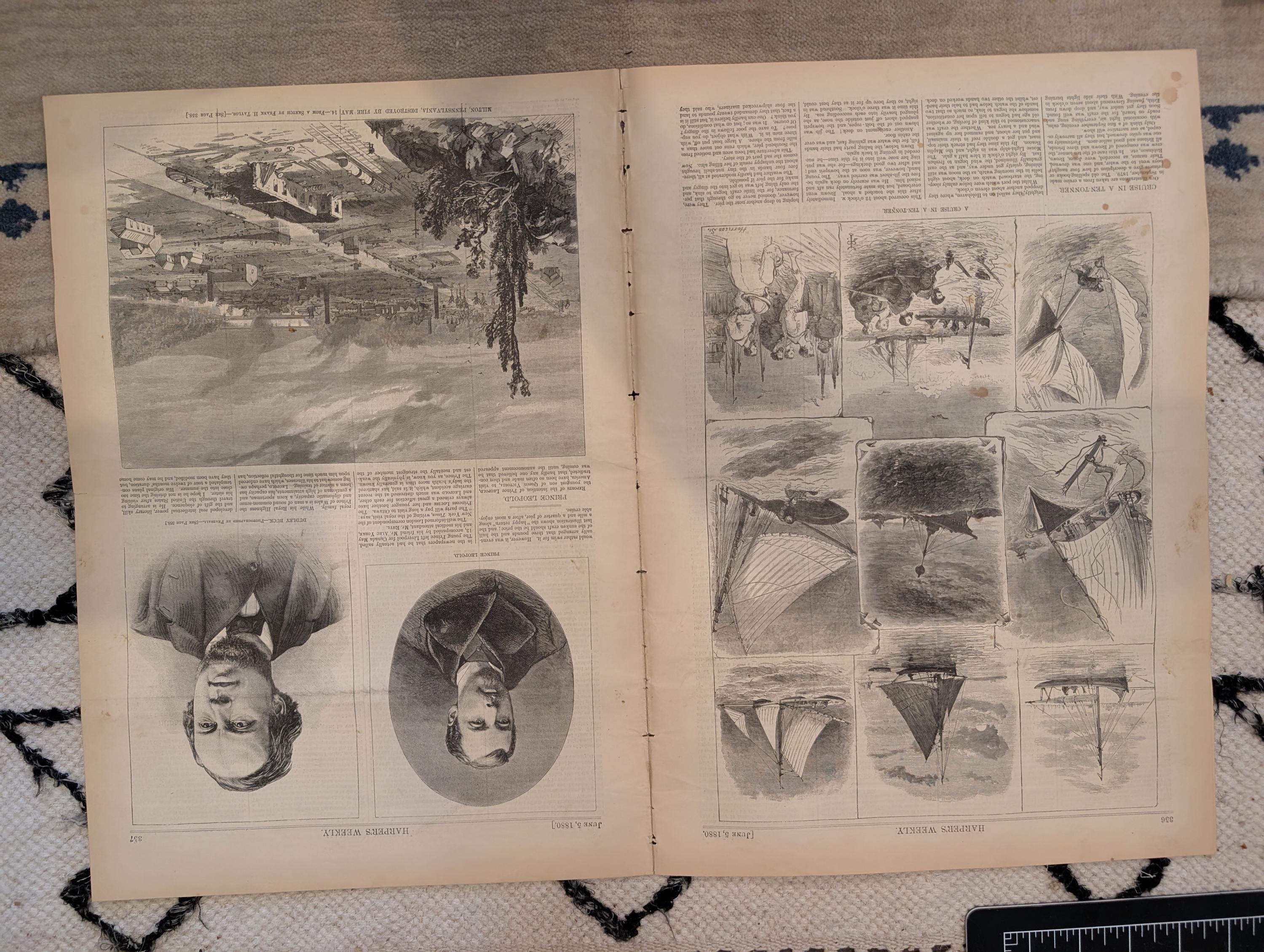
A vividly observed two-thirds page of small-boat sailing — a "ten tonner" working through the kind of waters that tested both seamanship and nerve, rendered with the intimate authenticity of an artist who knew boats from the inside. Small yacht racing and cruising were among the fastest-growing leisure pursuits of the Gilded Age, with the establishment of yacht clubs up and down the Atlantic seaboard and the democratization of sailing beyond the great racing yachts of the very wealthy. "A Cruise in Ten Tonner" captures that more accessible sailing world with warmth and specificity. A wonderful piece for collectors of maritime history and Victorian leisure culture.
🔥 HALF PAGE — "MILTON, PENNSYLVANIA, DESTROYED BY FIRE — MAY 14"
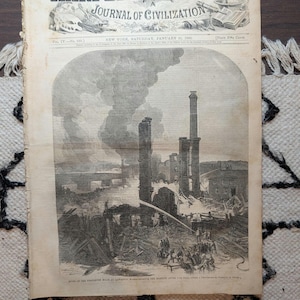
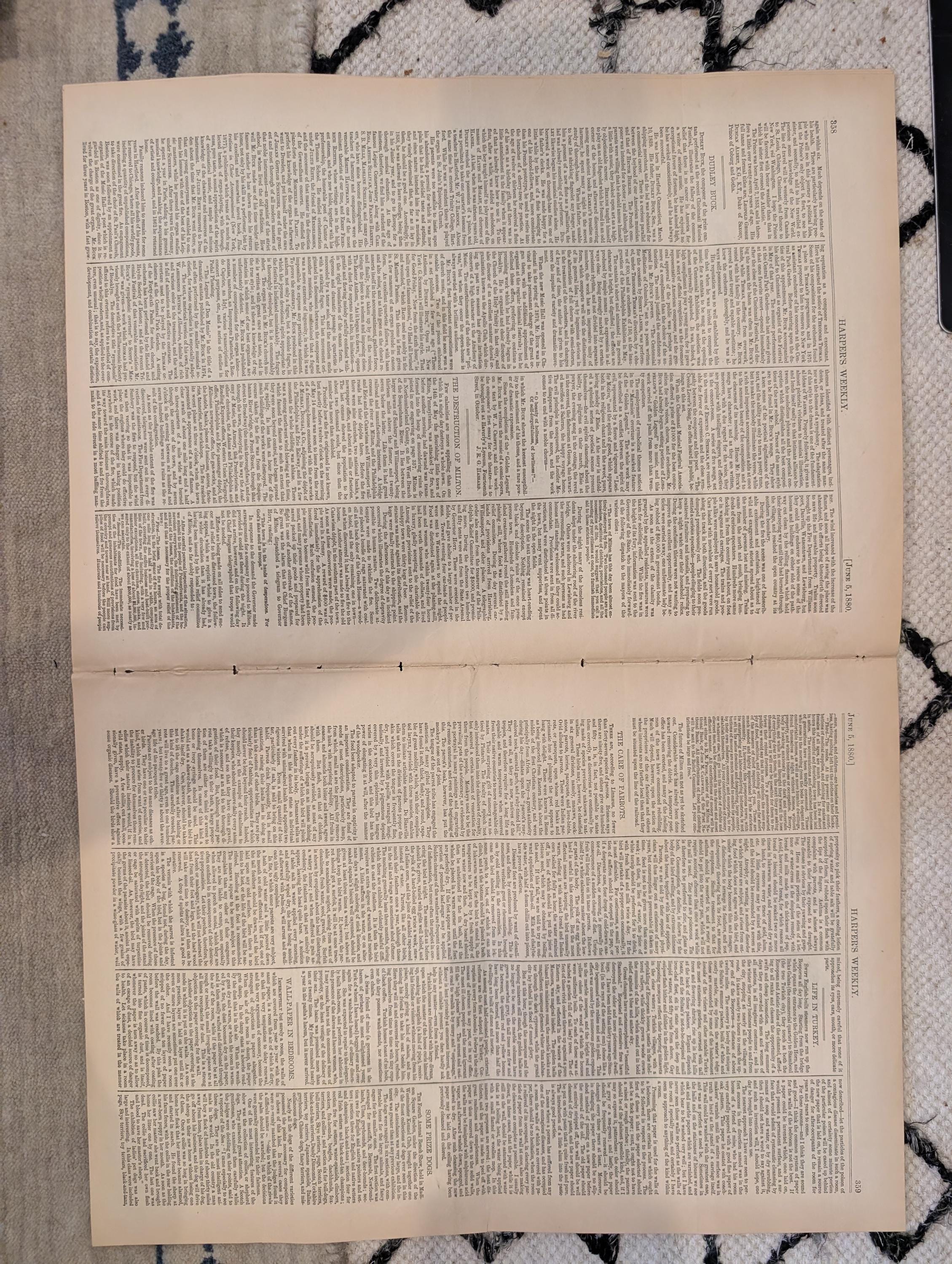
A striking half-page documentary of the fire that had destroyed much of Milton, Pennsylvania — a prosperous small town on the Susquehanna River — in May 1880, just weeks before this issue appeared. Town fires were among the most catastrophic and most common disasters of the 19th century, when wooden construction, inadequate water supplies, and the absence of effective fire departments made any significant fire potentially ruinous. The destruction of Milton — a community built around river commerce and small industry — was a blow that would take years to recover from, and Harper's Weekly's half-page documentation captures the scale of the loss at the moment of raw aftermath. A primary source document for collectors of Pennsylvania history and the history of American town fires.
🏅 FULL PAGE — "SOME PRIZE DOGS AT THE RECENT BENCH SHOW"
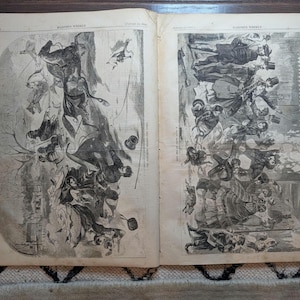
A handsome full page of prize dog portraits from the most recent bench show — the Gilded Age dog fancy at its finest, the best specimens of their breeds assembled for Harper's Weekly's artist in the aftermath of competition. Following the magnificent Dog Congress centerfold of two weeks prior, this second dog show full page confirms that 1880 was something of a golden year for canine illustration in Harper's Weekly — and that the paper's readers had a genuine and enthusiastic appetite for the subject. A delightful and fully displayable full page for collectors of dog history, Victorian animal culture, and the history of the American dog show.
🪖 FULL PAGE — "THE UNDECORATED GRAVE"
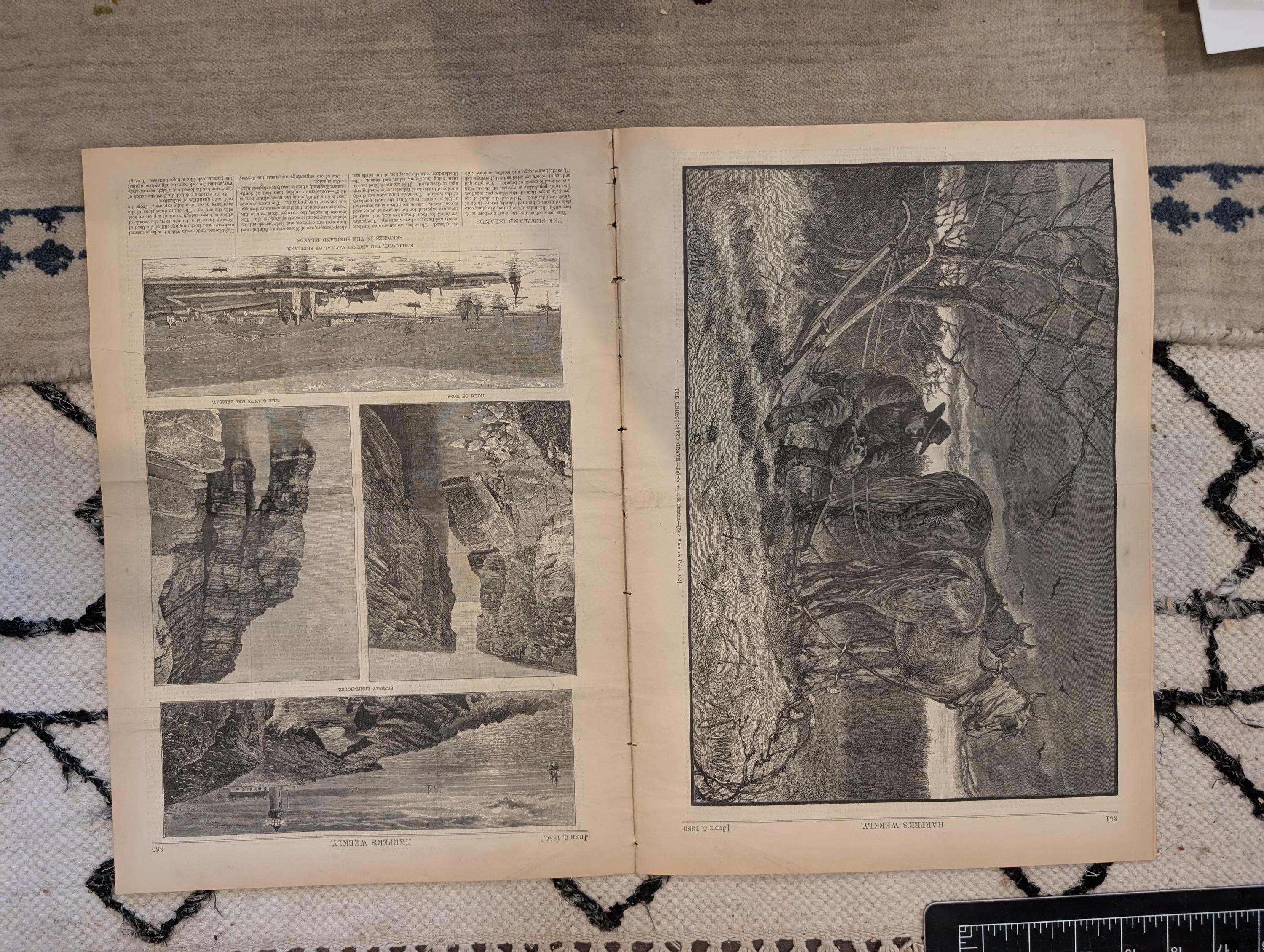
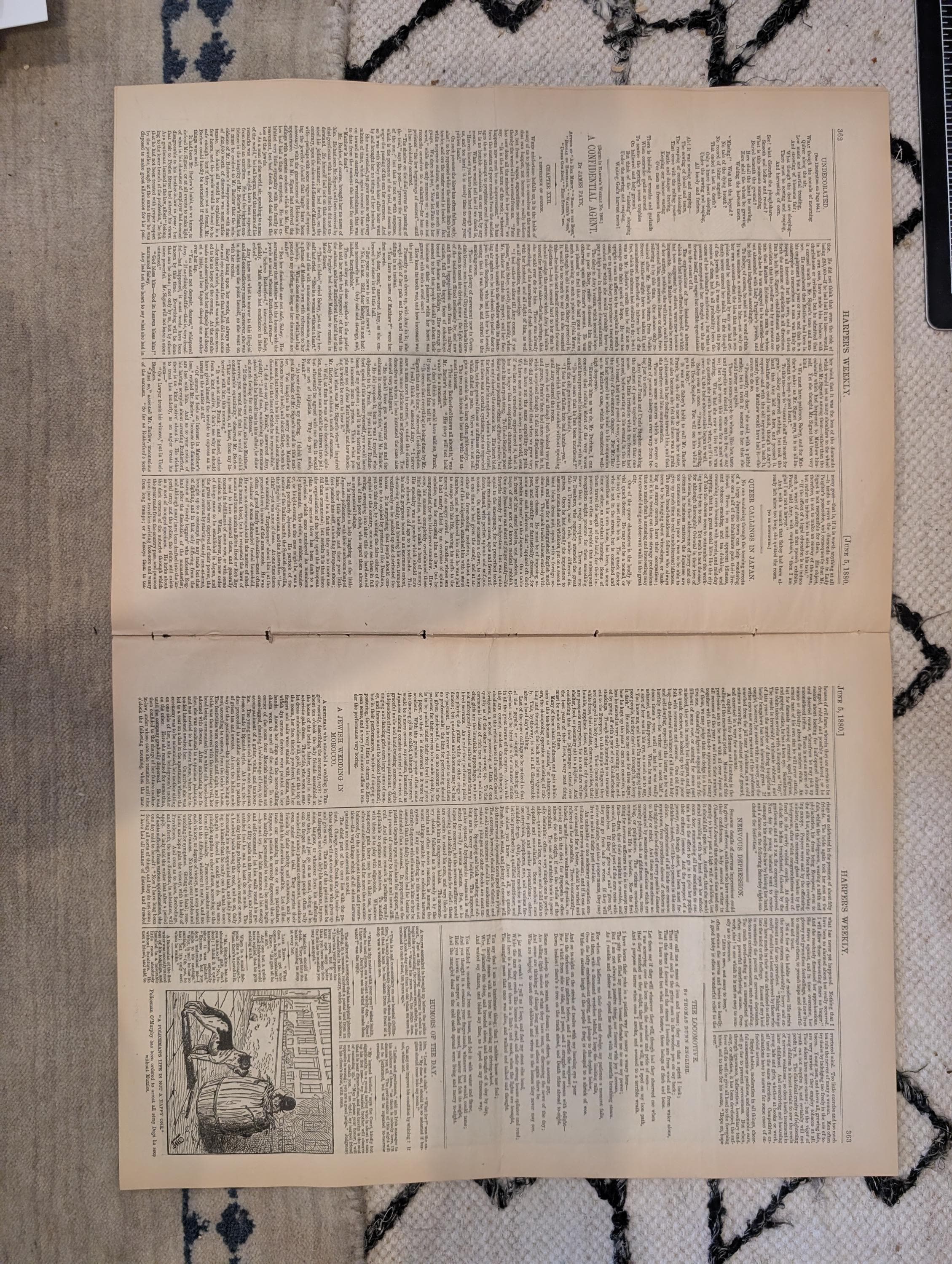
One of the most quietly powerful and historically significant illustrations in this issue — a full page appearing in the immediate aftermath of Memorial Day 1880, documenting the graves of soldiers that had been left undecorated while others nearby were covered in flowers. The undecorated grave was a pointed subject in 1880, fifteen years after the end of the Civil War: whose graves were being remembered, whose were being forgotten, and what that forgetting said about the national memory of the war and its causes. In the post-Reconstruction South, the graves of Black Union soldiers and their allies were particularly likely to go undecorated — while the Lost Cause movement was actively celebrating Confederate memory with flowers, monuments, and organized commemoration. Harper's Weekly's full-page meditation on the undecorated grave carries all of that weight without stating it directly — a restrained and deeply moving piece of visual journalism. An essential document for collectors of Civil War memory history, Memorial Day history, and the history of Reconstruction's contested legacy.
🏝️ TWO-THIRDS PAGE — "SKETCHES IN THE SHETLAND ISLANDS" — FOUR ILLUSTRATIONS
A wonderful and atmospheric two-thirds page of four illustrations from the Shetland Islands — the remote archipelago at the northern tip of Britain, closer to Bergen than to London, where the landscape is treeless and windswept, the sea is always present, and the traditions of Norse and Scottish culture have blended over centuries into something entirely their own. The Shetland Islands in 1880 were known to American readers primarily through the wool — Shetland wool, impossibly fine and warm, was one of the most prized textile materials in the world — and through the ponies, those small, sturdy, magnificently maned creatures that had become one of the great symbols of the islands. These four sketches — the landscape, the people, the fishing boats, the stone villages — constitute a vivid documentary portrait of one of the most remote corners of the Victorian world. A wonderful piece for collectors of Scottish history, Shetland Islands history, and Victorian travel illustration.
👑 TWO QUARTER-PAGE PORTRAITS — PRINCE LEOPOLD & DUDLEY BUCK
Two quarter-page portraits round out the issue's visual content. Prince Leopold — the youngest son of Queen Victoria, a hemophiliac whose fragile health had made his mother's court constantly anxious on his behalf and who was in 1880 being eased into a more active public role. And Dudley Buck — the American organist and composer whose sacred music and organ works had made him one of the most celebrated American composers of the Gilded Age, a figure at the center of the flourishing American church music tradition. An interesting pairing of royalty and artistry for collectors of Victorian portraiture and American musical history.
🔍 CONDITION & TRANSPARENCY 🔍
Completeness: Complete 16-page issue.
Authenticity: Guaranteed original printing from June 5, 1880 — not a reproduction.
Condition Report: Presents well for its 145-year age with natural toning to the newsprint consistent with paper of this era. The Thomas Nast Plumed Knight front page, the second Nast full page, the Shetland Islands four-scene illustration, the undecorated grave full page, the prize dogs full page, the Milton fire half page, and the sailing two-thirds page are all clear and displayable. I have photographed every page — please review all images carefully and don't hesitate to ask for additional close-ups of any area before purchasing.
📦 SHIPPING & PRESERVATION 📦
Housed in an acid-free archival folder with Mylar overlay to protect the 145-year-old newsprint
Flat-shipped with heavy-duty reinforcement to ensure safe arrival
Fully tracked for your peace of mind
In June 1880 the Plumed Knight had just been defeated for the third time, a Pennsylvania town was in ashes, soldiers' graves were going undecorated, and Harper's Weekly sent an artist to the Shetland Islands to sketch the edge of the world. What a paper.
🏷️ TAGS
1880 Thomas Nast Plumed Knight Blaine, James Blaine Republican Convention 1880, Shetland Islands Victorian Illustration, Milton Pennsylvania Fire 1880, Undecorated Grave Memorial Day, Civil War Memory Primary Source, Prize Dogs Bench Show 1880, Ten Tonner Sailing Victorian, Prince Leopold Victoria Son Portrait, Dudley Buck American Composer, Garfield Nomination Republican 1880, Gilded Age Election History, Antique Newspaper 1880, Harper's Weekly 1880, Blaine Nast Political Cartoon, Civil War Memorial History -
Shipping & Policies
Related Products