Americana
1880 Paterson NJ Labor Riot, Gladstone, Dog Show, Hatfield House — Harper's Weekly — May 22
$38.88
-
Details📜 ABOUT THIS PIECE OF HISTORY 📜
The May 22, 1880 issue of Harper's Weekly is a document of extraordinary range — from the most powerful elected leader in the world on the front page to a riot in the silk mills of New Jersey inside, from a double-page centerfold of dog show candidates that is one of the most charming illustrations in the entire 1880 run to the ancestral seat of the Marquis of Salisbury in four views of aristocratic grandeur. Thomas Nast weighs in on the great labor-capital debate of the age, a Virginia Sunday morning scene offers a quiet pastoral counterpoint to the Paterson violence, and Robert Raikes — founder of the Sunday school movement — is commemorated at the centenary of his great democratic educational project. This is an issue of surprising emotional range and lasting historical significance.
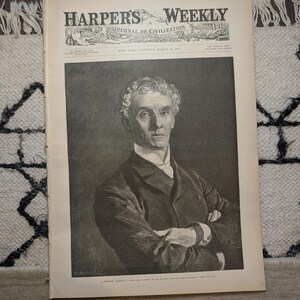
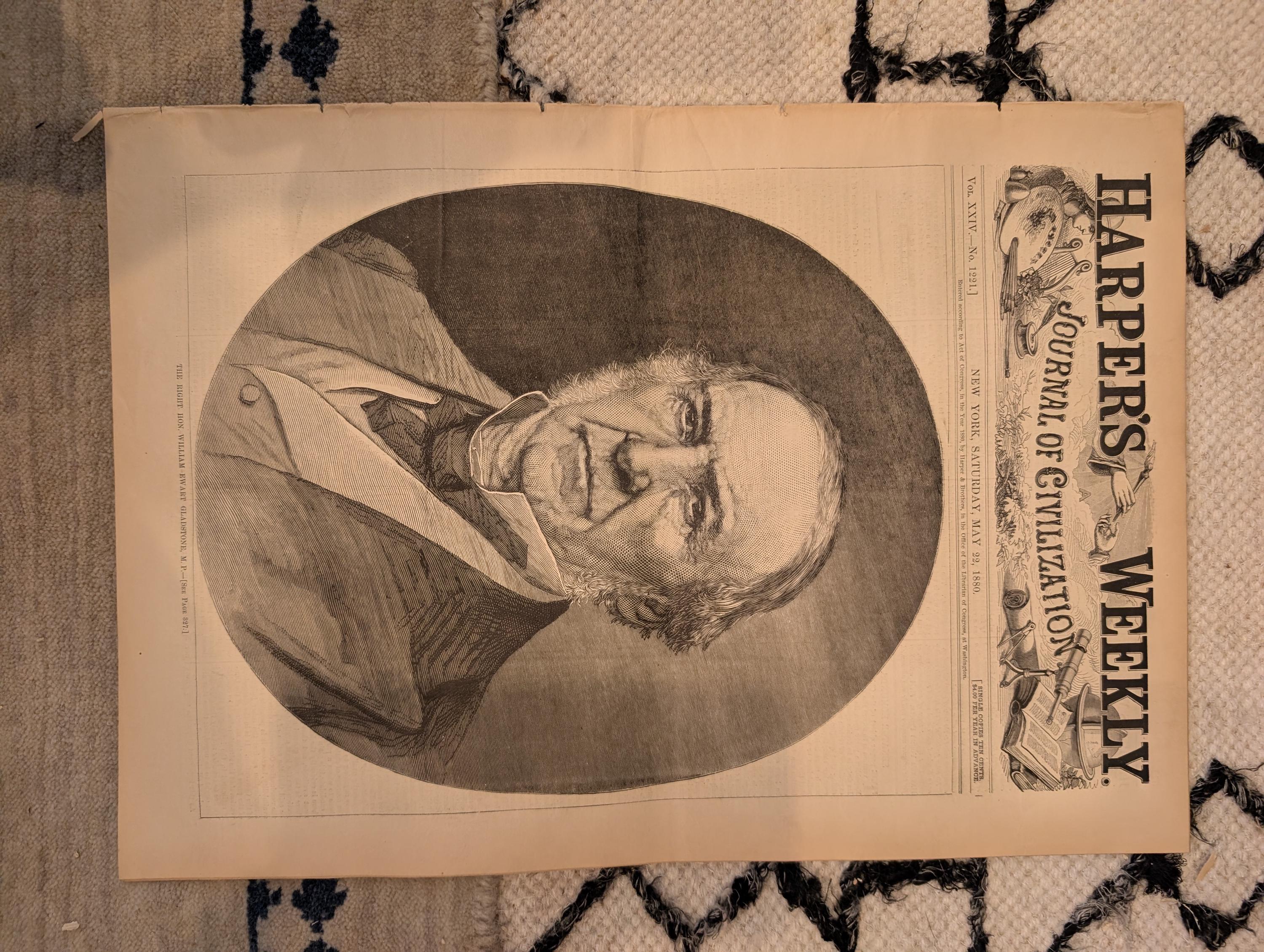
🎩 FULL FRONT PAGE — PORTRAIT OF WILLIAM EWART GLADSTONE, M.P.
The full front page is given over to one of the most consequential political figures of the 19th century — William Ewart Gladstone, just returned to power as British Prime Minister following his landslide Liberal victory in the April 1880 general election. Gladstone at 70 was at the absolute summit of his political authority — the Grand Old Man of British liberalism, the man who had disestablished the Irish Church, reformed the Irish land system, and extended the franchise, now returned to power on the strength of his Midlothian Campaign, one of the first great examples of modern political mass communication. His return to Downing Street was celebrated by liberals across the English-speaking world and dreaded by conservatives in equal measure. That Harper's Weekly gives him the entire front page — full portrait, no cartoon, no competition — reflects the genuine reverence in which the American liberal press held him. A fully displayable and historically significant front page for collectors of Victorian British political history and the history of liberalism.
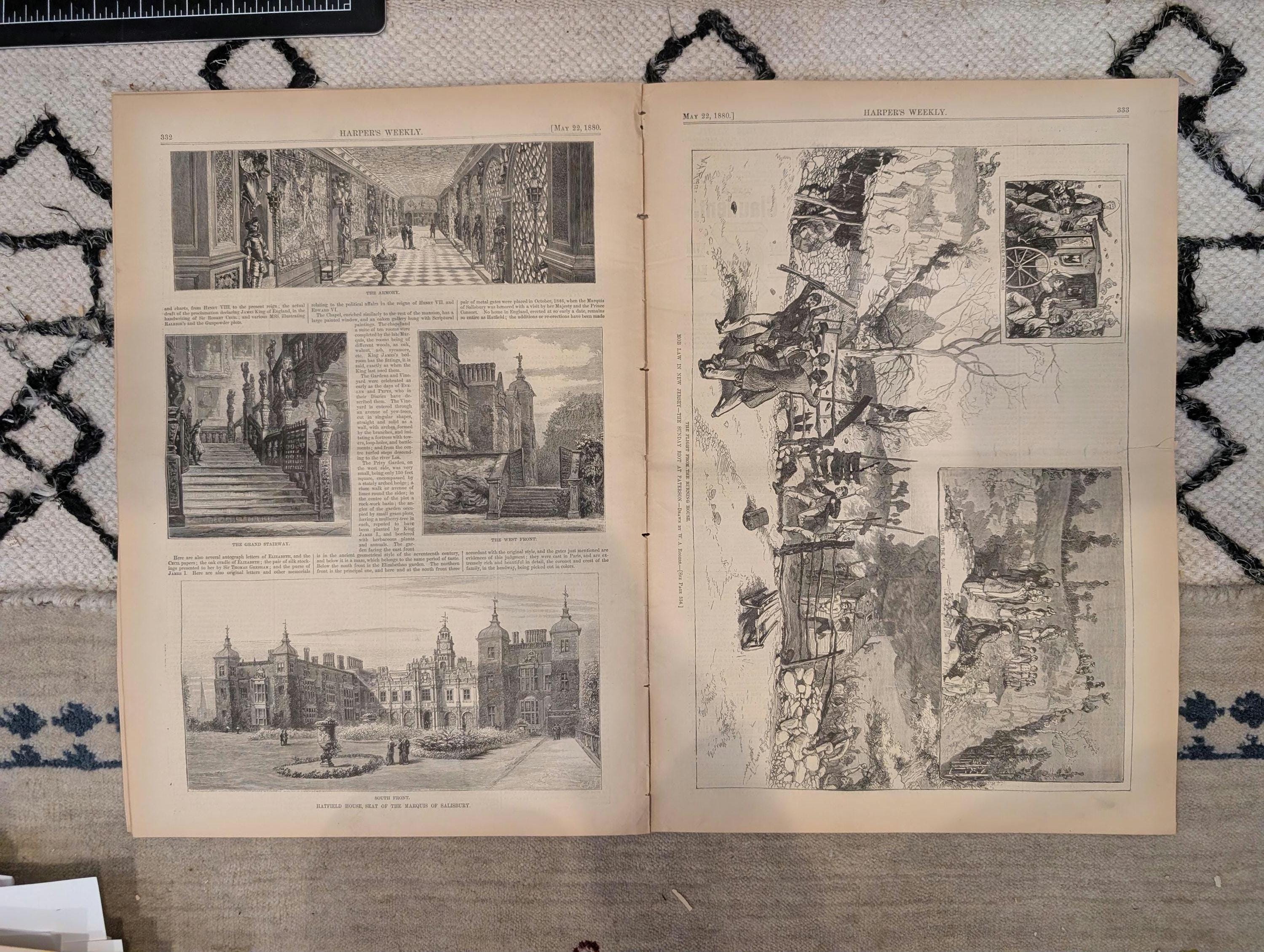
⚡ FULL PAGE — "MOB LAW IN NEW JERSEY — THE SUNDAY RIOT AT PATERSON"
One of the most historically significant and viscerally immediate illustrations in this issue — a full-page documentary of the labor riot that had erupted in Paterson, New Jersey on a Sunday in May 1880, when the city's silk workers and their supporters clashed with police and militia in the streets of America's great textile manufacturing center. Paterson in 1880 was the industrial heart of American silk production — the "Silk City," its mills and factories drawing immigrant workers from across Europe to operate the looms and machinery of one of the most profitable industries in the country. The workers who ran those looms were among the most militant and most organized in America, and the conditions of their labor — long hours, low wages, dangerous machinery, child labor — were among the most contested in the Gilded Age economy.
The Sunday riot depicted here was part of a broader pattern of labor unrest that was building toward the great strike wave of the 1880s — the decade that would produce the Haymarket affair, the Knights of Labor at its peak, and the first serious national reckoning with the question of what industrial capitalism owed to the people who made it run. Harper's Weekly's full-page documentation of the Paterson riot — the crowds, the confrontations, the violence, the response of the authorities — is a primary source document of exceptional importance for collectors of labor history, New Jersey history, the history of American textile manufacturing, and the broader history of the Gilded Age labor movement.
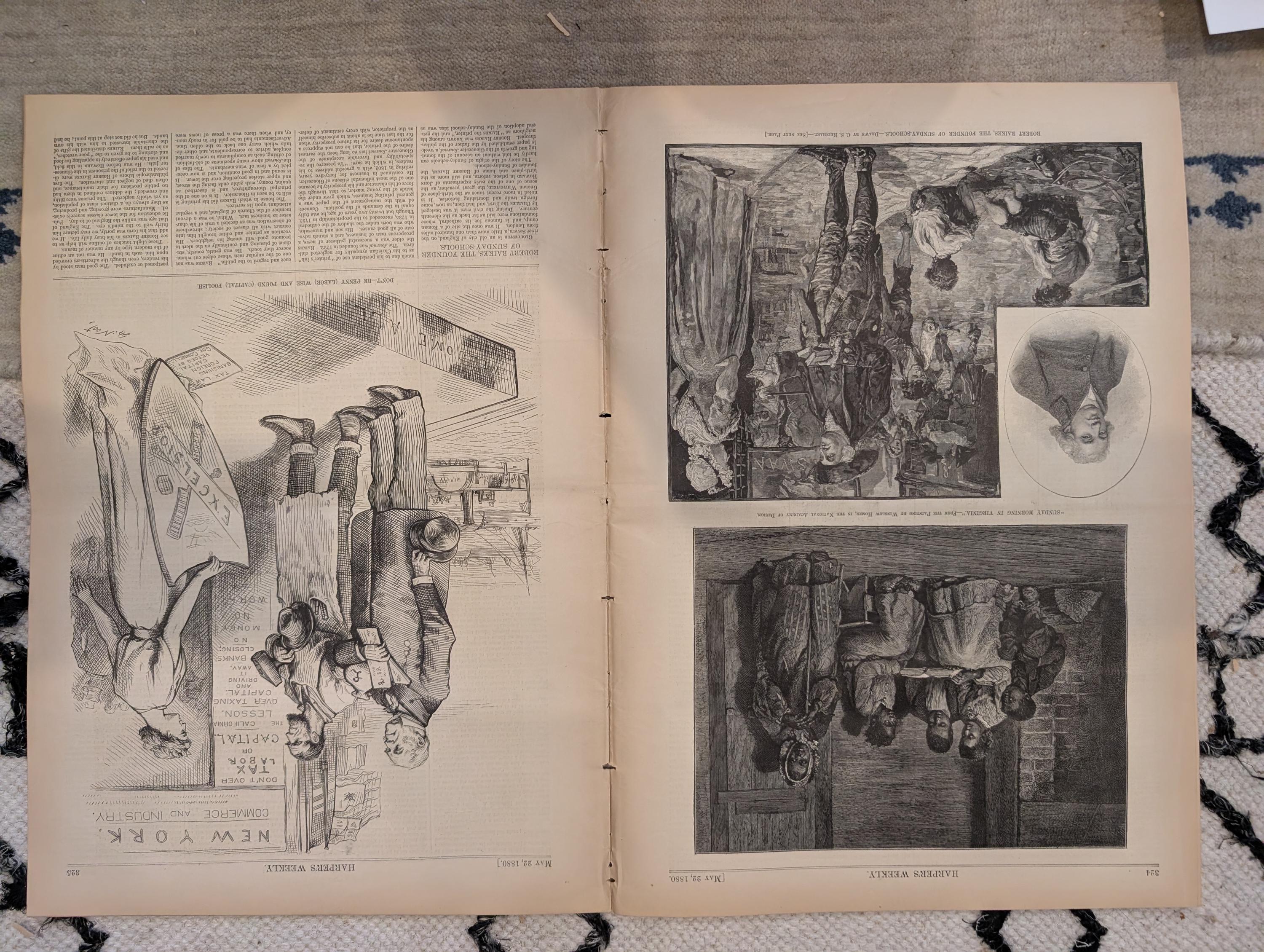
🎨 TWO-THIRDS PAGE — THOMAS NAST: "DON'T — BE PENNY (LABOR) WISER AND POUND (CAPITAL) FOOLISH"
Thomas Nast contributes a two-thirds page illustration that is one of his most direct engagements with the labor-capital question of the age — "Don't Be Penny (Labor) Wiser and Pound (Capital) Foolish" playing on the old proverb to make an argument about the self-defeating economics of exploiting workers. The timing — in an issue that also carries the full-page Paterson riot documentary — gives Nast's cartoon an immediate and specific resonance: the pennies saved by paying silk workers starvation wages were producing the pounds of damage represented by strikes, riots, and the destruction of social peace. Nast's sympathy with the dignity of labor was consistent throughout his career, and this two-thirds page is one of his clearest statements of that position. A significant piece for collectors of Nast's work and the history of the labor movement in American illustrated journalism.
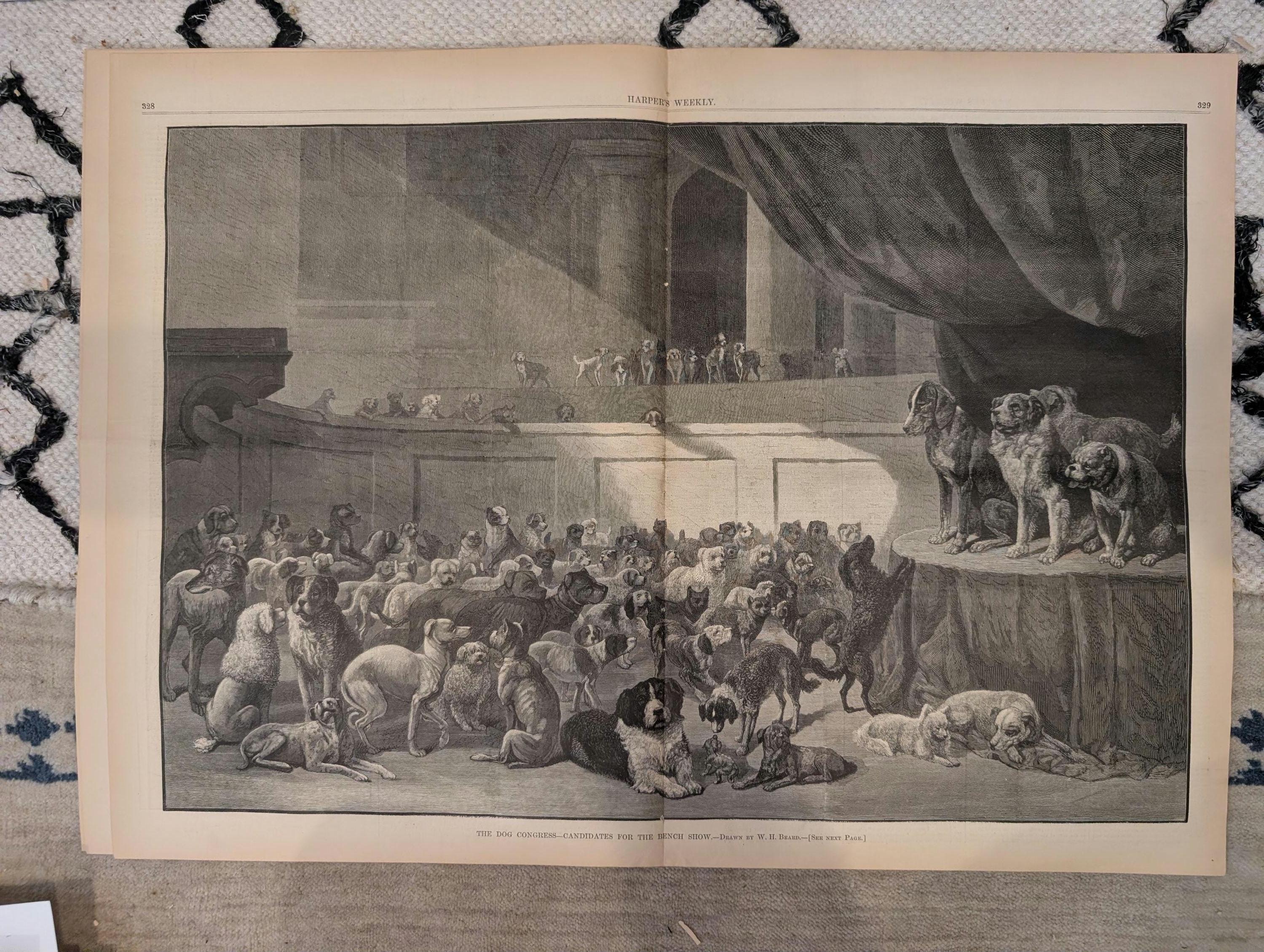
🐕 DOUBLE-PAGE CENTERFOLD — "THE DOG CONGRESS — CANDIDATES FOR THE BENCH SHOW"
One of the most delightful and purely enjoyable double-page centerfolds in the entire Harper's Weekly run for 1880 — a magnificent full spread of dog show candidates, the finest specimens of the Gilded Age fancy dog world assembled in their breed glory for Harper's Weekly's artist and, through him, for the nation. The dog show — institutionalized in America with the founding of the Westminster Kennel Club in 1877 — was one of the great new social institutions of the Gilded Age, combining the upper-class passion for purebred animals with the Victorian mania for classification and competition. "The Dog Congress" presents its canine candidates with the seriousness and affection that the subject deserves — terriers and setters, hounds and spaniels, each breed rendered with the documentary precision of a natural history illustration and the warmth of an artist who clearly enjoyed his assignment. A magnificent and fully displayable centerfold that never fails to charm whoever sees it.
🏰 FULL PAGE — "HATFIELD HOUSE, SEAT OF THE MARQUIS OF SALISBURY" — FOUR VIEWS
A handsome full page of four views of Hatfield House — the great Jacobean mansion in Hertfordshire that had been the ancestral seat of the Cecil family since the early 17th century and was in 1880 the home of Robert Cecil, the third Marquess of Salisbury, who was about to emerge as one of the dominant figures of late Victorian British conservatism. Salisbury — Foreign Secretary in Disraeli's recently defeated government — would serve three times as Prime Minister and become the last British leader to also serve as his own Foreign Secretary, one of the great statesmen of the Victorian age. His ancestral home — with its great hall, its formal gardens, its centuries of political history — is shown here in four views that constitute a fine piece of Victorian architectural illustration and English country house history.
☀️ HALF PAGE — "SUNDAY MORNING IN VIRGINIA"
A quietly beautiful half-page pastoral scene of a Sunday morning in Virginia — the church bells, the road, the rural landscape of the post-Reconstruction South rendered with the warm observation that Harper's Weekly's artists brought to their best genre work. In the context of an issue that also carries a full page of labor riot violence in New Jersey, this Virginia Sunday morning offers a moment of genuine pastoral stillness — though the Virginia of 1880, three years after the end of Reconstruction, carried its own weight of history in every churchgoing scene. A lovely and gently complex piece for collectors of Virginia history and Victorian American pastoral illustration.
📚 HALF PAGE — "ROBERT RAIKES, THE FOUNDER OF SUNDAY SCHOOLS"
A commemorative half-page portrait and illustration of Robert Raikes — the 18th-century English printer and philanthropist who had founded the Sunday school movement in Gloucester in 1780, exactly one hundred years before this issue appeared. The centenary of Raikes's great democratic educational project — which had brought basic literacy and religious instruction to thousands of working-class children who had no other access to education — was being celebrated across the English-speaking world, and Harper's Weekly joins that celebration with this commemorative half page. The Sunday school movement had spread from Raikes's Gloucester experiment to become one of the largest educational institutions in the world by 1880, with millions of children attending weekly. A fine piece for collectors of educational history, religious history, and Victorian humanitarian commemoration.
🔍 CONDITION & TRANSPARENCY 🔍
Completeness: Complete 16-page issue.
Authenticity: Guaranteed original printing from May 22, 1880 — not a reproduction.
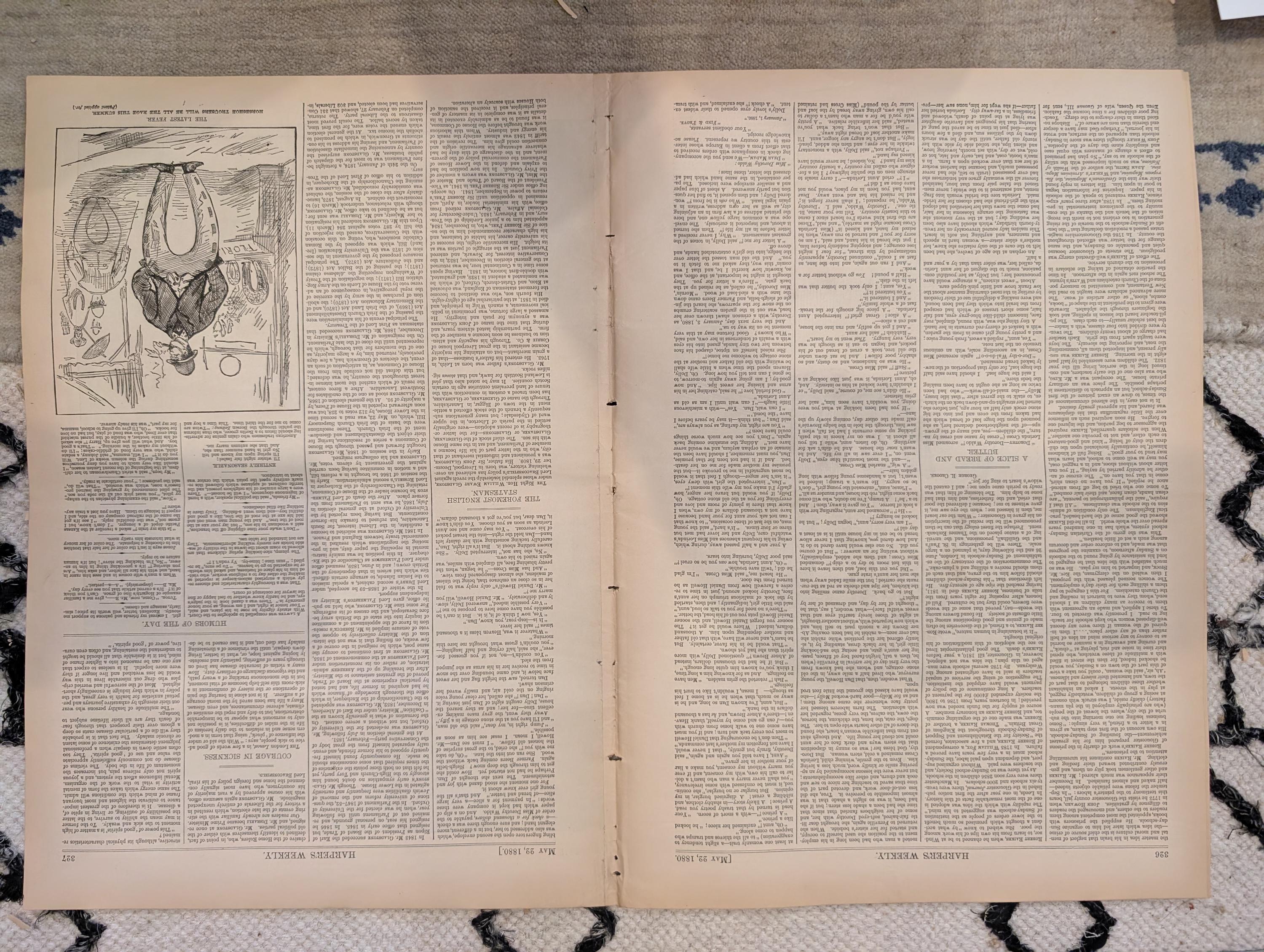
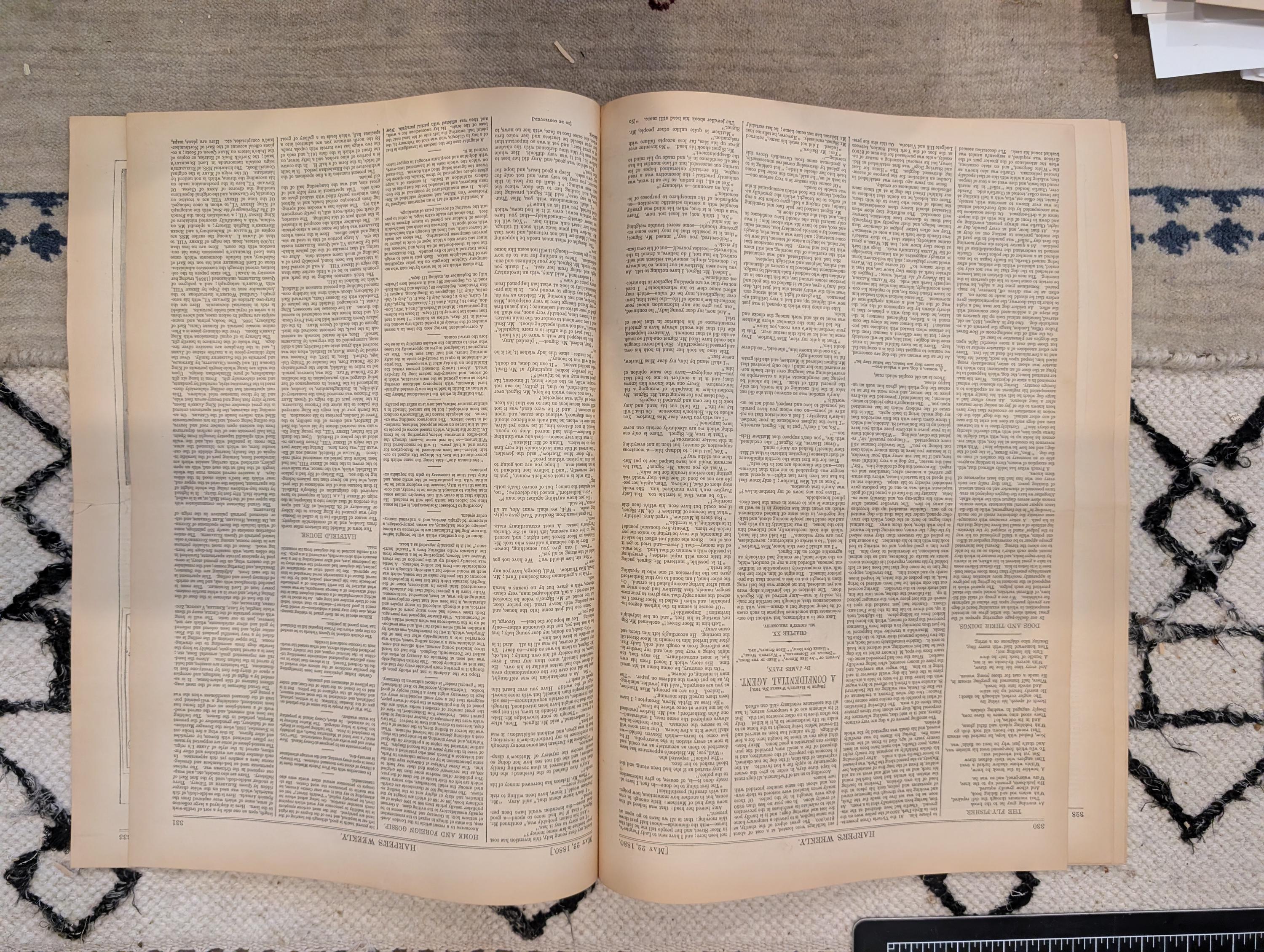
Condition Report: Presents well for its 145-year age with natural toning to the newsprint consistent with paper of this era. The Gladstone front page portrait, the Paterson riot full page, the Thomas Nast two-thirds page, the dog show double-page centerfold, the Hatfield House full page, and all other illustrations are clear and displayable. I have photographed every page — please review all images carefully and don't hesitate to ask for additional close-ups of any area before purchasing.
📦 SHIPPING & PRESERVATION 📦
Housed in an acid-free archival folder with Mylar overlay to protect the 145-year-old newsprint
Flat-shipped with heavy-duty reinforcement to ensure safe arrival of the centerfold
Fully tracked for your peace of mind
In the same May week in 1880 — Gladstone was returning to Downing Street, silk workers were rioting in the streets of Paterson, the dog show candidates were being arranged for their portraits, and Thomas Nast was doing the math on what it costs to underpay your workers. Harper's Weekly held the whole contradictory world at once.
🏷️ TAGS
1880 Paterson New Jersey Labor Riot, Silk Workers Riot Paterson 1880, Gladstone Prime Minister Portrait, Thomas Nast Labor Capital Cartoon, Dog Show Congress Victorian, Westminster Kennel Club History, Hatfield House Marquis Salisbury, Robert Raikes Sunday School Founder, Sunday Morning Virginia 1880, Labor Unrest Gilded Age, New Jersey Labor History, Victorian Dog Show Illustration, Antique Newspaper 1880, Harper's Weekly 1880, Gilded Age Labor History, Victorian British Political History -
Shipping & Policies
Related Products