Americana
1880 Madison Square Garden Fire, Blaine Cartoon, 7th Reg May 8 Harper's Weekly
$38.83
-
Details📜 ABOUT THIS PIECE OF HISTORY 📜
The May 8, 1880 issue of Harper's Weekly arrives at a moment of political electricity and civic drama in equal measure — the Republican national convention is just weeks away and Thomas Nast unleashes one of his most devastating cartoons of the entire election year against James G. Blaine, the most charismatic and controversial figure in American politics. Meanwhile Madison Square Garden lies in ruins after a catastrophic fire, the Seventh Regiment's colonels fill the entire front page in a parade of martial portraiture, and a hunter stands knee-deep in slaughtered wild fowl in a half-page that reads as one of the earliest conservation arguments in the American illustrated press. This is a genuinely exceptional issue.
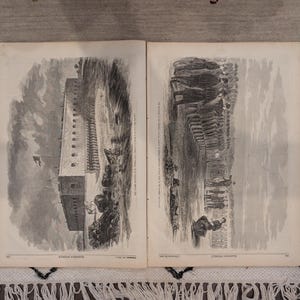
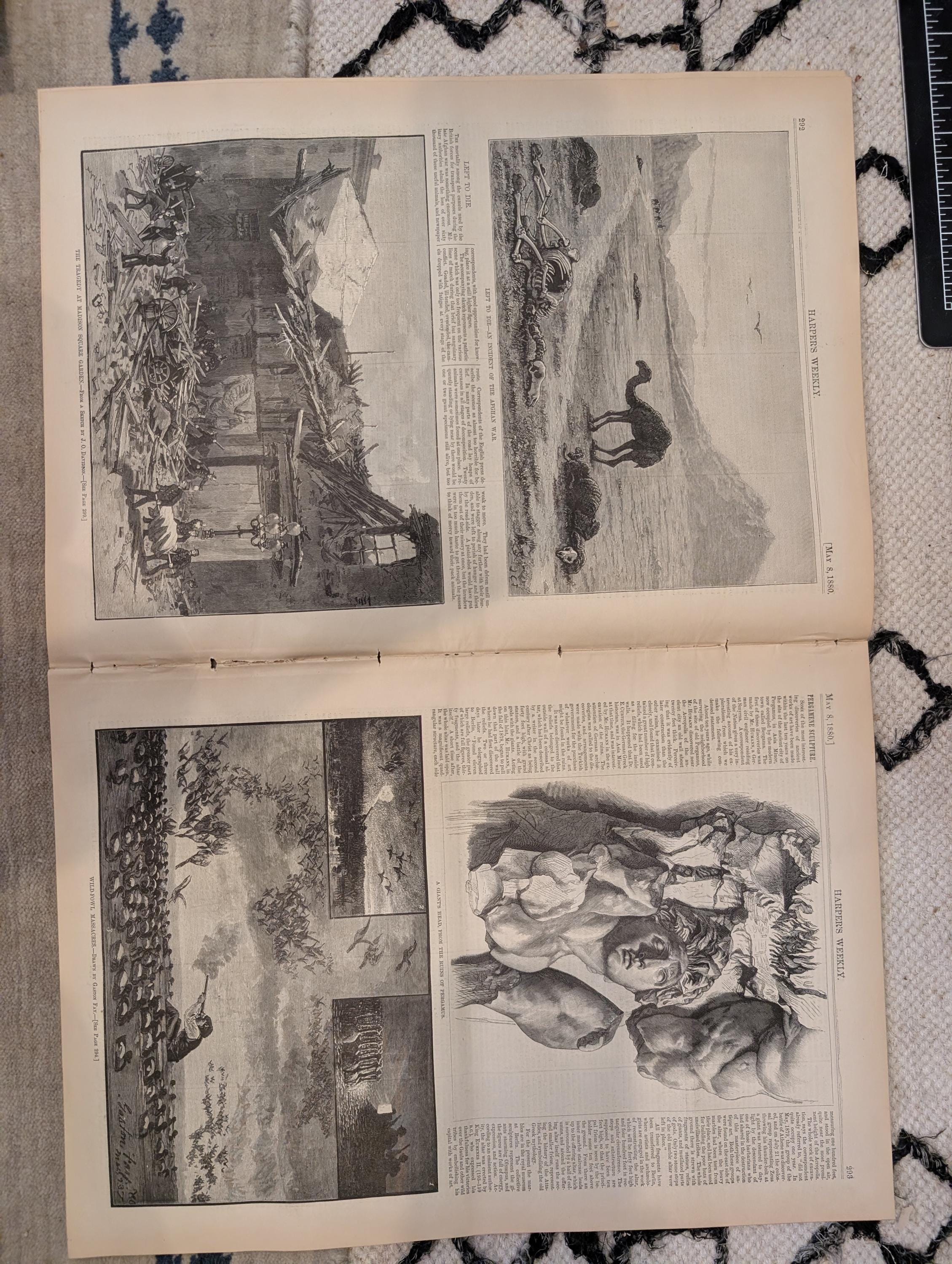
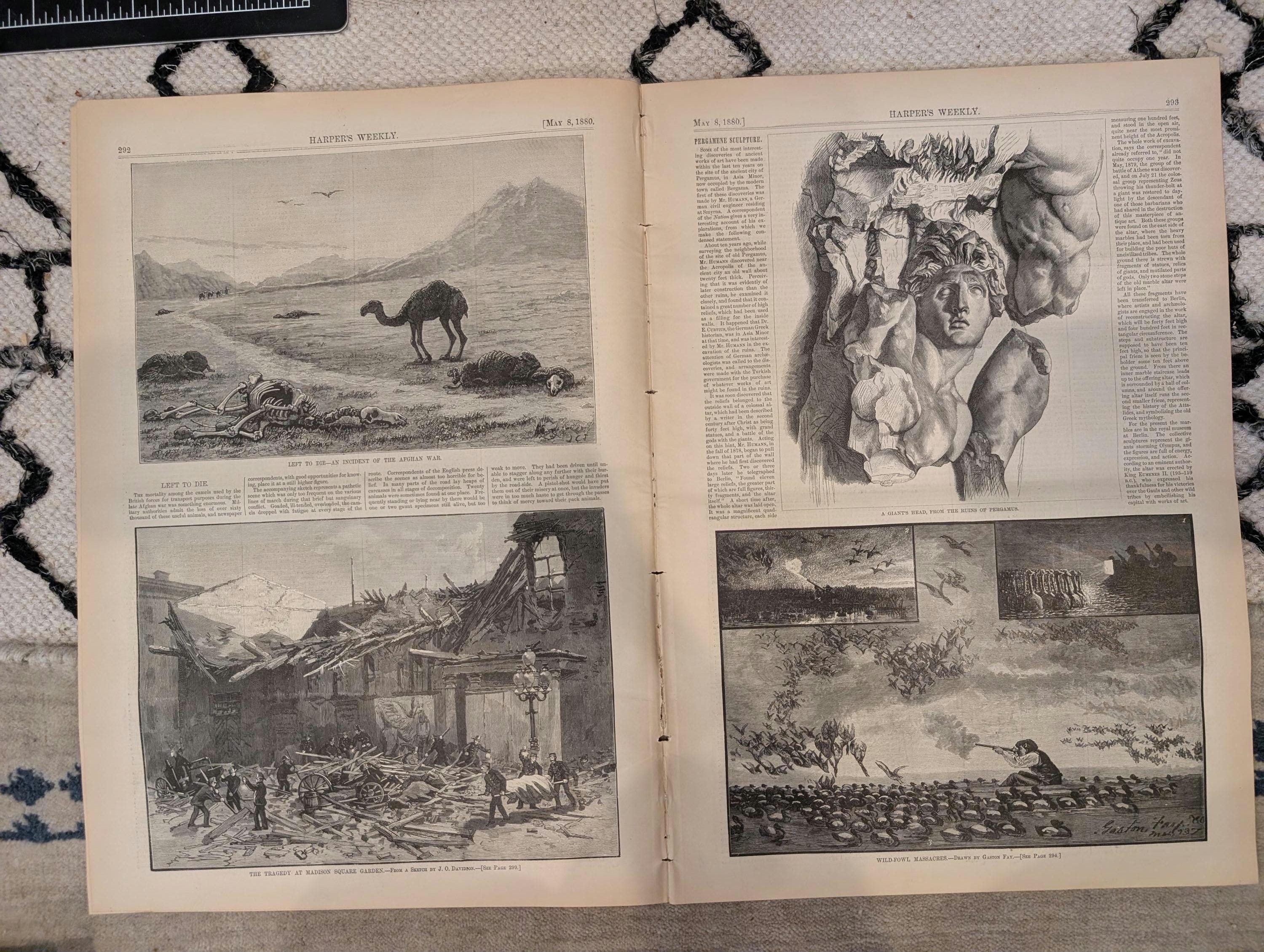
🔥 HALF PAGE — "THE TRAGEDY AT MADISON SQUARE GARDEN" — IN RUINS AFTER FIRE
One of the most historically significant and visually striking illustrations in this issue — a half-page documentary of Madison Square Garden in the immediate aftermath of the fire that had just destroyed it, the ruins still raw and smoking at the moment Harper's Weekly's artist arrived to record them. The Madison Square Garden that burned in 1880 was the first building to bear that name — a converted railroad depot at Madison Avenue and 26th Street that P.T. Barnum had transformed into an indoor arena and that had become one of the great entertainment venues of New York City, hosting everything from circus performances to political rallies to flower shows. Its destruction by fire was a genuine civic loss, and this half-page illustration documents it at the moment of maximum drama — the charred framework, the collapsed roof, the ruins of a building that had been at the center of New York public life. For collectors of New York City history, Madison Square Garden history, and the history of American entertainment venues, this is a primary source document of exceptional rarity — the very first Madison Square Garden, in ruins, in 1880, three years before Stanford White's celebrated second Garden would rise on the same site.
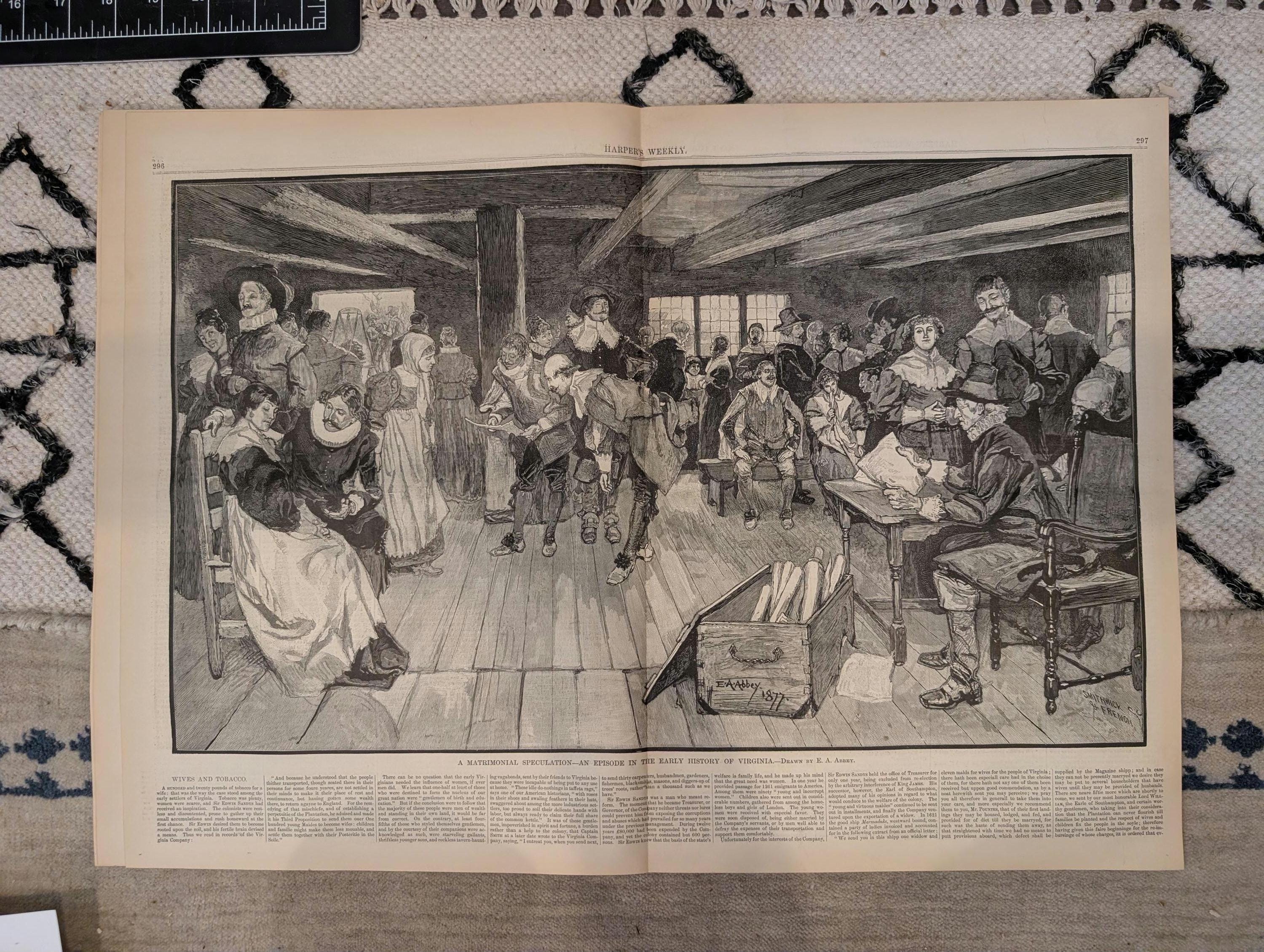
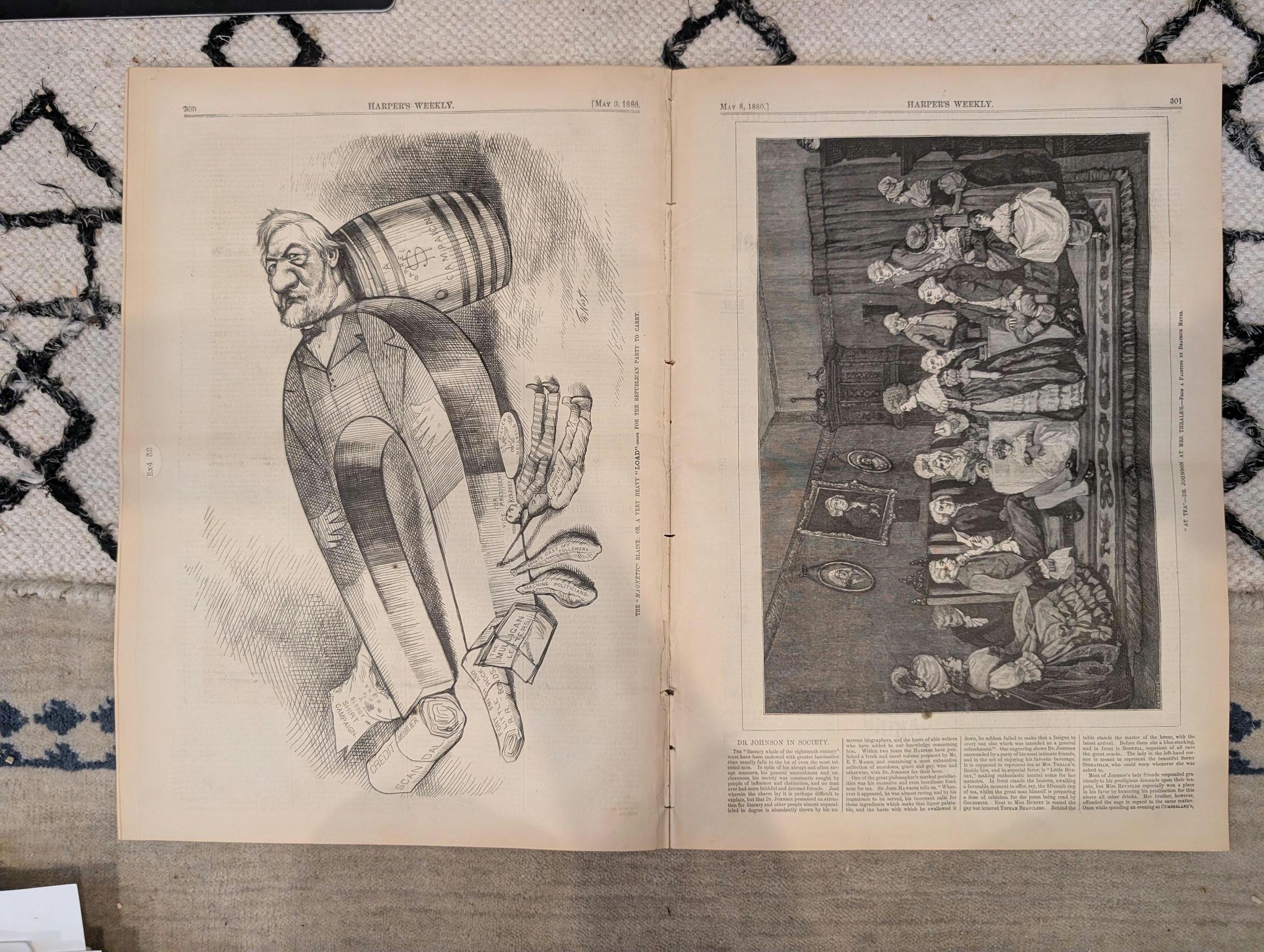
🎨 FULL PAGE — THOMAS NAST: "THE MAGNETIC BLAINE — OR A VERY HEAVY LOAD"
One of the most important and historically consequential Thomas Nast cartoons of the entire 1880 election year — a full-page evisceration of James G. Blaine, the Maine senator and former Speaker of the House who was the most glamorous and most divisive figure in the Republican Party. Blaine — known to his passionate supporters as "The Plumed Knight" — was making his third run for the Republican presidential nomination in 1880, and his magnetic personal appeal was matched in equal measure by the corruption scandals that had dogged him since the Crédit Mobilier era. The Mulligan Letters — correspondence that strongly suggested Blaine had used his position as Speaker to profit from railroad land grant legislation — had already wounded him badly in 1876, and Nast was determined to wound him again in 1880.
"The Magnetic Blaine — Or a Very Heavy Load" deploys Nast's genius for visual metaphor: Blaine's magnetic personal appeal pulling supporters toward him even as the weight of his corruption scandals drags him downward. The "very heavy load" of the Mulligan Letters, the railroad deals, the whiff of self-dealing that clung to Blaine despite his brilliance and charm — all of it rendered in the visual language that made Nast's cartoons the most powerful political force in American journalism. Blaine would not get the nomination in 1880 — Garfield emerged as the dark horse compromise candidate — but he would try again in 1884, and Nast would be waiting for him then too. For collectors of Nast's political work, Blaine history, and the 1880 Republican convention, this full page is an essential primary source.
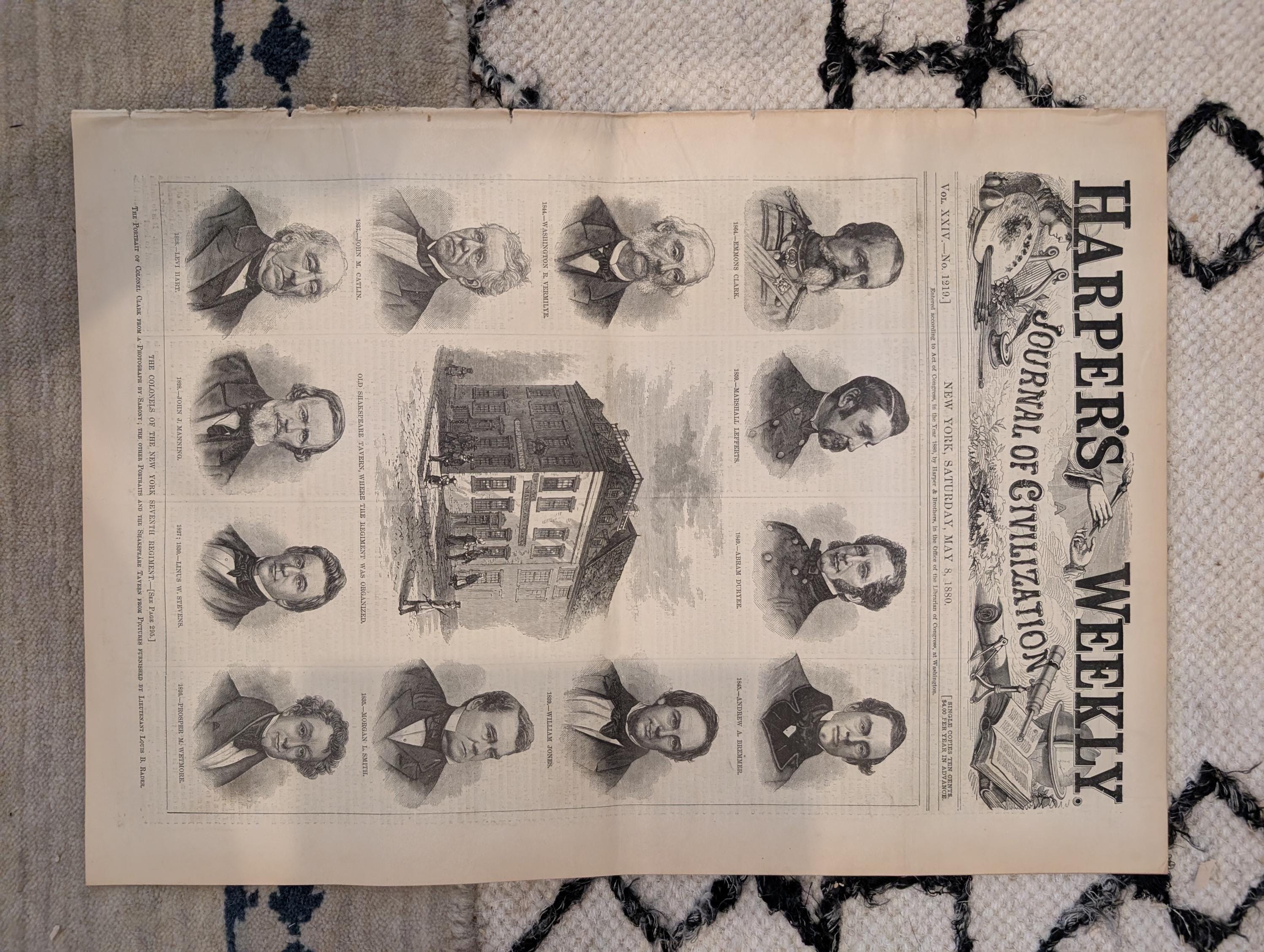
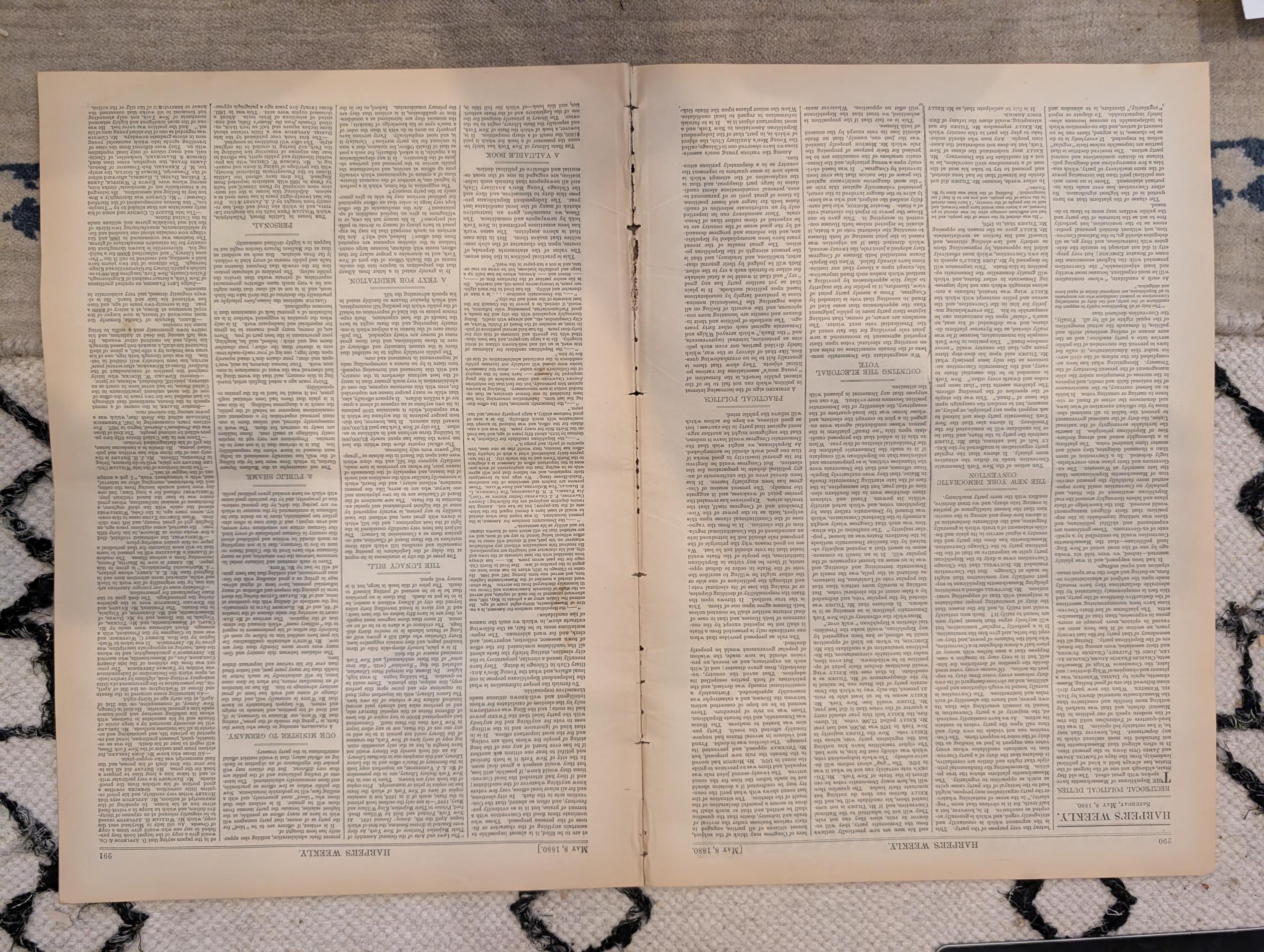
🎖️ FULL FRONT PAGE — "THE COLONELS OF THE NEW YORK SEVENTH REGIMENT"
The entire front page is given over to a gallery of portraits of the colonels of the New York Seventh Regiment — one of the most celebrated and socially prestigious military units in America, whose membership read like a directory of the New York establishment and whose annual regimental review was one of the great social events of the Gilded Age calendar. The Seventh Regiment — known as the Silk Stocking Regiment for the social prominence of its officer corps — had served with distinction in the Civil War and remained one of the most visible symbols of New York's civic identity in the postwar decades. This full front-page portrait gallery is a primary source document of New York military and social history — the faces of the men who led one of America's most storied militia regiments, captured at the height of the regiment's Gilded Age prestige.
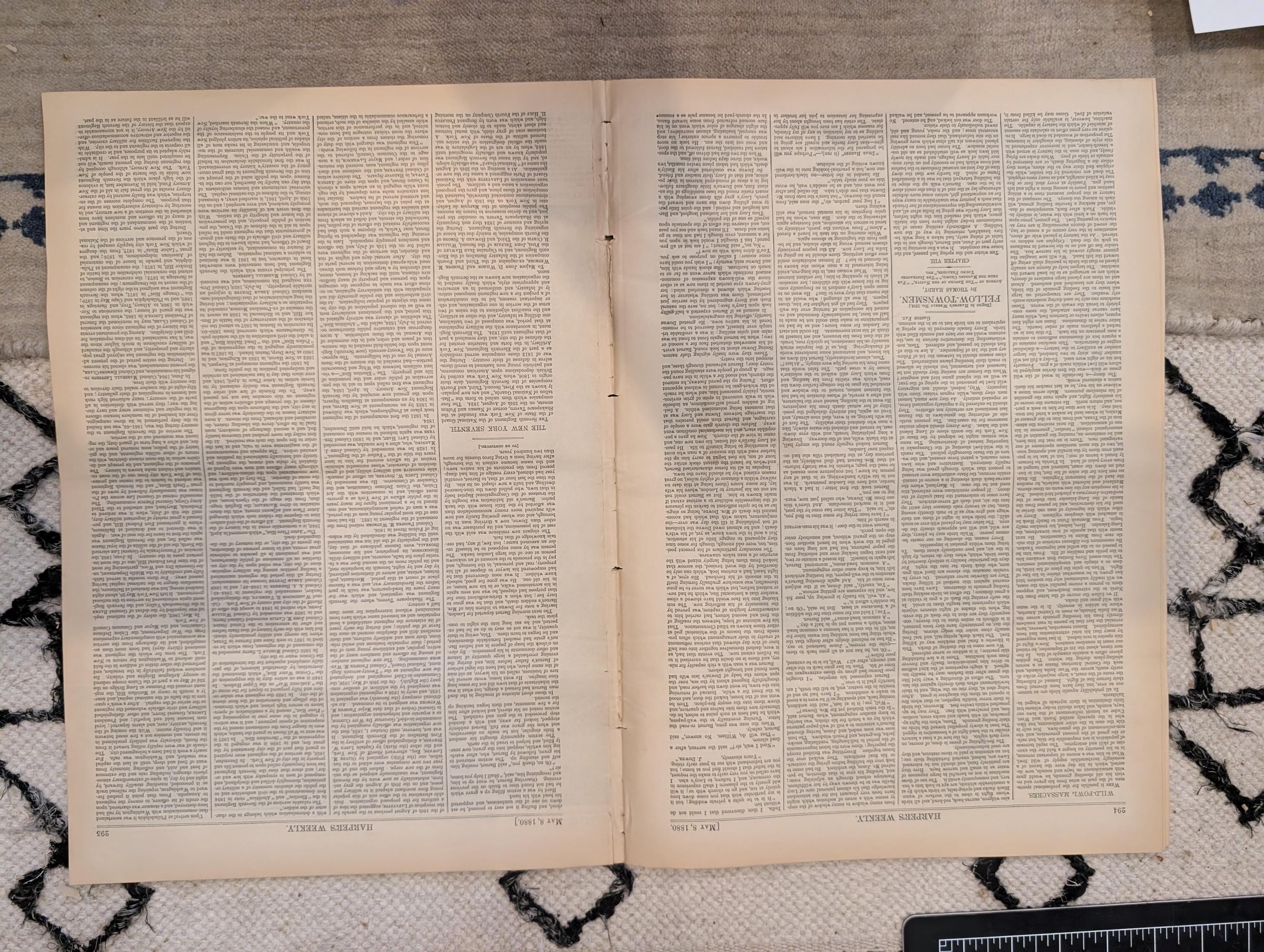
🦆 HALF PAGE — "WILD FOWL MASSACRES"
A half-page illustration of duck hunting that reads, in the context of 1880, as something more complicated than a simple sporting scene. "Wild Fowl Massacres" — note the word choice, note the title's moral weight — documents the industrial-scale market hunting that was devastating waterfowl populations across North America at exactly this moment. Market hunters working the great flyways of the Mississippi and Atlantic coasts were killing ducks, geese, and shorebirds by the hundreds of thousands annually, supplying the restaurants and dinner tables of American cities with wild game at prices that made the slaughter economically irresistible and ecologically catastrophic. The American conservation movement — which would culminate in the Migratory Bird Treaty Act of 1918 — had its roots in precisely this period, when the scale of the killing was first becoming visible to the public. Harper's Weekly's choice of the word "massacres" in the title is not accidental. A historically significant piece for collectors of conservation history, wildlife history, and the history of American hunting culture.
🔍 CONDITION & TRANSPARENCY 🔍
Completeness: Complete 16-page issue.
Authenticity: Guaranteed original printing from May 8, 1880 — not a reproduction.
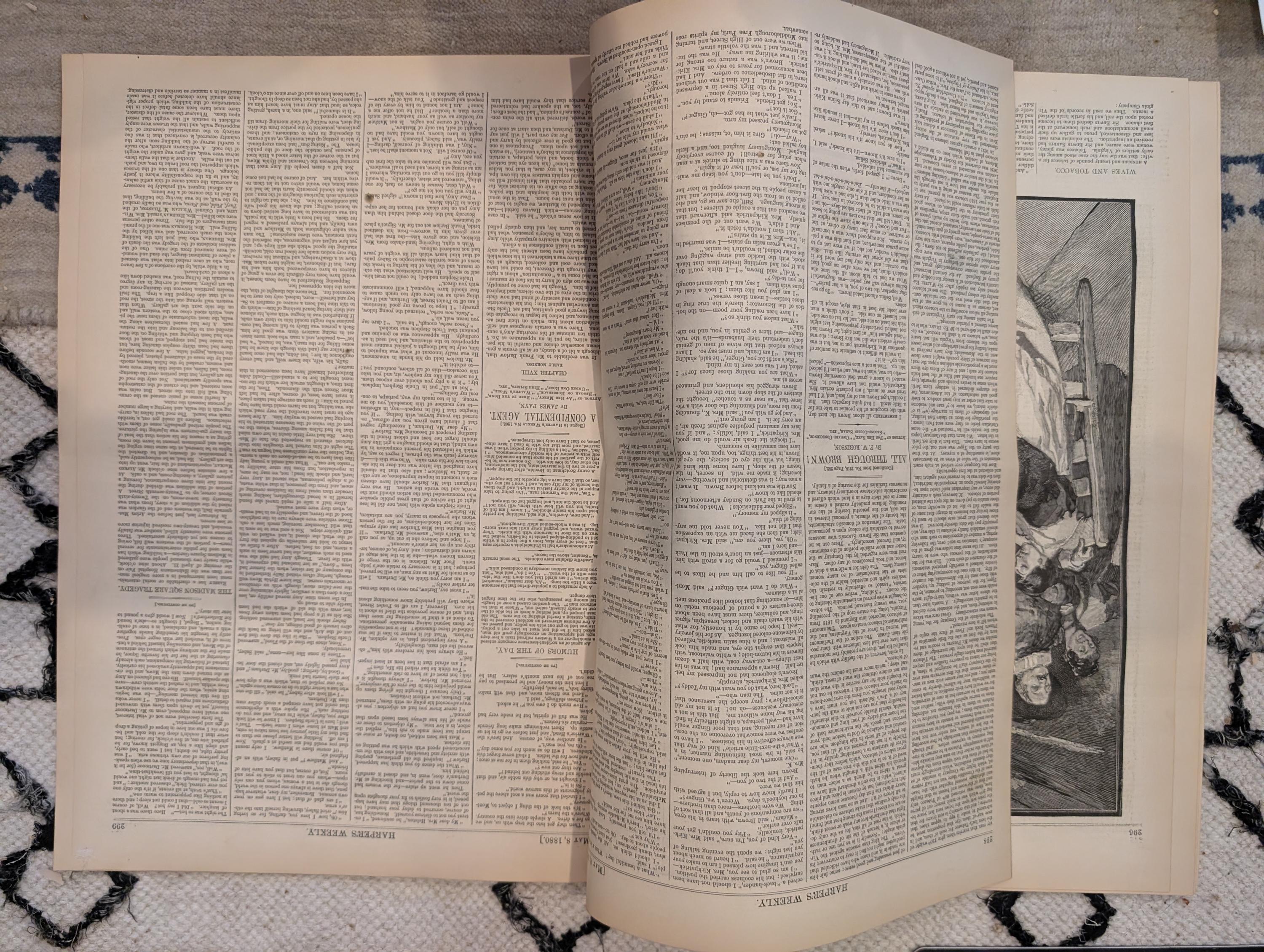
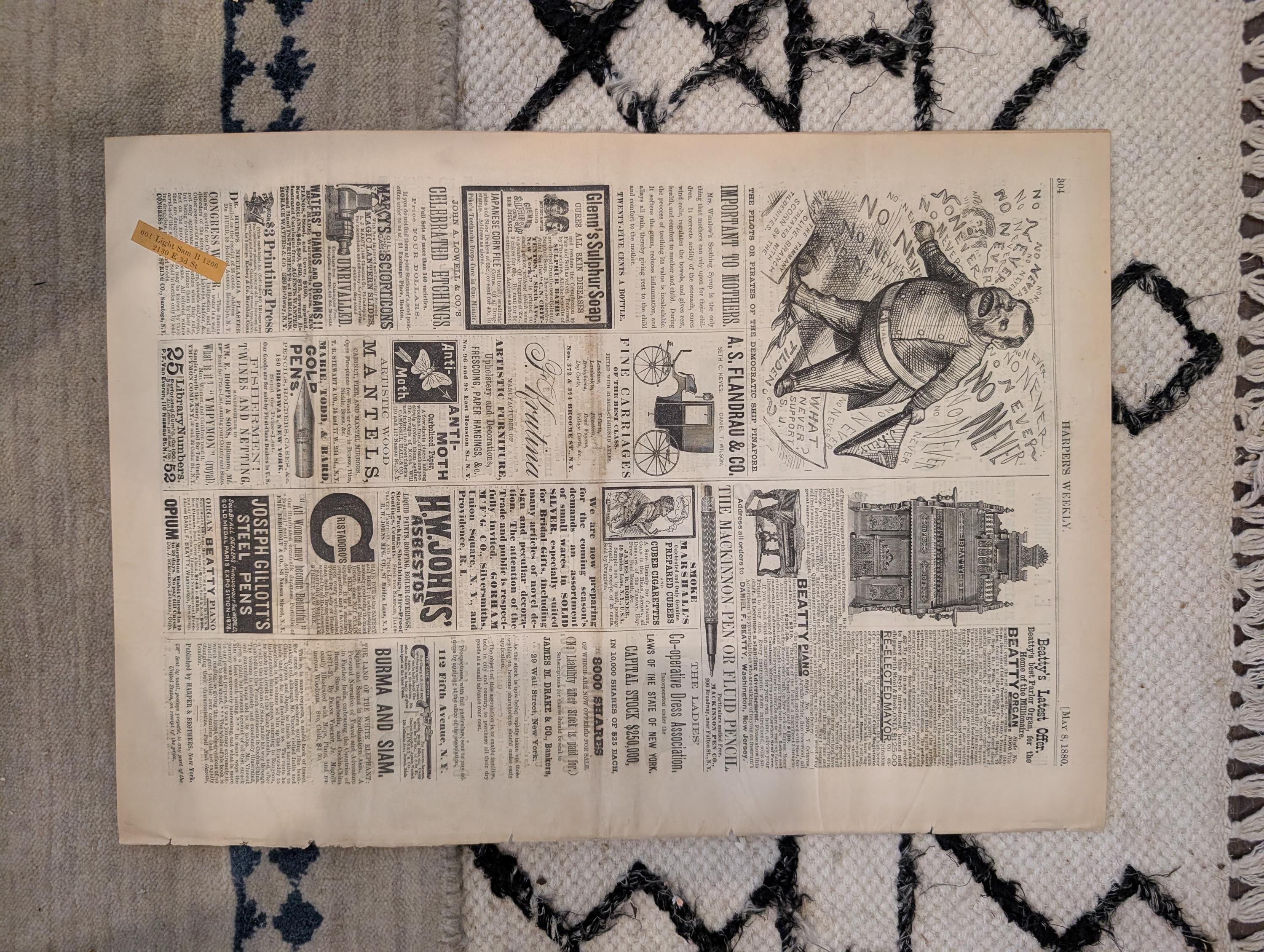
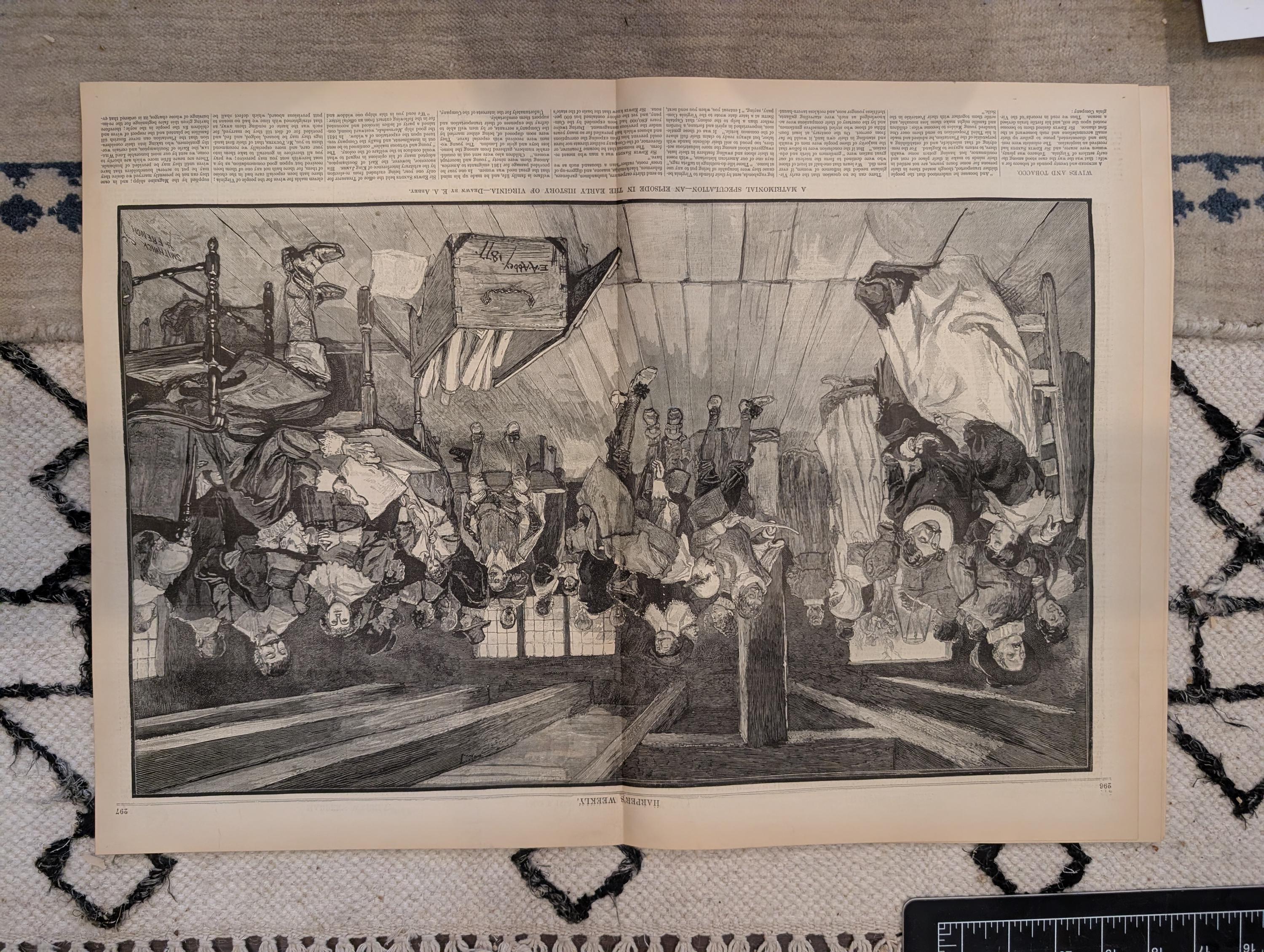
Condition Report: Presents well for its 145-year age with natural toning to the newsprint consistent with paper of this era. The Seventh Regiment colonels front page, the Madison Square Garden ruins half page, the Thomas Nast Blaine full page, and the wild fowl hunting half page are all clear and displayable. I have photographed every page — please review all images carefully and don't hesitate to ask for additional close-ups of any area before purchasing.
📦 SHIPPING & PRESERVATION 📦
Housed in an acid-free archival folder with Mylar overlay to protect the 145-year-old newsprint
Flat-shipped with heavy-duty reinforcement to ensure safe arrival
Fully tracked for your peace of mind
The first Madison Square Garden was on fire, James Blaine was carrying his corruption like a millstone, and Thomas Nast had his pen out. May 1880 — the Republican convention was three weeks away and the air was full of smoke, in more ways than one.
🏷️ TAGS
1880 Madison Square Garden Fire, First Madison Square Garden Ruins, Thomas Nast Blaine Cartoon, Magnetic Blaine Nast Political Cartoon, New York Seventh Regiment Colonels, Wild Fowl Massacres Duck Hunting, James Blaine Republican Nomination 1880, Madison Square Garden History, Republican Convention 1880 Blaine, Mulligan Letters Blaine Scandal, New York Silk Stocking Regiment, Conservation History Waterfowl, Antique Newspaper 1880, Harper's Weekly 1880, Gilded Age Political History, Victorian New York City History2 / 2 -
Shipping & Policies
Related Products