Americana
1880 Harper's Weekly — Nast, Worcester Cathedral, Valley of Mexico — Apr 17
$38.83
-
Details📜 ABOUT THIS PIECE OF HISTORY 📜
The April 17, 1880 issue of Harper's Weekly arrives at a moment of maximum political tension — the Republican national convention is just weeks away, the third-term Grant movement is at its climax, and Thomas Nast delivers two full-page political cartoons that together constitute one of the most pointed and historically significant pairings of his entire 1880 output. Between them, a breathtaking double-page centerfold of Worcester Cathedral fills the center of the issue with soaring medieval grandeur, the Valley of Mexico opens from the heights of Chapultepec in one of the most beautiful landscape illustrations in this entire run, and William Ellery Channing — one of the great minds of American religious liberalism — is commemorated in a suite of small illustrations. This is an issue of extraordinary range and lasting historical importance.
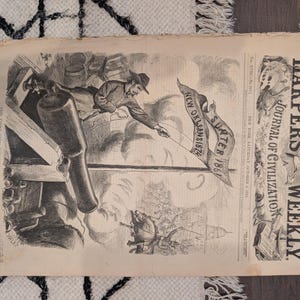
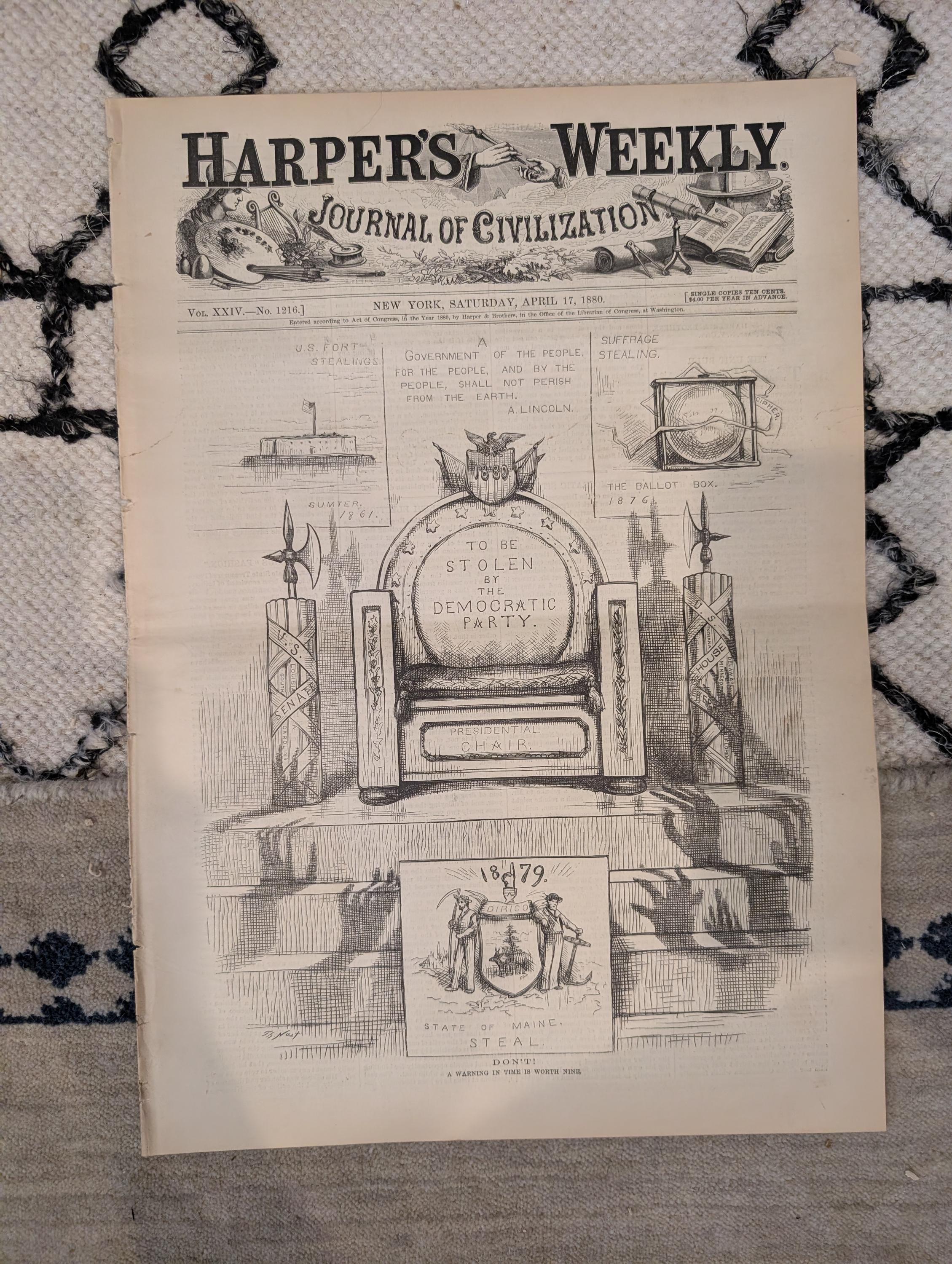
🎨 FULL FRONT PAGE — THOMAS NAST: "DON'T"
Thomas Nast opens the issue with a front page of maximum compression — a single word title, "Don't," carrying the full weight of his political intelligence at the most critical moment of the 1880 presidential cycle. The Republican national convention in Chicago was approaching fast, and the battle between the Grant third-term forces led by Roscoe Conkling and the anti-Grant reformers was reaching its decisive phase. Nast had been the most powerful visual defender of Grant through two presidential terms, but the idea of a third term troubled him deeply — it smelled of the Caesarism he had spent his career fighting, and "Don't" was his one-word verdict on the ambition that was driving the convention toward a constitutional and ethical cliff edge. Simple, direct, devastating — a front page that says everything in a single word and a single image. A fully displayable and historically essential Nast front page for collectors of his work and Gilded Age presidential history.
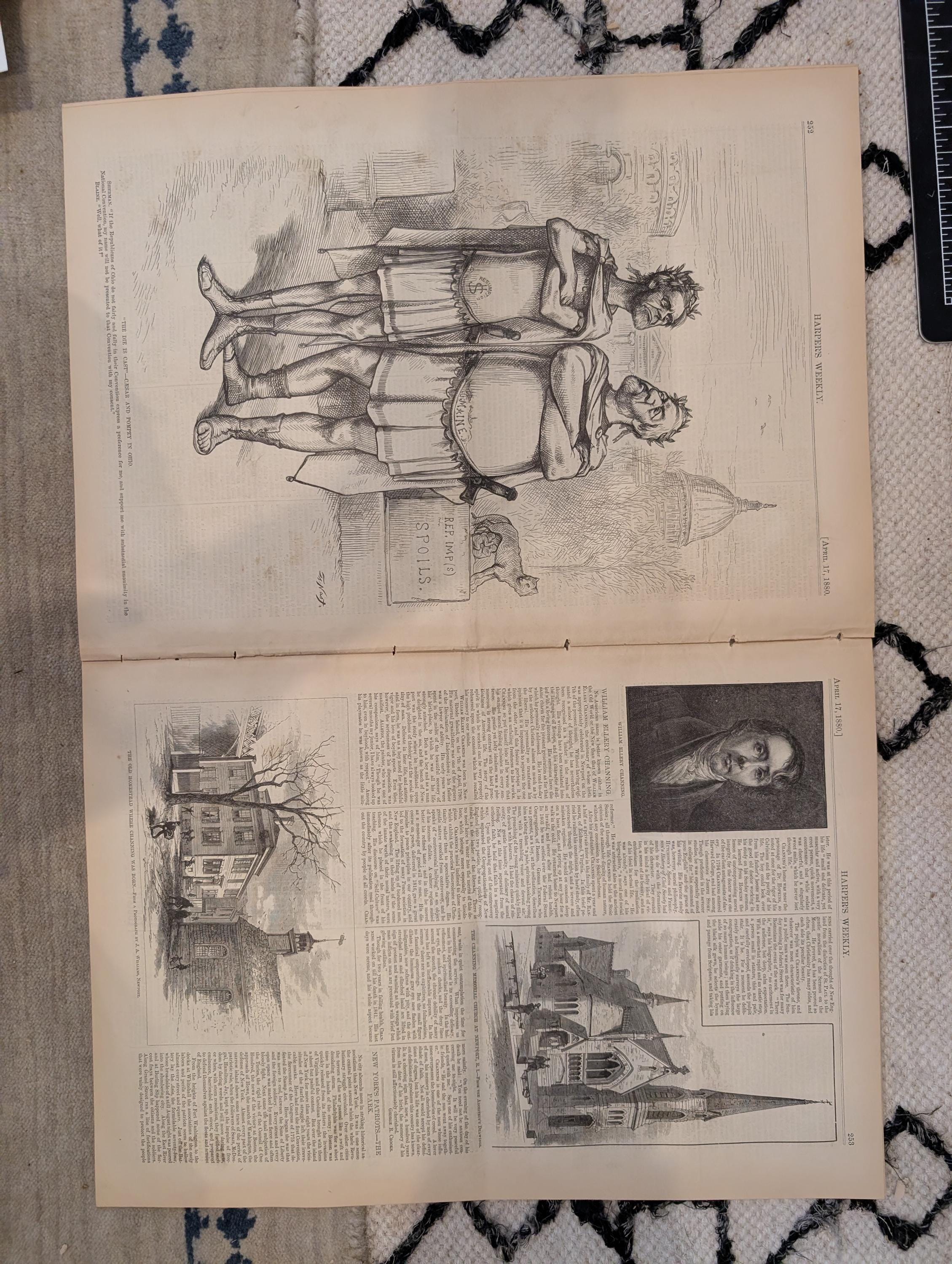
🎨 FULL PAGE — THOMAS NAST: "THE DIE IS CAST — CAESAR AND POMPEY IN OHIO"
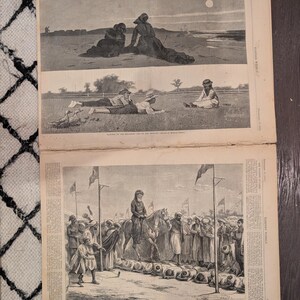
The second Thomas Nast full-page political cartoon of the issue extends his classical Roman imagery — Caesar and Pompey in Ohio — into the specific geography of the Republican power struggle. Ohio was at the heart of the anti-Grant Republican coalition: James Garfield was an Ohio congressman, John Sherman was Ohio's senior senator and a serious presidential contender, and the state's Republican delegation would be a crucial battleground at the Chicago convention. Nast's invocation of Caesar and Pompey — the two great rivals whose conflict had destroyed the Roman Republic — was not subtle, and it was not meant to be. "The Die is Cast" was Caesar's own phrase at the Rubicon, and Nast is placing the Republican Party at exactly that kind of irreversible threshold. Two Thomas Nast full-page political cartoons in a single issue — "Don't" and "The Die is Cast" — makes this one of the most important Nast issues of the entire election year. For collectors of Nast's work, this pairing is exceptional.
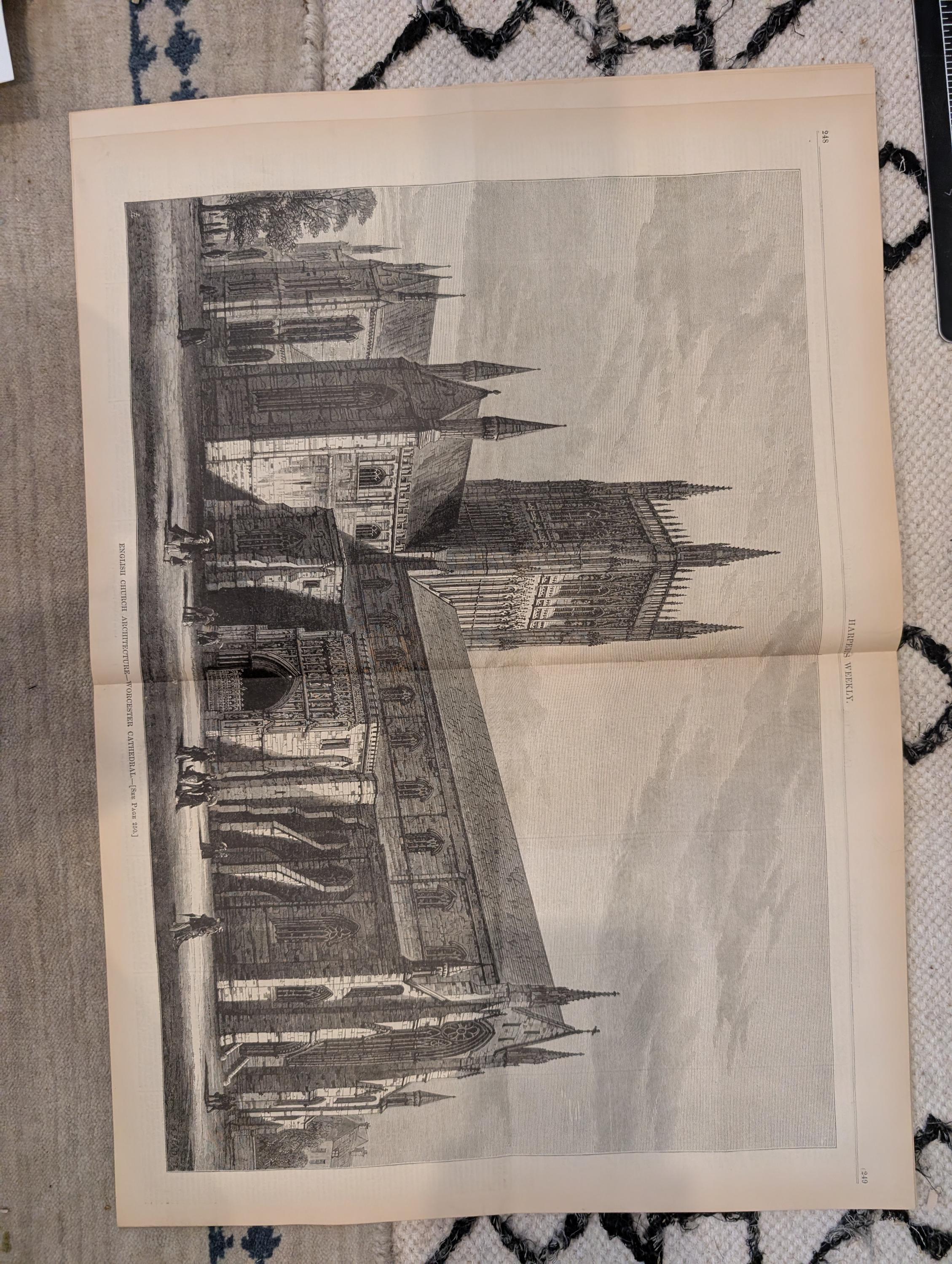
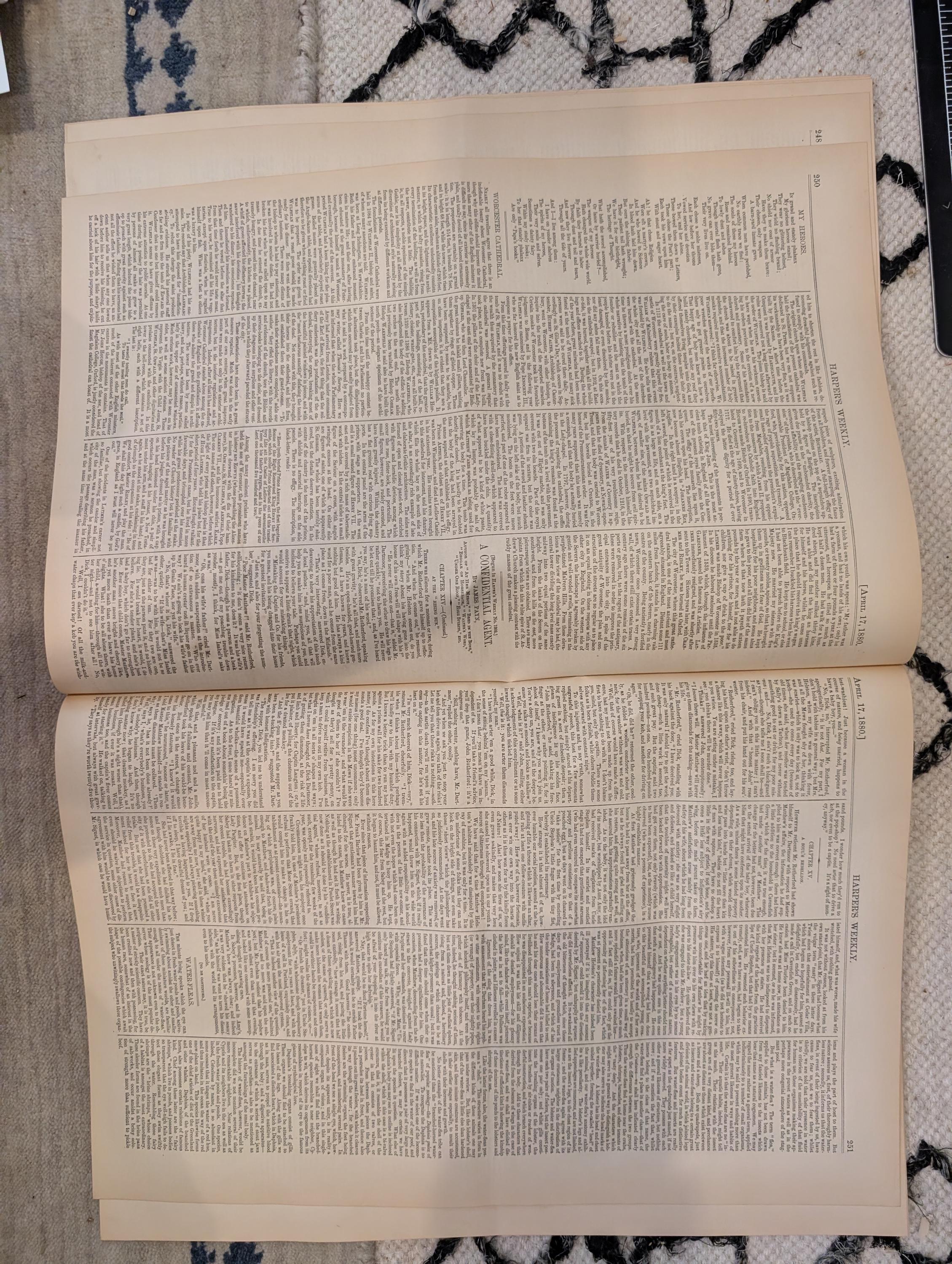
🏛️ DOUBLE-PAGE CENTERFOLD — "ENGLISH CHURCH ARCHITECTURE — WORCESTER CATHEDRAL"
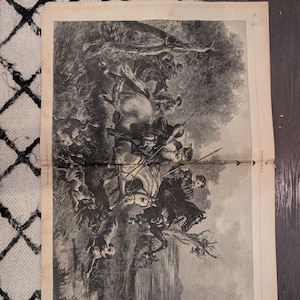
The visual crown jewel of this issue — a magnificent double-page centerfold of Worcester Cathedral, one of the supreme achievements of English medieval architecture and one of the most historically layered buildings in Britain. Worcester Cathedral stands on the banks of the Severn River in the heart of England, its great tower rising over a city where English kings were crowned and buried — King John lies in the cathedral's choir, the oldest royal effigy in England. The building itself spans nearly every period of English medieval architecture from Norman to Perpendicular Gothic, making it one of the richest architectural documents in the country. The double-page format gives the Harper's Weekly artist full scope to render the cathedral's extraordinary complexity — the tower, the nave, the cloisters, the river setting — with the grandeur and detail the subject demands. A stunning and fully displayable centerfold for collectors of English architectural history, Victorian travel illustration, and Gothic cathedral art.
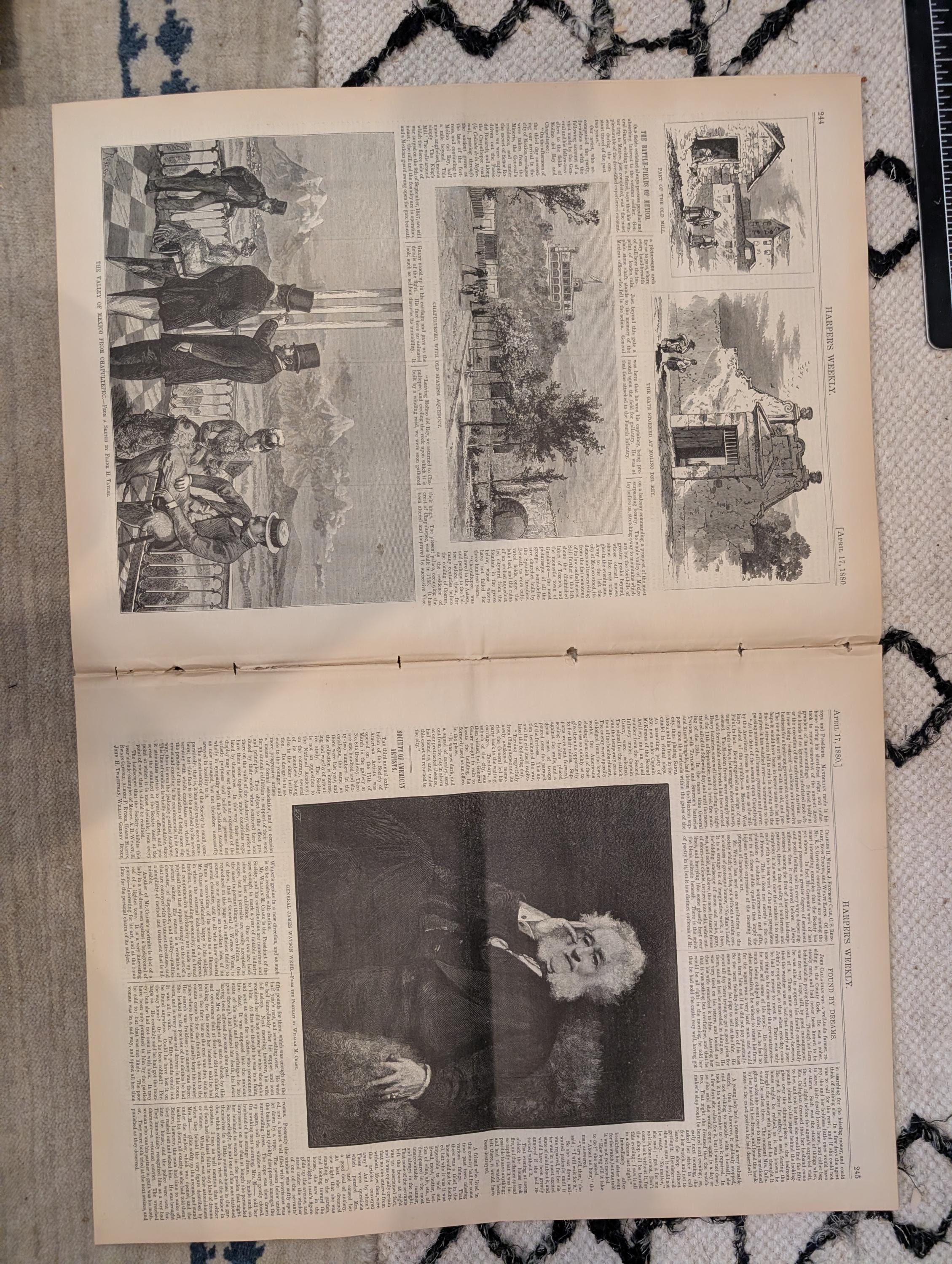
🌋 FULL PAGE — "THE VALLEY OF MEXICO FROM CHAPULTEPEC"
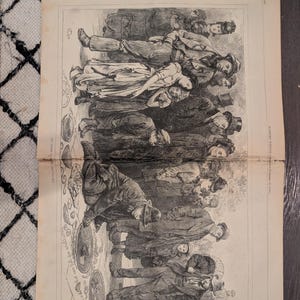
One of the most beautiful landscape illustrations in this entire run of issues — a full-page view of the Valley of Mexico as seen from the heights of Chapultepec Castle, the ancient hilltop fortress above Mexico City that had served as the seat of Aztec rulers, Spanish viceroys, and Mexican emperors before becoming the official residence of President Porfirio Díaz. The Valley of Mexico as seen from Chapultepec — the great lake basin ringed by volcanic peaks, the snow-capped cone of Popocatépetl rising in the distance, the sprawl of Mexico City below — was one of the great landscape views of the Americas, and this full-page illustration captures it with the panoramic ambition that the subject demands. Published in the context of Grant's Mexico visit coverage, this view gives Harper's Weekly readers their most complete visual sense of the landscape Grant had just traveled through. An essential and fully displayable piece for collectors of Mexican history, landscape illustration history, and the history of Chapultepec.
✝️ PORTRAIT — "GENERAL JAMES WATSON WEBB"
A one-third page portrait of General James Watson Webb — the celebrated newspaper editor, diplomat, and Civil War general who had made his name as the pugnacious editor of the New York Courier and Enquirer before serving as American Minister to Brazil under Lincoln and Johnson. Webb was one of the great characters of 19th-century American public life — a man who had fought duels, built newspapers, served his country in war and diplomacy, and lived long enough to become a grand old man of the Gilded Age establishment. A fine piece for collectors of American journalism history, Civil War military history, and Victorian political portraiture.
📖 SMALL ILLUSTRATIONS — WILLIAM ELLERY CHANNING
A suite of small illustrations commemorating William Ellery Channing — the great Boston Unitarian minister and theologian whose influence on American religious liberalism, abolitionism, and the Transcendentalist movement had been immeasurable. Channing had died in 1842, but his legacy was being actively commemorated in the early 1880s, and Harper's Weekly's small illustrations — of Channing himself, of the places associated with his life and work — constitute a modest but significant contribution to that commemoration. A fine piece for collectors of American religious history, Unitarian history, and the history of American abolitionism.
🔍 CONDITION & TRANSPARENCY 🔍
Completeness: Complete 16-page issue.
Authenticity: Guaranteed original printing from April 17, 1880 — not a reproduction.
Condition Report: Presents well for its 145-year age with natural toning to the newsprint consistent with paper of this era. The Thomas Nast front page, the second Nast full page, the Worcester Cathedral double-page centerfold, the Valley of Mexico full page, the General Webb portrait, and the Channing illustrations are all clear and displayable. I have photographed every page — please review all images carefully and don't hesitate to ask for additional close-ups of any area before purchasing.
📦 SHIPPING & PRESERVATION 📦
Housed in an acid-free archival folder with Mylar overlay to protect the 145-year-old newsprint
Flat-shipped with heavy-duty reinforcement to ensure safe arrival of the centerfold
Fully tracked for your peace of mind
In April 1880 Thomas Nast told the Republican Party "Don't" on the front page and "The Die is Cast" inside, Worcester Cathedral filled the centerfold with eight centuries of English stone, and the Valley of Mexico opened from the heights of Chapultepec like a dream. What a paper. What a week.
🏷️ TAGS
1880 Harpers Weekly, Thomas Nast Political Cartoon, Nast Don't Third Term Grant, Nast Caesar Pompey Ohio, Worcester Cathedral Victorian, English Gothic Architecture, Valley of Mexico Chapultepec, Grant Mexico Visit 1880, William Ellery Channing, General James Watson Webb, Republican Convention 1880, Grant Third Term History, Medieval Cathedral Illustration, Gilded Age Presidential History, Antique Newspaper 1880, Harper's Weekly 1880 -
Shipping & Policies
Related Products