Americana
1880 Harper's Weekly — Chinese Opium Palace SF, Winter Palace Explosion — Apr 3
$38.83
-
Details📜 ABOUT THIS PIECE OF HISTORY 📜
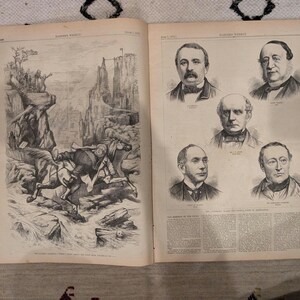
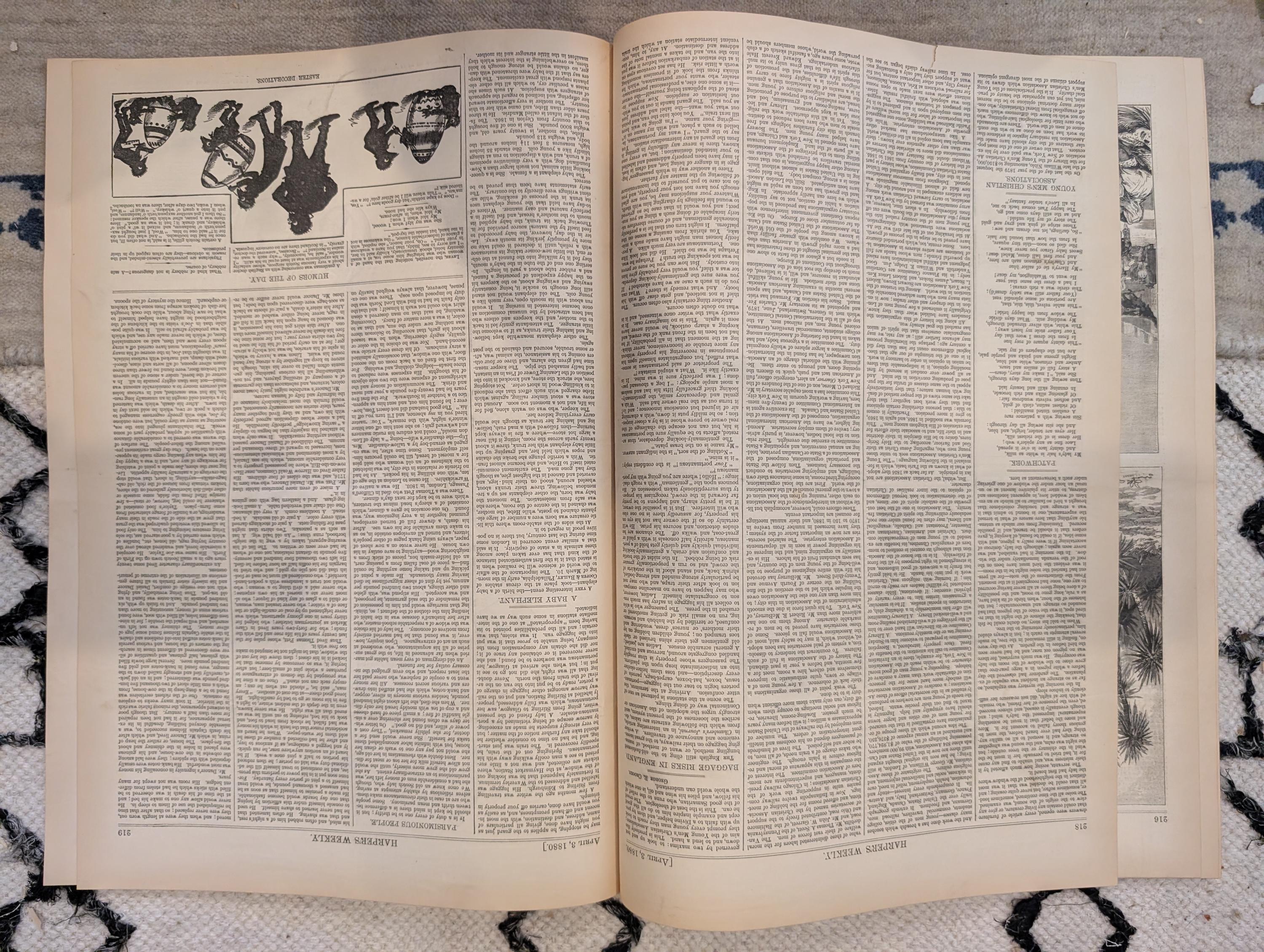
The April 3, 1880 issue of Harper's Weekly is one of the most visually and historically extraordinary issues in the entire run for 1880 — opening with the smoking ruins of the Winter Palace in St. Petersburg where a bomb had just failed to kill the Czar, filling the centerfold with the vivid landscapes of the road from Vera Cruz to Mexico City, and delivering one of the most remarkable and historically significant social documentary illustrations in the entire Harper's Weekly archive: a full-page interior view of a Chinese opium palace in San Francisco. Add Thomas Nast, the Salvation Army's first American appearance in the illustrated press, the first elephant ever born in captivity, and an Easter full page, and this is an issue that rewards every collector who encounters it.
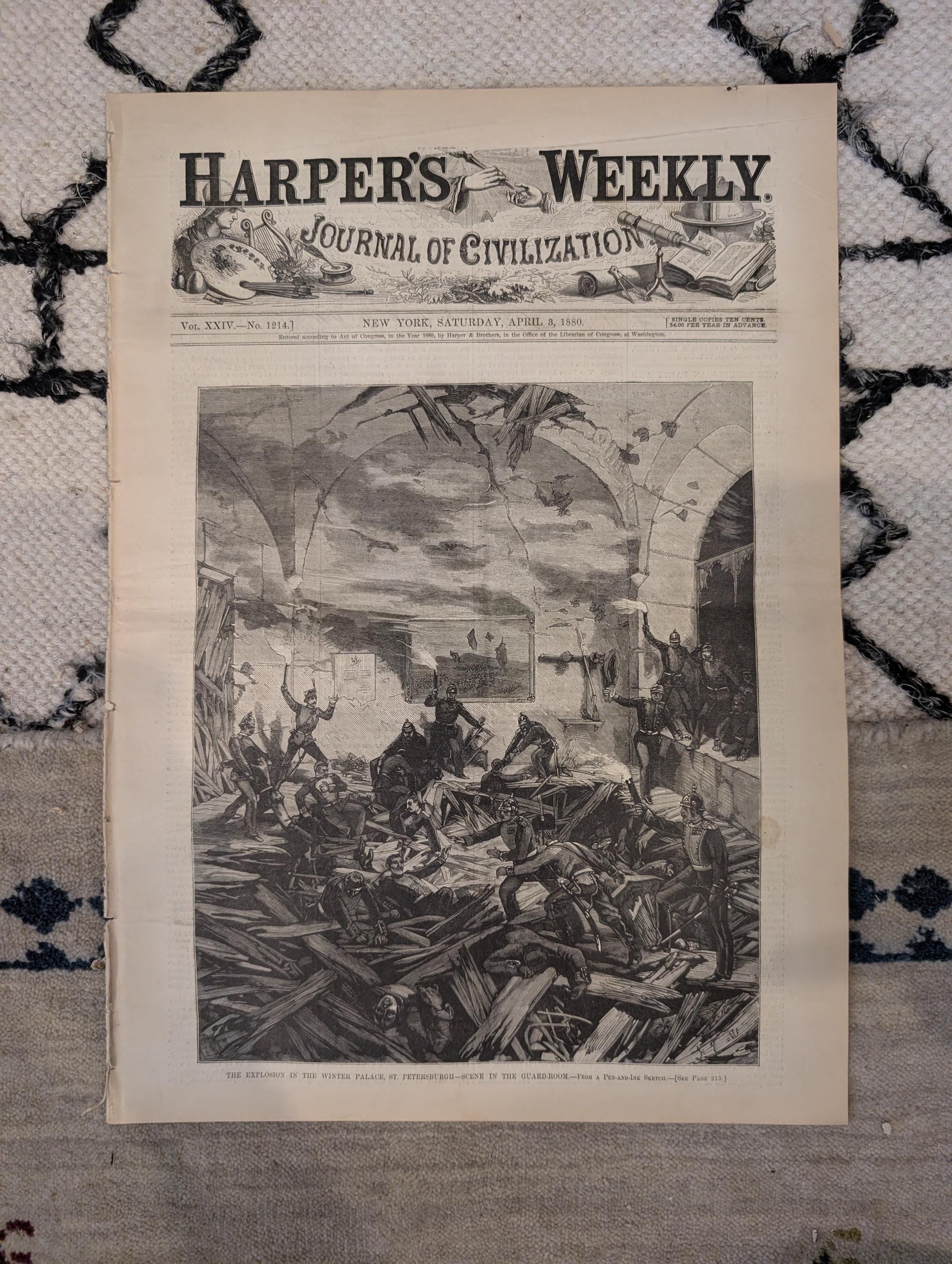
💥 FULL FRONT PAGE — "THE EXPLOSION IN THE WINTER PALACE, ST. PETERSBURG — SCENE IN THE GUARD ROOM"
The front page delivers one of the most dramatic illustrations in this entire run of issues — the aftermath of the bomb explosion in the Winter Palace in St. Petersburg that had rocked the world just weeks before. The Narodnaya Volya revolutionary organization had smuggled explosives into the basement of the Winter Palace itself — the very heart of Romanov imperial power — and detonated them in an attempt to assassinate Czar Alexander II at dinner. The explosion killed eleven soldiers of the Finnish Guard and wounded thirty more, devastating the guard room and blowing a hole in the palace that shook the confidence of monarchies across Europe. Alexander II had survived only because his dinner had been delayed — again. The scene depicted here — the shattered guard room, the dead and wounded soldiers, the catastrophic violence of the blast — is one of the most chilling images Harper's Weekly published in 1880, and a primary source document of the revolutionary crisis that would finally claim Alexander's life just one year later. An essential piece for collectors of Russian imperial history, the history of political assassination, and Victorian international journalism.
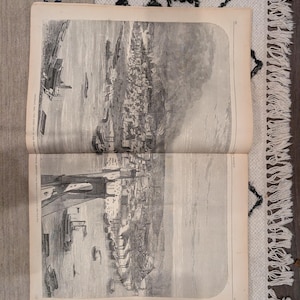
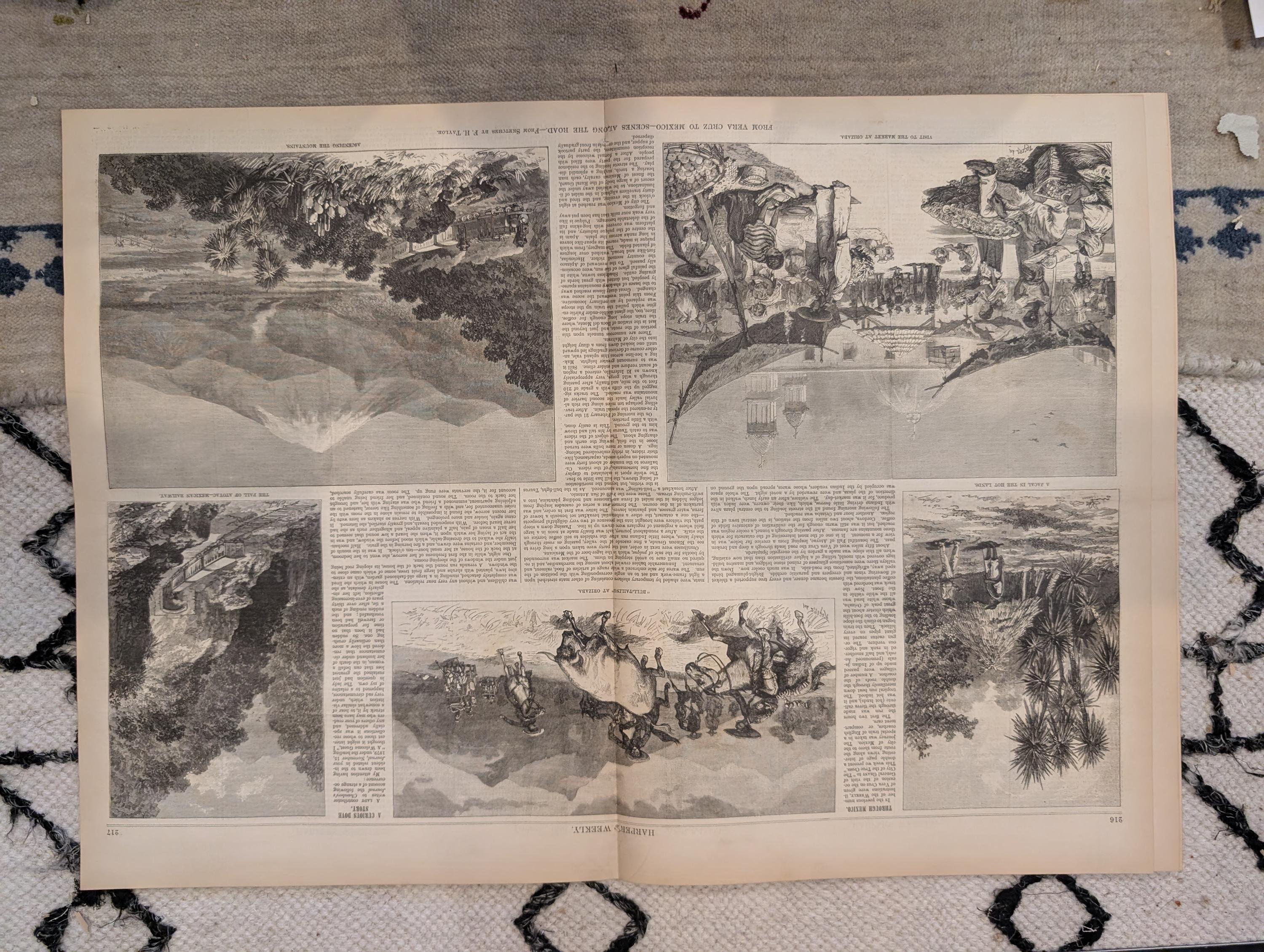
🎨 DOUBLE-PAGE CENTERFOLD — "FROM VERA CRUZ TO MEXICO — SCENES ALONG THE ROAD"
A magnificent double-page centerfold continuing Harper's Weekly's extraordinary coverage of Grant's Mexico visit — this time leaving the coastal port behind and following the road inland toward Mexico City through some of the most dramatic landscape in the Americas. The route from Vera Cruz to the capital climbs from tropical lowlands through cloud forest and high plateau, passing through landscapes of staggering beauty and through towns rich with the history of Spanish conquest, Mexican independence, and American intervention. The many scenes packed into this double-page spread constitute one of the most complete visual documentaries of the Mexican interior landscape in the American illustrated press of 1880 — a primary source of enduring value for collectors of Mexican history, Grant history, and Victorian travel illustration.
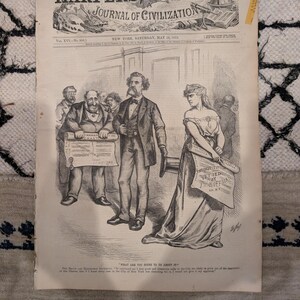
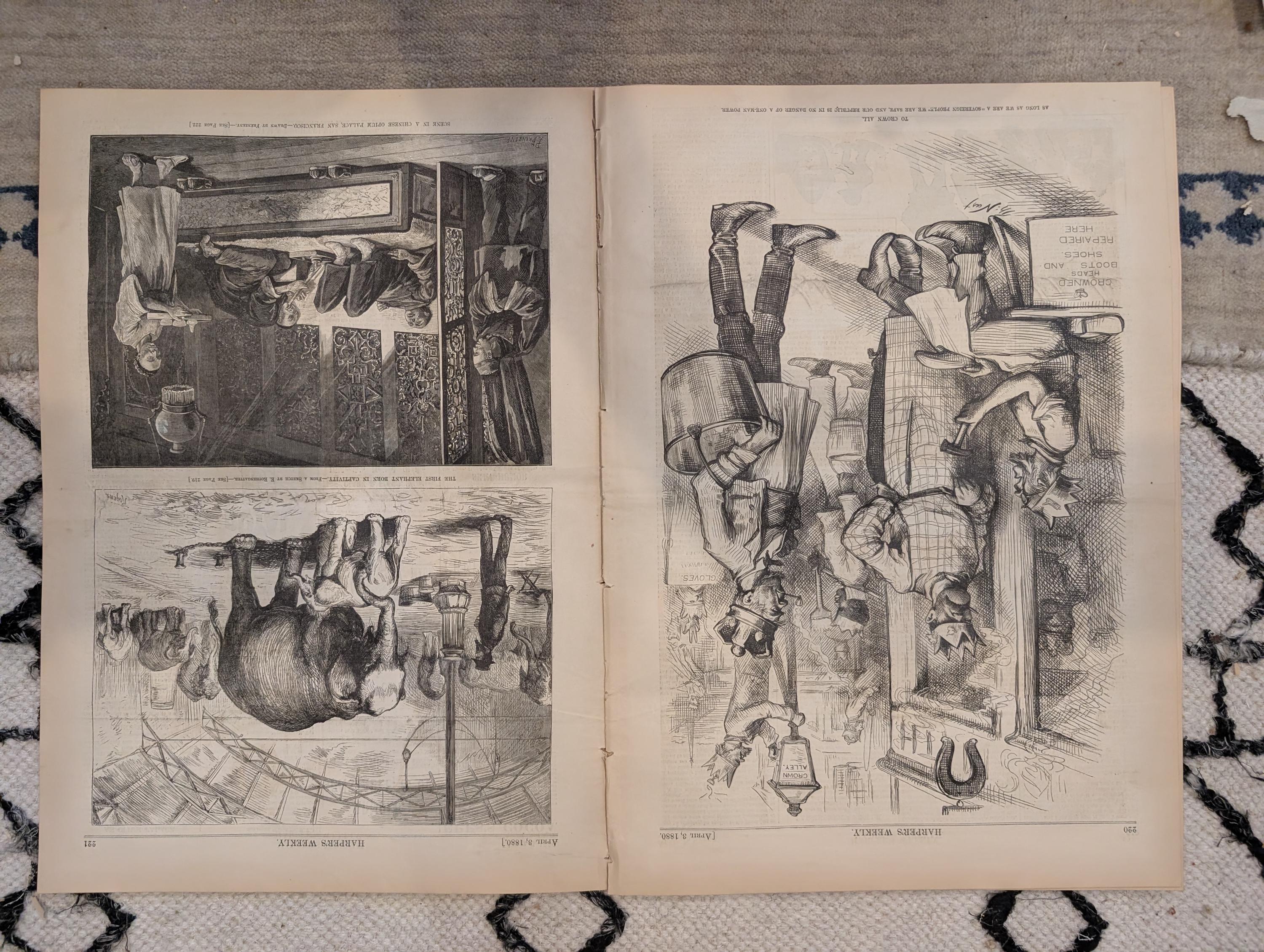
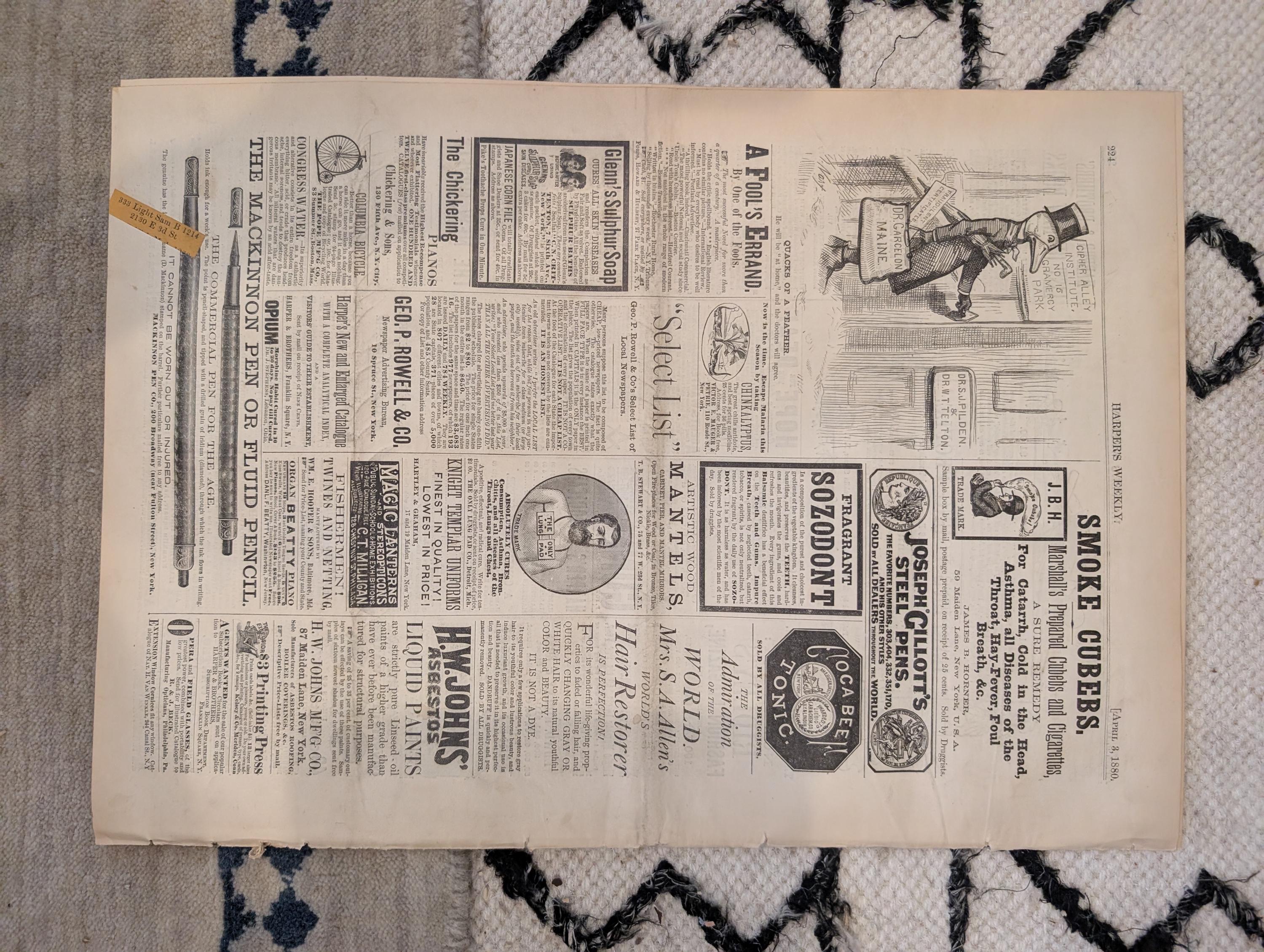
🎨 FULL PAGE — THOMAS NAST: "TO CROWN ALL"
Thomas Nast delivers a full-page political cartoon with a title that drips with the irony he deployed most devastatingly — "To Crown All" arriving at the precise moment when the Republican presidential nomination contest was reaching its climax and the third-term Grant movement was making its most aggressive push toward the crown of a third presidency. Nast had been the most powerful visual advocate for Grant during the general's two presidential terms, but his relationship with the idea of a third term was complex and searching, and "To Crown All" reflects that complexity. A significant and fully displayable Nast full page for collectors of his work and Gilded Age presidential history.
🏮 FULL PAGE — "SCENE IN A CHINESE OPIUM PALACE, SAN FRANCISCO"
The most historically significant and visually extraordinary social documentary illustration in this issue — and one of the most remarkable illustrations in the entire Harper's Weekly run for 1880. A full-page interior view of a Chinese opium palace in San Francisco — the dimly lit rooms, the reclining figures, the pipes, the dreamlike atmosphere of one of the most controversial and fascinating institutions in Gilded Age America. San Francisco's opium dens were among the most written-about and least understood phenomena of the city's Chinatown, generating a literature of sensation, moral panic, and genuine social anxiety that reflected the broader American ambivalence about Chinese immigration and Chinese culture. Some visitors were thrill-seekers documenting the exotic. Others were reformers documenting a social evil. Harper's Weekly's artist was a witness, and what he drew is a primary source document of exceptional rarity and historical complexity.
In 1880 the opium den sat at the intersection of multiple anxieties — race, addiction, urban poverty, the limits of tolerance, and the question of what kind of city San Francisco intended to be. The Chinese Exclusion Act was two years away. The Workingmen's Party was agitating in the streets. And in the quiet rooms of Chinatown, men of multiple races — the illustration typically showed white visitors alongside Chinese patrons — were lying in the lamplight with their pipes. Harper's Weekly put it on a full page and let American readers look. For collectors of Chinese American history, San Francisco history, the history of drug policy, and Victorian social documentary illustration, this full page is an irreplaceable primary source.
🐘 HALF PAGE — "THE FIRST ELEPHANT BORN IN CAPTIVITY"
A delightful and historically notable half-page illustration of the first elephant ever successfully born in captivity in America — one of the great animal stories of 1880, celebrated in the press with the enthusiasm that Victorian America reserved for natural wonders. The birth of a captive elephant was a genuine zoological landmark, and Harper's Weekly's illustration captures both the scientific significance and the simple human delight of the occasion. A wonderful piece for collectors of natural history, zoological history, and Victorian American popular science.
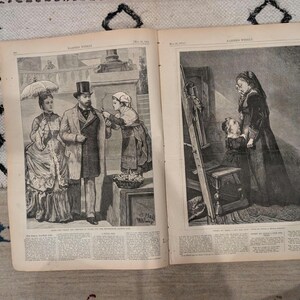
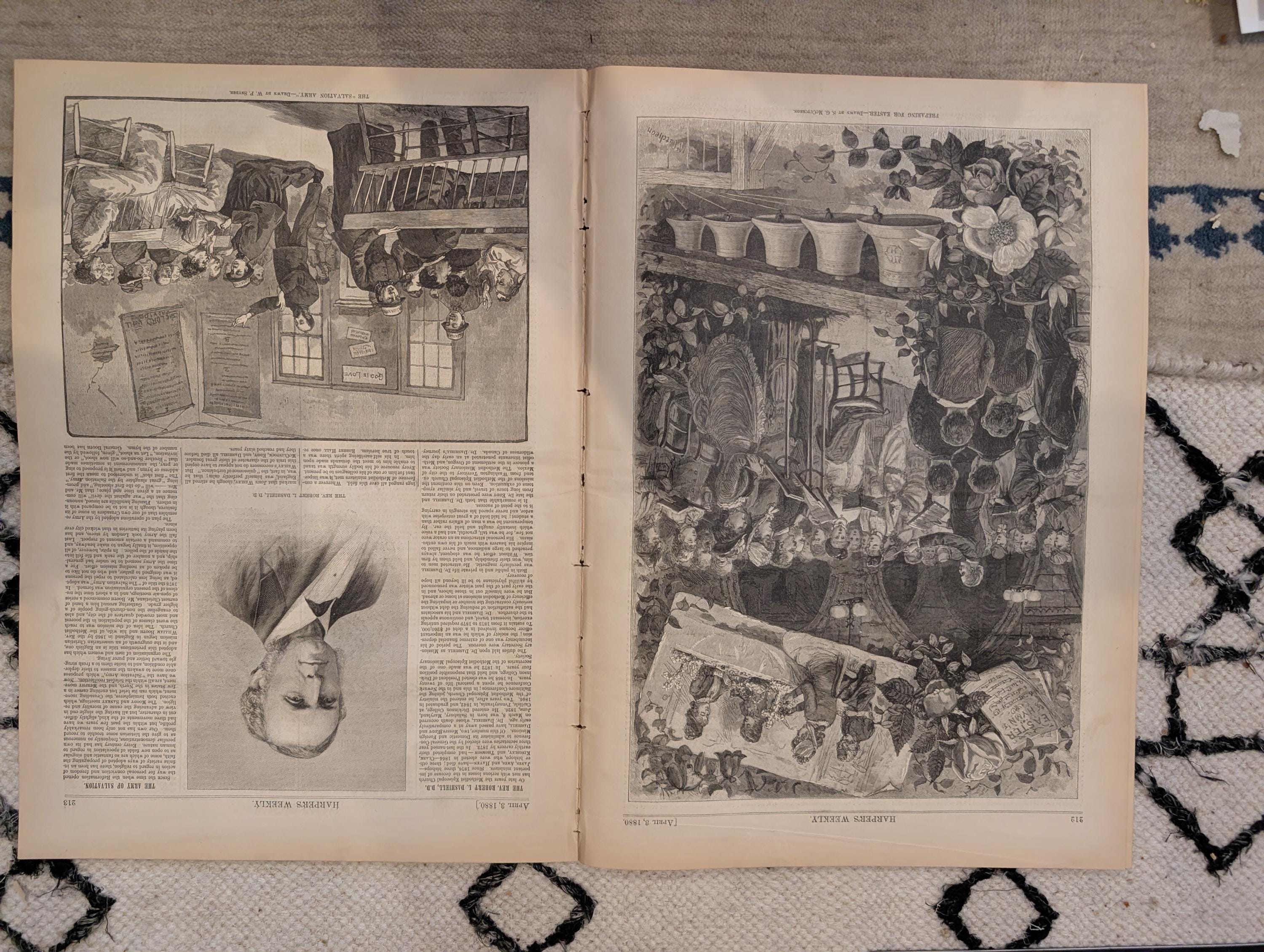
✝️ FULL PAGE — "PREPARING FOR EASTER"
A warm and richly observed full-page illustration of Easter preparations — the flowers, the devotions, the domestic rituals of the most important feast in the Christian calendar, rendered with the human warmth and pictorial skill that made Harper's Weekly's holiday illustrations among the most beloved features of the paper. A lovely and fully displayable seasonal piece.
⚔️ HALF PAGE — "THE SALVATION ARMY"
A historically significant half-page illustration of the Salvation Army — one of the earliest appearances of William Booth's organization in the American illustrated press, at a moment when the Army was just beginning its expansion from its English origins into the United States. The Salvation Army's combination of evangelical Christianity, military organization, and direct service to the urban poor was a genuinely novel and controversial presence in 1880, and Harper's Weekly's illustration documents it at its American dawn. A fine piece for collectors of religious history, social reform history, and the history of American charitable organizations.
🔍 CONDITION & TRANSPARENCY 🔍
Completeness: Complete 16-page issue.
Authenticity: Guaranteed original printing from April 3, 1880 — not a reproduction.
Condition Report: Presents well for its 145-year age with natural toning to the newsprint consistent with paper of this era. The Winter Palace explosion front page, the Vera Cruz to Mexico centerfold, the Thomas Nast full page, the Chinese opium palace full page, the captive elephant half page, and all other illustrations are clear and displayable. I have photographed every page — please review all images carefully and don't hesitate to ask for additional close-ups of any area before purchasing.
📦 SHIPPING & PRESERVATION 📦
Housed in an acid-free archival folder with Mylar overlay to protect the 145-year-old newsprint
Flat-shipped with heavy-duty reinforcement to ensure safe arrival of the centerfold
Fully tracked for your peace of mind
In April 1880 a bomb had just gone off in the Winter Palace, Grant was riding toward Mexico City through cloud forest, the first elephant born in captivity was blinking at the world, and Harper's Weekly sent an artist into a San Francisco opium palace and published what he saw. What a document of a world in motion.
🏷️ TAGS
1880 Harpers Weekly, Chinese Opium Palace San Francisco, Opium Den San Francisco 1880, Winter Palace Explosion St Petersburg, Czar Alexander Assassination Attempt, Thomas Nast Political Cartoon, Vera Cruz Mexico City Road Scenes, Grant Mexico Visit 1880, Salvation Army First Illustration, First Elephant Born Captivity, San Francisco Chinatown History, Chinese American History 1880, Russian Imperial History, Victorian Social Documentary, Antique Newspaper 1880, Harper's Weekly 1880 -
Shipping & Policies
Related Products