Incunable
1496 Nuremberg Chronicle Original Leaf – Augsburg “Pirated” Edition by Johann Schönsperger – Kings & Scholars Woodcuts
$160.00
-
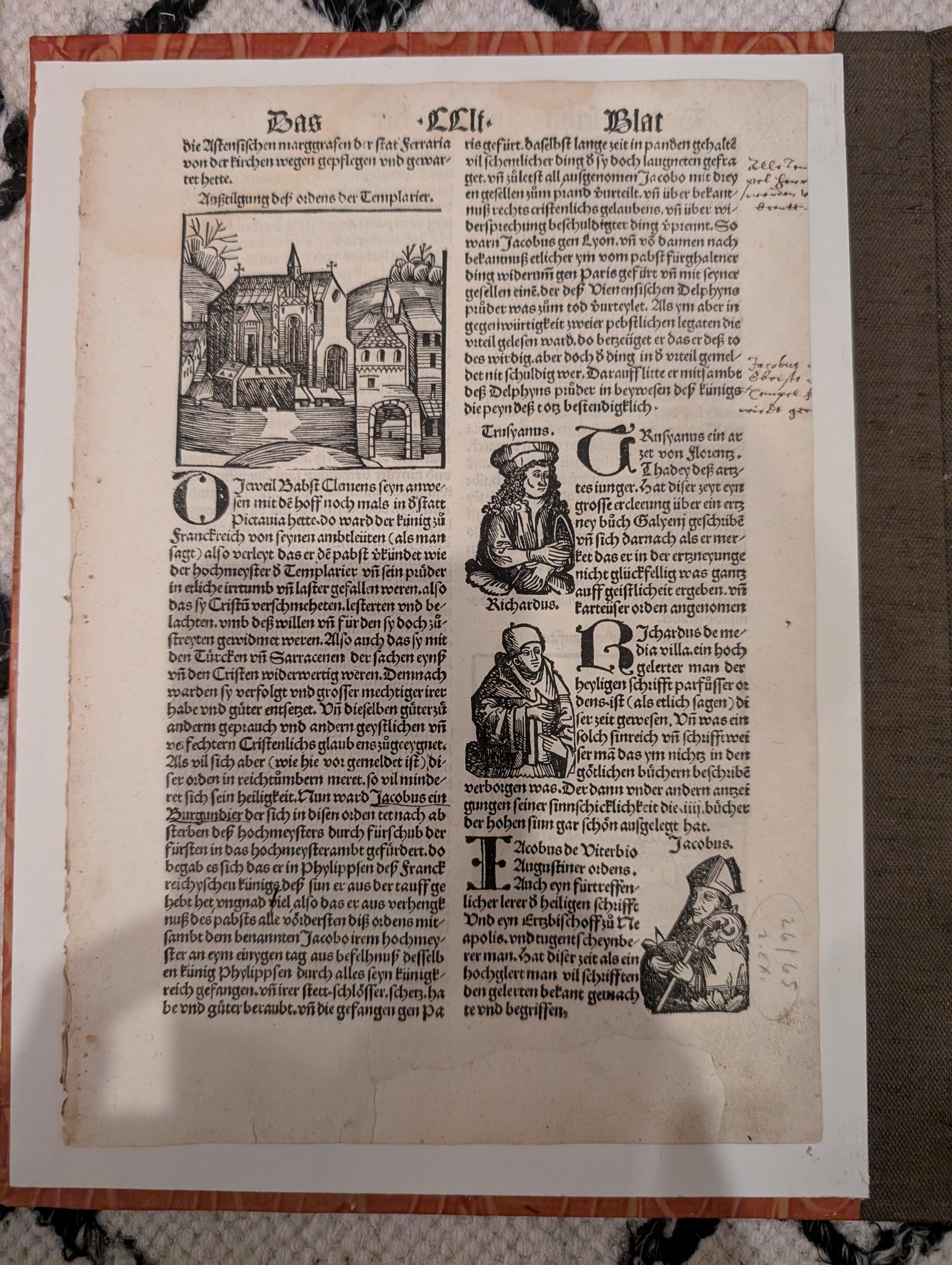
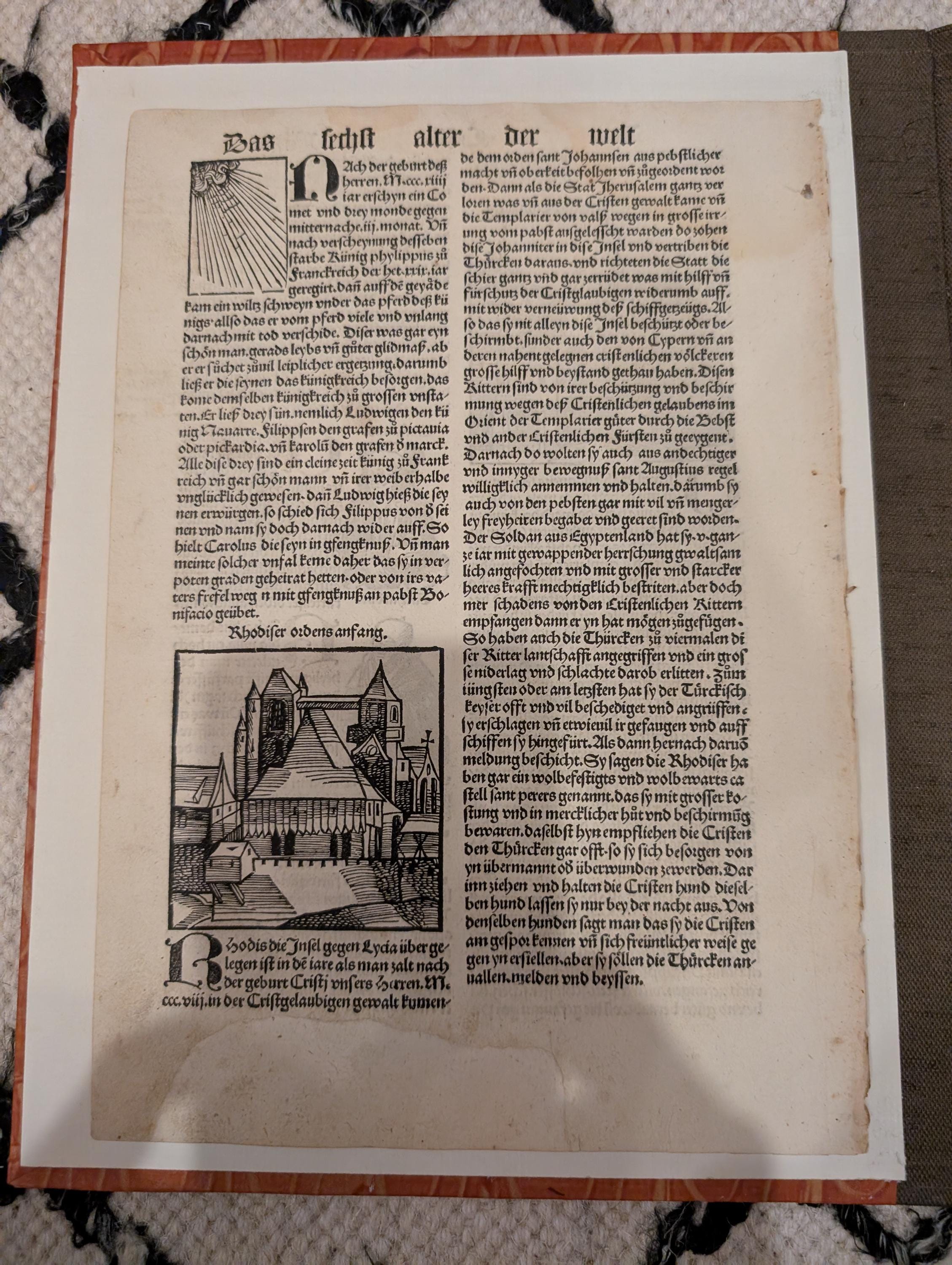
DetailsThis is an original incunable leaf from the celebrated Nuremberg Chronicle (Das Buch der Chroniken / Liber Chronicarum), printed in 1496 in Augsburg, Germany by Johann Schönsperger (c. 1455–1521).
Schönsperger’s Augsburg printings of 1496, 1497 and 1500 were unauthorized re-editions of Anton Koberger’s 1493 Nuremberg Chronicle—smaller, more affordable versions intended for a wider audience. Ironically, these “pirated” Augsburg issues are far scarcer today than Koberger’s official Nuremberg printing, making each surviving leaf a true rarity of early printing history.
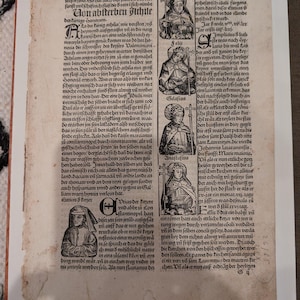
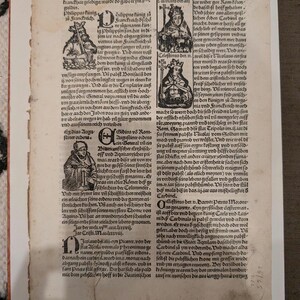
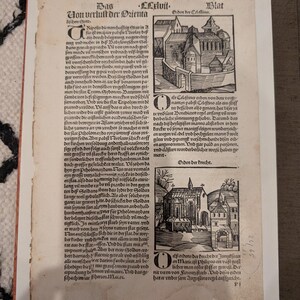
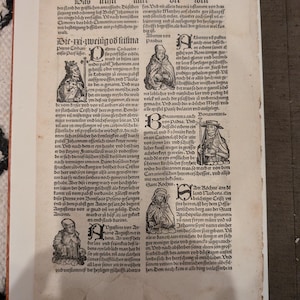
This double-sided page from the Sixth Age of the World features woodcut portraits of crowned kings, clerics, and scholars, surrounded by dense Gothic black-letter text in early German. It remains a vivid example of Renaissance craftsmanship at the dawn of print culture.
---
📜 Details
Date: 1496
Printer: Johann Schönsperger, Augsburg (Germany)
Work: Nuremberg Chronicle / Liber Chronicarum
Material: Hand-laid rag paper printed in Gothic type with original woodcuts
Content: Portraits of rulers and scholars accompanied by historical text
Size: Approx. 27 × 18.5 cm (≈ 10.6 × 7.3 in.)
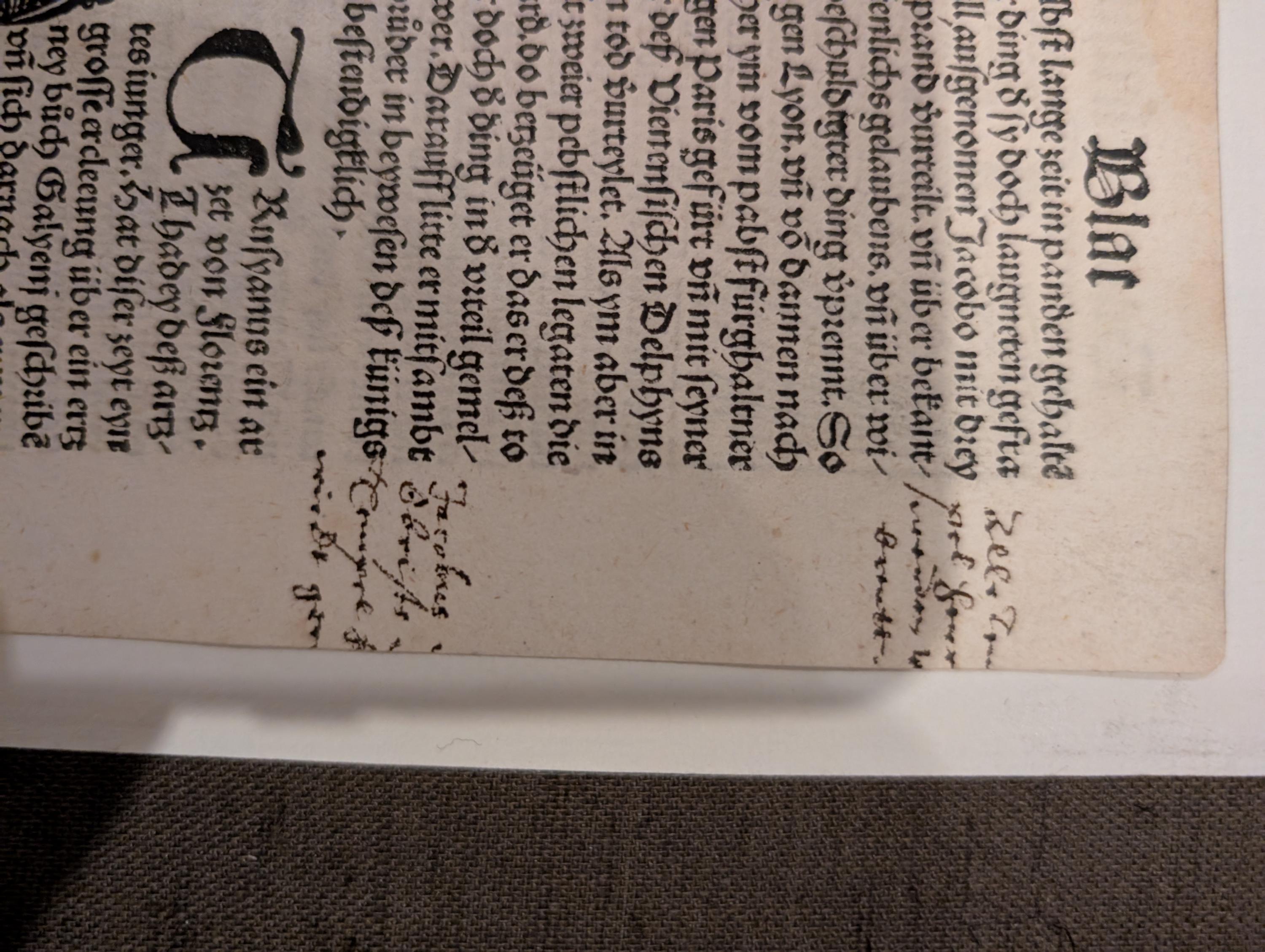
Condition: As shown in photos. Expected toning and light water staining along outer margin; small pencil marks in margin. The print remains bold and woodcuts crisp. Some leaves from this collection may include marginalia or later pencil notes; please inspect photos closely — sold as is.
Provenance: From a disbound, incomplete copy purchased at auction. No complete book was harmed — this leaf survives from a long-separated fragment.
---
🖼️ Framing Available
Each leaf can be professionally framed with archival, acid-free matting and UV-filtering acrylic, ready for museum-quality preservation or elegant home display.
---
✨ Historical Context
The Nuremberg Chronicle is among the most ambitious illustrated books of the fifteenth century — a universal history of the world from Creation to the author’s own era.
Schönsperger’s Augsburg edition reused and re-engraved many of the woodcuts designed in the workshop of Michael Wolgemut and Wilhelm Pleydenwurff, the masters under whom Albrecht Dürer trained in Nuremberg.
Though technically a “pirated” printing, the Augsburg issues are treasured today for their rarity and for spreading Renaissance imagery beyond Germany’s major presses. Each page captures the artistry, devotion, and ingenuity of Europe’s first printers. -
Shipping & Policies
Related Products